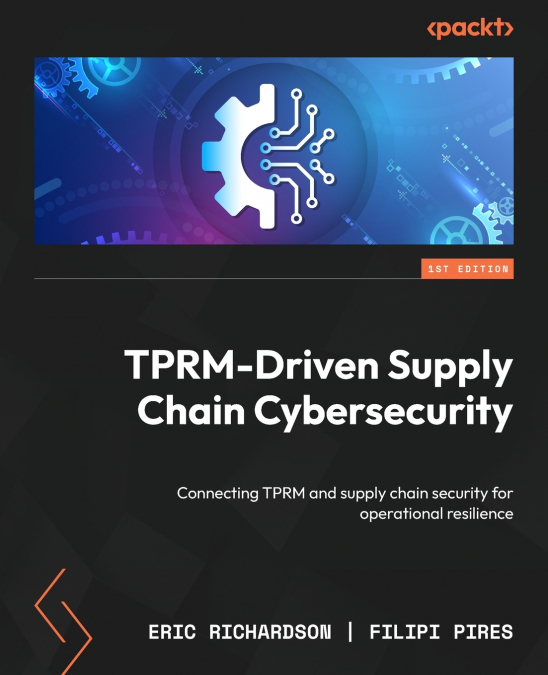
Eric Richardson / Filipi Pires
 Librería Samer Atenea
 Kálamo Books
 Librería Elías (Asturias)
 Librería Kolima (Madrid)
 Librería Proteo (Málaga)
Integrate cybersecurity into TPRM to reduce vendor breach impact, meet DORA and NIST C-SCRM expectations, and monitor fourth-party exposure using SBOM-driven diligence, threat intelligence, and automation.Key Features:- Design a lifecycle-based TPRM program that ties vendor decisions to cyber risk- Map DORA, NIST C-SCRM, and ISO/IEC 27036 controls to audits and evidence- Build contract clauses, SBOM requirements, and playbooks for third- and fourth-party breaches- Includes assessment templates, evidence checklists, and incident playbooks you can adaptBook Description:Reduce supply chain cyber risk by turning third-party risk management into an operational program that connects procurement, legal, and security decisions. This book replaces checkbox assessments with a lifecycle approach you can apply from onboarding through offboarding, so vendor risk tiering, control mapping, and continuous monitoring drive clear outcomes.You learn how to align supplier oversight with major obligations and guidance, including DORA, GDPR, Executive Order 14028, NIST C-SCRM, and ISO/IEC 27036. You also get practical methods for strengthening contracts and SLAs-covering audit rights, breach notification, liability, and security requirements that flow down to critical subcontractors.From threat intelligence and security ratings to incident response playbooks for vendor and sub-vendor breaches, the book shows how to handle real signals, not just survey answers. Written by practitioners with deep experience in supply chain risk and offensive security, it also explains how SBOM standards and AI-assisted scoring can support scalable governance. By the end, you can build and mature an intelligence-driven TPRM program focused on measurable resilience.What You Will Learn:- Learn how vendor ecosystems become attack paths- Categorize third- and fourth-party supply chain risks- Create risk tiers and segmentation based on business impact- Design a lifecycle workflow from onboarding to offboarding- Select controls using NIST and ISO supply chain guidance- Translate DORA, GDPR, and EO 14028 duties into controls- Prepare evidence packs for audits and regulator questions- Plan continuous monitoring beyond annual questionnairesWho this book is for:This book is for cybersecurity leaders, TPRM/VRM practitioners, risk managers, and procurement professionals who need a repeatable way to evaluate and monitor vendors and critical suppliers. Compliance teams and in-house counsel working with DORA, GDPR, HIPAA, and related requirements will also benefit. Basic familiarity with security principles and vendor management helps.Table of Contents- The Disconnect - TPRM vs. Cybersecurity in the Supply Chain- The New Attack Surface - A Taxonomy of Supply Chain Risks- The Foundational Framework - A TPRM-Driven Security Lifecycle- The Regulatory Blueprint - Navigating Key Frameworks- The Legal Foundation of Embedding Cybersecurity into Contracts- The Unseen Threat - Managing Fourth-Party Risk- Deep Dive - Threat Intelligence: Uncovering Hidden Supply Chain Risks- The Incident Blueprint - Responding to Third- and Fourth-Party Breaches- Measuring and Advancing TPRM Maturity- Connecting TPRM and SCM - Due Diligence of Suppliers and Understanding Threats- Understanding Your Service Provider’s Software Bill of Material- The Technological Imperative - Leveraging AI and Automation- The Software Ingredient List - SBOM and Supply Chain Security- Building an Advanced Program - From Compliance to Resilience