 Librería Samer Atenea
 Kálamo Books
 Librería Elías (Asturias)
 Librería Kolima (Madrid)
 Librería Proteo (Málaga)
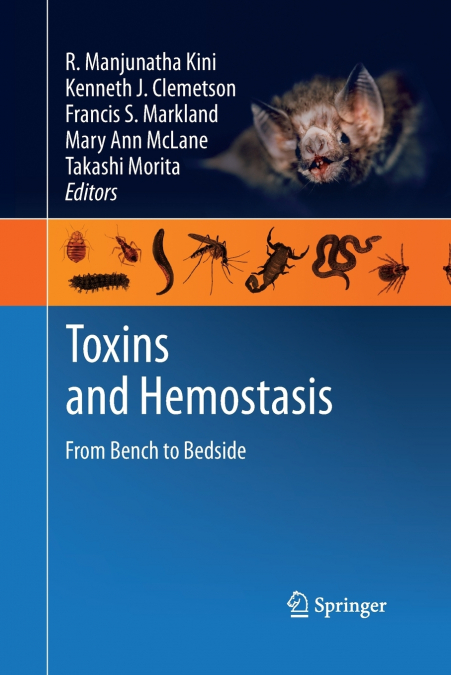
Circulation of blood is vital for the survival of vertebrates, including man. Mainly, it plays an important role in carrying food nutrients and oxygen to every tissue and organ and in removing all waste products and carbon dioxide. Any imbalance in the hemostatic and cardiovascular systems can lead to death and severe debility. A number of animals have developed mechanisms to target these systems and exploit the vulnerability. In some species (for example, snakes), such mechanisms are used to immobilize and kill the victim/prey, whereas in others (for example, insects, such as leaches, mosquitoes and ticks), they are used to provide a continuous supply of blood. These mechanisms include, but are not limited to, procoagulant and anticoagulant actions that affect the coagulation cascade and platelet aggregation, as well as altering vasodilatory responses. In all these various animals, these mechanisms have evolved to perfection over millions of years to support their survival. In last 3-4 decades, due to the efforts of scientists from various backgrounds including biology, protein chemistry, molecular biology, pharmacology, hematology, and structural biology, significant progress in understanding the structure-function relationships, as well as the mechanism of action have been made in a number of exogenous factors that affect blood coagulation, platelet aggregation and vasodilation from various animals. These exogenous factors have contributed significantly to the development of research tools as well as providing new therapeutic agents.With the increase average age of the population coupled with changes in life style in recent years, there has been a significant increase in cardiovascular and hematological disorders. Thus scientists in both academic institutions as well as the pharmaceutical industry are developing better therapeutic agents to improve the quality of life. This impetus has lead to the search for novel agents from various sources that interfere with cardiovascular and hematalogical processes.Although at first glance exogenous factors appear to function as ’villains’, several life-saving drugs have been developed based upon these factors. Such drugs or drug leads include those that inhibit the angiotensin converting enzymes (Captopril and Enalapril), that block platelet receptors (Eptifibatide and Tirofiban), or that digest thrombotic plugs (Alfimeprase and bat plasminogen activator) to name a few. Several new and exciting success stories are currently unfolding. In this book, recent studies on some of the exogenous factors that play crucial roles in cardiovascular and hematological disorders are reviewed in order to consolidate the efforts in this area of research and to recruit new, talented researchers. The 25-30 review chapters, each written by experts in their field, compiled herein are devoted to exogenous factors affecting platelet aggregation, anticoagulant and procoagulant proteins, fibrinolytic proteins and hypotensive agents (For details see, Contents of the Book).This book is intended to help to create elevated awareness and enthusiasm in the field of exogenous factors. I believe that this book will provide greater impetus to the search for novel proteins based on naturally occurring exogenous factors. This will be the first book dealing extensively with exogenous factors in the last 25 years. The book will provide a ready reference to the different approaches used to solve complex problems in protein chemistry and pharmacology of exogenous factors. The book will update our understanding of the structure-function relationships and mechanisms of action of exogenous factors and provide great insights into future directions for solving the remaining challenges.