
Torregarcía, Purpura y Agua

Torregarcía, Purpura y Agua

María Juana López Medina

140,62 €
IVA incluido
Disponible
Editorial:
British Archaeological Reports (Oxford) Ltd
Año de edición:
2023
Materia
Antropología
ISBN:
9781407360478
140,62 €
IVA incluido
Disponible

Selecciona una librería:

  • Librería Samer Atenea
  • Librería Aciertas (Toledo)
  • Kálamo Books
  • Librería Perelló (Valencia)
  • Librería Elías (Asturias)
  • Donde los libros
  • Librería Kolima (Madrid)
  • Librería Proteo (Málaga)

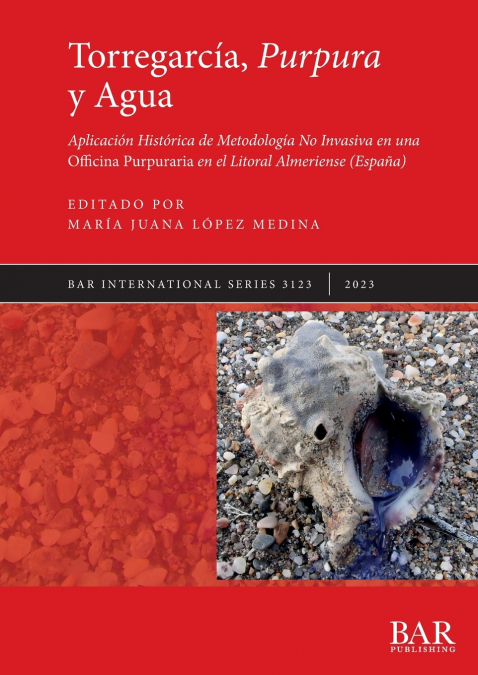
A lo largo de la costa del sureste de la Península Ibérica existen numerosos restos vinculados a la producción de la purpura. Este estudio se centra en el yacimiento de Torregarcía (Almería, España), situado en el Parque Natural de Cabo de Gata-Níjar, una zona costera protegida de especial interés ecológico. Torregarcía se excavó inicialmente en 1990 y se identificó como una factoría romana de salazones en la que también se practicaba la actividad complementaria del tinte. A pesar de su importancia, ha pasado desapercibida en la historiografía de las últimas tres décadas y nunca ha sido objeto de una publicación científica. Las investigaciones presentadas en este libro se han llevado a cabo mediante técnicas de prospección no invasivas, como el georradar (GPR), y han revelado la importancia de la explotación del tinte púrpura como actividad principal del yacimiento. También se describen instalaciones más complejas asociadas a las estructuras excavadas y a un gran conchero. Junto a éstas, además, se han documentado otras construcciones y concheros. Todo ello conforma el denominado por nosotros 'paisaje de la purpura' en el litoral del Sureste peninsular, que permite al Parque Natural mostrar un excelente patrimonio arqueológico más allá de las excavaciones realizadas hasta la fecha.Along the coast of the southeast of the Iberian Peninsula, there are numerous remains linked to the manufacture of purple dyes. This study focuses on the site of Torregarcía (Almería, Spain), located in the Cabo de Gata-Níjar Natural Park, a protected coastal area of particular ecological interest. Torregarcía was initially excavated during 1980s and was identified as a Roman salting factory where the complementary activity of dyeing was also practised. Despite its importance, it has gone unnoticed in the historiography of the last three decades and has never been the subject of dedicated scientific publication. The investigations presented in this book have been carried out using non-invasive prospecting techniques, such as ground-penetrating radar (GPR), and have revealed the importance of the exploitation of purple dye as the main site activity. More complex installations associated with the excavated structures and a large shell pit are also described. Alongside these, other buildings and shells have also been documented along the coastline of this site. All of this forms what we call the 'purple landscape' in the southeast of the peninsular coast, which allows the Natural Park to show archaeological heritage beyond any excavations carried out to date. 

Artículos relacionados

  • The jewish community in new england
    Keith Warwick
    The purpose of The Jewish Community in New England is to inform readers about the Jewish community in each of the six New England States: Rhode Island, Connecticut, Maine, Massachusetts, New Hampshire, and Vermont. Factual, inspirational, and poetic, it serves as a scholarly guide to institutions of Jewish life in this dynamic American region. Stocked with valuable information ...
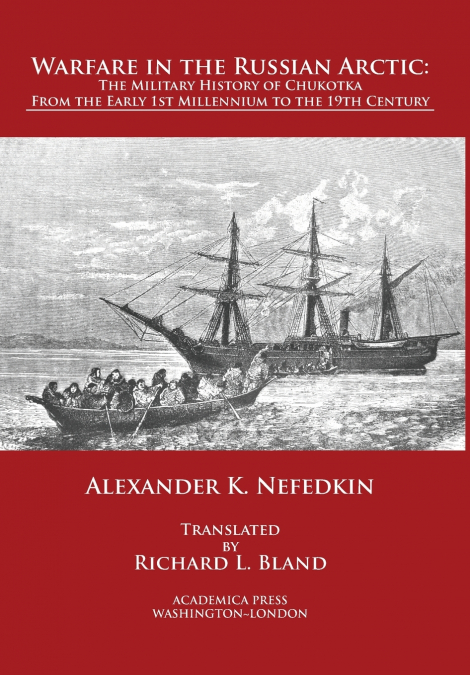
  • Warfare in the Russian arctic
    Alexander K Nefedkin / Richard L Bland
    Alexander Nefedkin’s highly original new book, translated by the noted American scholar Richard L. Bland, is devoted to the understudied topic of the military and military-political history of Chukotka, the far northeastern region of the Russian Federation, separated from Alaska by Bering Strait. This study is based on primary sources, including archaeological, folkloric, and d...
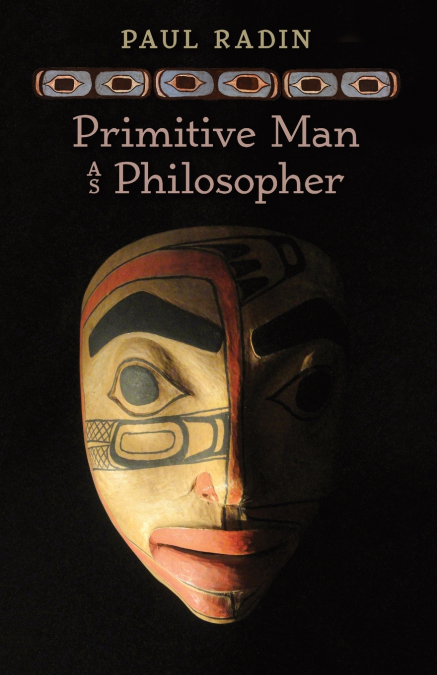
  • Primitive Man as Philosopher
    Paul Radin
    First published in 1927, Primitive Man as Philosopher represents a landmark in early anthropological studies. In this work, Paul Radin demonstrates the problematic nature of distinguishing between 'primitive' and 'civilized' cultures. He traces such ideas as the nature of Goodness and Truth, the meaning of life, and the reality of death across various cultures, highlighting how...
    Disponible

    24,38 €

  • The Economics of Population Growth
    Julian Lincoln Simon
    Comparison with stationary and very fast rates of population growth shows modern population grwoth to have long-run positive effects on the standards of living. This is Julian Simon’s contention, and he provides support for its validity in both more and less-developed countries. He notes that since each person constitutes a burden in the short run, whether population growth is ...
    Disponible

    153,61 €

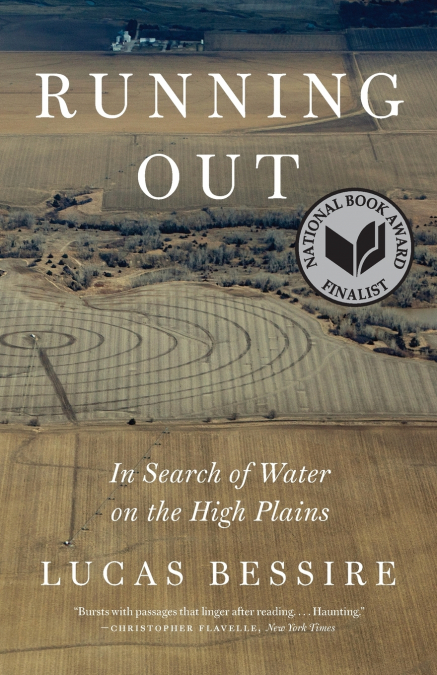
  • Running Out
    Lucas Bessire
    Finalist for the National Book AwardAn intimate reckoning with aquifer depletion in America’s heartlandThe Ogallala aquifer has nourished life on the American Great Plains for millennia. But less than a century of unsustainable irrigation farming has taxed much of the aquifer beyond repair. The imminent depletion of the Ogallala and other aquifers around the world is a defining...
    Disponible

    25,19 €

  • The Nation and Its Fragments
    Partha Chatterjee
    In this book, the prominent theorist Partha Chatterjee looks at the creative and powerful results of the nationalist imagination in Asia and Africa that are posited not on identity but on difference with the nationalism propagated by the West. Arguing that scholars have been mistaken in equating political nationalism with nationalism as such, he shows how anticolonialist nation...
    Disponible

    72,17 €