

Topics in the Philosophy of Biology

Topics in the Philosophy of Biology


65,41 €
IVA incluido
Disponible
Editorial:
Springer Nature B.V.
Año de edición:
1975
Materia
Influencia de la ciencia y la tecnología sobre la sociedad
ISBN:
9789027705969
65,41 €
IVA incluido
Disponible

Selecciona una librería:

  • Librería Samer Atenea
  • Librería Aciertas (Toledo)
  • Kálamo Books
  • Librería Perelló (Valencia)
  • Librería Elías (Asturias)
  • Donde los libros
  • Librería Kolima (Madrid)
  • Librería Proteo (Málaga)

The philosophy of biology should move to the center of the philosophy of science - a place it has not been accorded since the time of Mach. Physics was the paradigm of science, and its shadow falls across con­ temporary philosophy of biology as well, in a variety of contexts: reduction, organization and system, biochemical mechanism, and the models of law and explanation which derive from the Duhem-Popper­ Hempel tradition. This volume, we think, offers ample evidence of how good contempo­ rary work in the philosophical understanding of biology has become. Marjorie Grene and Everett Mendelsohn aptly combine a deep philo­ sophical appreciation of conceptual issues in biology with an historical understanding of the radical changes in the science of biology since the 19th century. In this book, they present essays which probe such historical and methodological questions as reducibility, levels of organization, function and teleology, and the range of issues emerging from evolution­ ary theory and the species problem. In conjunction with Professor Grene’s collection of essays on the philosophy of biology, The Under­ standing of Nature (Boston Studies in the Philosophy of Science, Vol. XXIII) and the occasional essays on these topics which we have published in other volumes (listed below), this volume contributes to bringing biology to the center of philosophical attention. Everett Mendelsohn, ’Explanation in Nineteenth Century Biology’ (Boston Studies, Vol. II, 1965). David Hawkins, ’Taxonomy and Information’, (Boston Studies, Vol. III, 1967).

Artículos relacionados

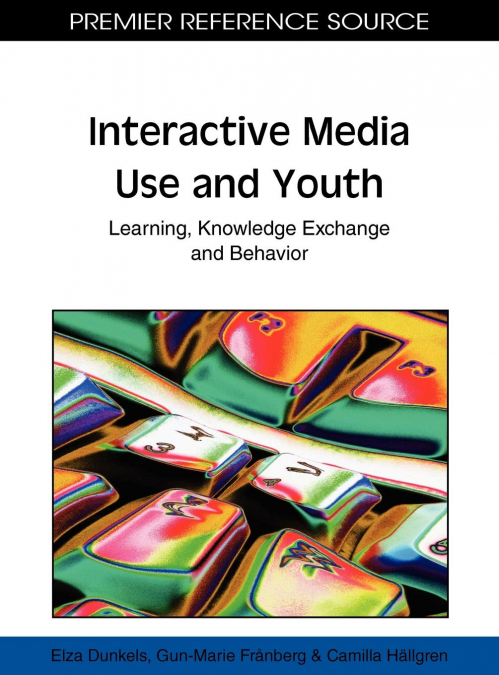
  • Interactive Media Use and Youth
    Modern advancements in technology have changed the way that young people use interactive media. Learning from such methods was not even considered until recently. It is now slowly defining the landscape of contemporary pedagogical practices. Interactive Media Use and Youth: Learning, Knowledge Exchange and Behavior provides a comprehensive collection of knowledge based on diffe...
  • Social and Economic Effects of Community Wireless Networks and Infrastructures
    Abdelaal
    It is surprising to think that in today’s rapidly evolving world of technology, over half of the globe still does not have access to high speed internet. Creating community wireless networks has in the past been a way to provide remote communities with internet and network access. Social and Economic Effects of Community Wireless Networks and Infrastructures highlights the succ...
  • The New Atlantis
    Francis Bacon
    In this work, Bacon portrayed a vision of the future of human discovery and knowledge, expressing his aspirations and ideals for humankind. The novel depicts the creation of a utopian land where 'generosity and enlightenment, dignity and splendour, piety and public spirit' are the commonly held qualities of the inhabitants of 'Bensalem'. ...
  • Sport 2.0
    Andy Miah
    ...
    Disponible

    28,86 €

  • Productivity Machines
    Corinna Schlombs
    ...
    Disponible

    48,52 €

  • Open Space
    Mariel Borowitz
    ...
    Disponible

    38,25 €