
Thus Spake Zarathustra

Thus Spake Zarathustra

Friedrich Nietzsche

23,37 €
IVA incluido
Disponible
Editorial:
Les prairies numériques
Año de edición:
2026
Materia
Filosofía occidental: antigua, hasta c. 500
ISBN:
9791043139468
23,37 €
IVA incluido
Disponible

Selecciona una librería:

  • Librería Samer Atenea

  • Kálamo Books
  • Librería Elías (Asturias)
  • Librería Kolima (Madrid)
  • Librería Proteo (Málaga)

Thus Spake Zarathustra was Friedrich Nietzsche’s favorite of the books he wrote, and has been his most popular amongst general readers. Yet some scholars dislike it because of its unphilosophical nature: it eschews jargon and the scaffolding of arguments, which engage only the intellect, in favor of an artistic approach that engages the whole mind.After ten years of solitude in a cave high in the mountains, Zarathustra wishes to share with humanity the wisdom he has accumulated during this time. He reaches the nearest town and addresses the crowd on the marketplace. He tells them of the Overman: the next step in human evolution, a being who creates their own values, freed from the weight of tradition and morality, and who takes responsibility for their own successes and failures. But the crowd doesn’t understand him; his discourse is met only with rude ignorance. Zarathustra then decides to gather a small group of disciples and share his wisdom with them.The bulk of the book is Zarathustra’s speeches on topics such as morality, society, individualism, religion, and how suffering and its overcoming are what give meaning to our existence. While already wiser than most, Zarathustra still learns from those he talks to, re-evaluating his thoughts as he deals with disappointment (such as when his disciples prove to be mere followers), and confronting his own doubts. His greatest challenge, though, comes when he faces the existential test of the eternal recurrence of the same: the thought that our lives could repeat indefinitely without the minutest of change. Thus Spoke Zarathustra: A Book for All and None (German: Also sprach Zarathustra: Ein Buch für Alle und Keinen), also translated as Thus Spake Zarathustra, is a work of philosophical fiction written by German philosopher Friedrich Nietzsche and published in four volumes between 1883 and 1885.[1] The protagonist is nominally the historical Zarathustra, more commonly called Zoroaster in the West.Much of the book consists of discourses by Zarathustra on a wide variety of subjects, most of which end with the refrain 'thus spoke Zarathustra.' The character of Zarathustra first appeared in Nietzsche’s earlier book The Gay Science (at §342, which closely resembles §1 of 'Zarathustra’s Prologue' in Thus Spoke Zarathustra).The style of Nietzsche’s Zarathustra has facilitated varied and often incompatible ideas about what Nietzsche’s Zarathustra says. The '[e]xplanations and claims' given by the character of Zarathustra in this work 'are almost always analogical and figurative.'[2] Though there is no consensus about what Zarathustra means when he speaks, there is some consensus about that which he speaks. Thus Spoke Zarathustra deals with multiple subjects ranging from the mundane to philosophical, such as metaphysics, war, perspectivism, and the amorality of nature; it also began or elaborated on many of Nietzsche’s core ideas such as the Übermensch, the death of God, the will to power, and eternal recurrence.

Artículos relacionados

  • The Nature of Things
    Lucretius Lucretius
    De rerum natura (On the Nature of Things) is a 1st century BC didactic poem by the Roman poet and philosopher Lucretius with the goal of explaining Epicurean philosophy to a Roman audience. Lucretius presents the principles of atomism; the nature of the mind and soul; explanations of sensation and thought; the development of the world and its phenomena; and explains a variety o...
  • Pompeii
    Fergus Mason
    Pompeii was one of most advanced cities of its time; it had a complex water system, gymnasium, and an amphitheater. Despite it's advancements, there was one thing it wasn't ready for: Mount Vesuvius—the volcano that led to its ultimate doom.  The 79 AD eruption of Mount Vesuvius was one of the worst disasters in all of European history. In a near instant, over 15,000 p...
    Disponible

    10,36 €

  • Middle Platonism and Neoplatonism, Volume 1
    Stephen Gersh
    'It is generally agreed that those types of philosophy that are loosely called ’Platonic’ and ’Neoplatonic’ played a crucial role in the history of European culture during the centuries between antiquity and the Renaissance. However, until now no scholar has attempted to describe the evolution of these forms of thought in a single comprehensive academic study.' So writes Stephe...
  • Middle Platonism and Neoplatonism, Volume 2
    Stephen Gersh
    It is generally agreed that those types of philosophy that are loosely called 'Platonic' and 'Neoplatonic' played a crucial role in the history of European culture during the centuries between antiquity and the Middle Ages. However, until now no scholar has attempted to describe the evolution of these forms of thought in a single comprehensive academic study. Middle Platonism a...
  • Porphyry’s Commentary on Ptolemy’s Harmonics
    Andrew Barker
    ...
    Disponible

    80,87 €

  • The Roots of Platonism
    John Dillon
    ...
    Disponible

    26,54 €

Otros libros del autor

  • Beyond Good and Evil
    Friedrich Nietzsche
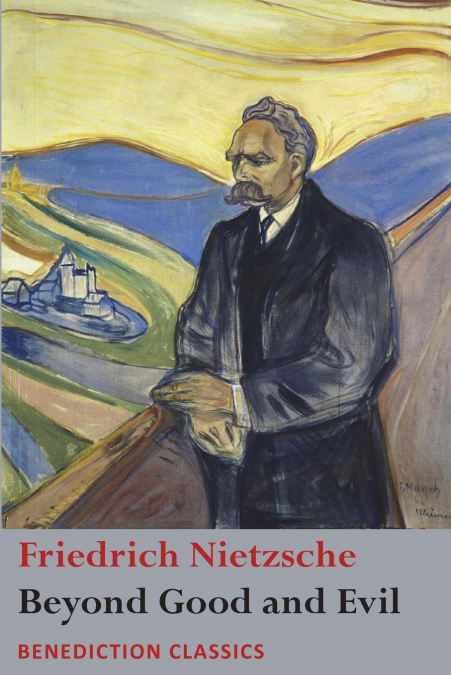
    Nietzsche, though primarily a philosopher, wrote widely on art, philology, history, religion, tragedy, culture, and science.  In 1886, at the height of his powers, he published Beyond Good and Evil.  Here he examines much of the best of human thought--dogmatic philosophy, Judeo-Christian morality, science and democracy – and finds it lacking.  Rejecting “slave-morality” he pres...
  • Beyond Good and Evil
    Friedrich Nietzsche
    Nietzsche, though primarily a philosopher, wrote widely on art, philology, history, religion, tragedy, culture, and science.  In 1886, at the height of his powers, he published Beyond Good and Evil.  Here he examines much of the best of human thought--dogmatic philosophy, Judeo-Christian morality, science and democracy – and finds it lacking.  Rejecting “slave-morality” he pres...
    Disponible

    9,99 €

  • Beyond Good and Evil
    Friedrich Nietzsche
    What If Everything You Believe About Good and Evil Deserves to Be Questioned?In Beyond Good and Evil, Friedrich Nietzsche delivers one of the most provocative and influential works in the history of Western philosophy. Challenging conventional morality, established religious beliefs, and the assumptions underlying traditional philosophical thought, Nietzsche invites readers to ...
    Disponible

    12,08 €

  • El ocaso de los ídolos
    Friedrich Nietzsche
    ¿Quién decide lo que somos cuando todos pensamos igual?En una sociedad que confunde multitud con verdad y ruido con razón, la individualidad se convierte en un acto de resistencia. Este ensayo desvela cómo la comodidad, la técnica y la opinión colectiva han desplazado al pensamiento crítico, transformando la cultura en una corriente uniforme que arrastra incluso a los más lúcid...
    Disponible

    12,43 €

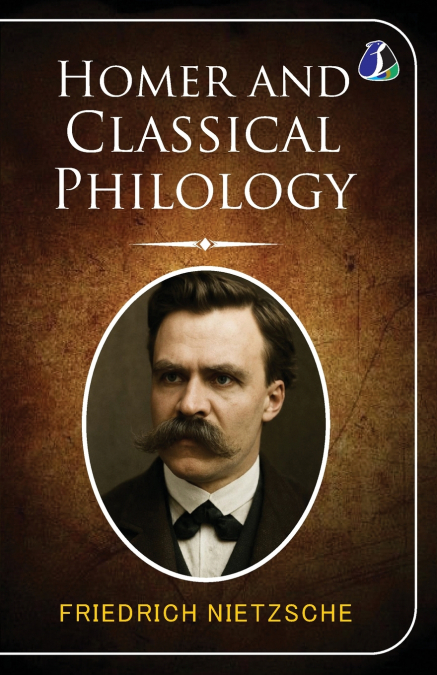
  • Homer and the Classical Philology
    Friedrich Nietzsche
    Friedrich Nietzsche’s Homer and Classical Philology (1869) is his inaugural lecture at the University of Basel. It diagnoses a crisis in 19th-century philology, calling for a shift from dry data collection toward a synthesis of aesthetics, history, and philosophy. Using the 'Homeric question', he argues that epics are not the work of a single historical genius, but the collecti...
    Disponible

    12,34 €

  • The Twilight of the Idols
    Friedrich Nietzsche
    NA ...
    Disponible

    15,68 €