 Librería Samer Atenea
 Kálamo Books
 Librería Elías (Asturias)
 Librería Kolima (Madrid)
 Librería Proteo (Málaga)
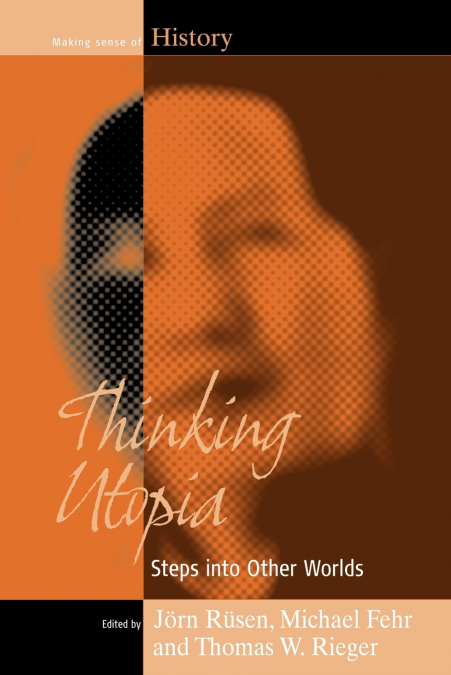
'. . . a highly readable and structured discussion about utopian thinking at the beginning ofthe 21st century . . . It is indeed fortunate that political scientists, historians, philosophers,art critics, and literary theorists have come together to share their thinking on utopia andutopian thought at this disastrous moment of human history, when many are asking if thereis a future to which to look forward.' - European LegacyAfter the breakdown of socialist and communist systems in the East, it became fashionable todeclare the so-called 'end of utopia' ('end of history,' 'end of narratives'). The authors ofthis volume do not share this view but think that it is time to rehabilitate utopian thought.The political concept of Utopia that has given its name to these transcendental projectionsonto the world has been too narrow to describe and analyze the moving forces of the mindperceiving human existence beyond reality. By broadening the perspectives of utopianstudies, these essays enable the reader to reconstruct scholarly paradigms and strategies ofutopian, complex and holistic thinking in modern cosmology, philosophy, sociology, in literary,historical and political sciences, and to compare traditions and ways of Western utopianthought to the practice in the East.Jörn Rüsen was Professor of Modern History at Universities Bochum and Bielefeld for manyyears. From 1994 to 1997 he was Director of the Center for Interdisciplinary Research (ZiF) atBielefeld. Since 1997 he has been President of the Institute for Advanced Study in theHumanities Essen (Kulturwissenschaftliches Institut).Michael Fehr has been Director of the Karl Ernst Osthaus-Museum of the City of Hagen,Germany, since 1987. Prior to that he was Assistant Professor at the Bergische UniversitätWuppertal, and Deputy Director at the Art Museum of the City of Bochum. He has publishedextensively on contemporary art as well as on theory of museums, and teaches museology atUniversity of Bonn.Thomas W. Rieger worked at the Museum of Contemporary History Bonn (Stiftung Haus derGeschichte) from 1993 to 1998, and since 1999 at Karl Ernst Osthaus-Museum Hagen. He hasbeen teaching Theory of Architecture at RWTH Aachen and has been Curator at KunsthalleDüsseldorf since 2004.