
Thin Cell Layer Culture System

Thin Cell Layer Culture System


266,66 €
IVA incluido
Consulta disponibilidad
Editorial:
Springer Nature B.V.
Año de edición:
2003
Materia
Biologia, ciencias de la vida
ISBN:
9781402012075

Selecciona una librería:

  • Librería Samer Atenea
  • Librería Aciertas (Toledo)
  • Kálamo Books
  • Librería Perelló (Valencia)
  • Librería Elías (Asturias)
  • Donde los libros
  • Librería Kolima (Madrid)
  • Librería Proteo (Málaga)

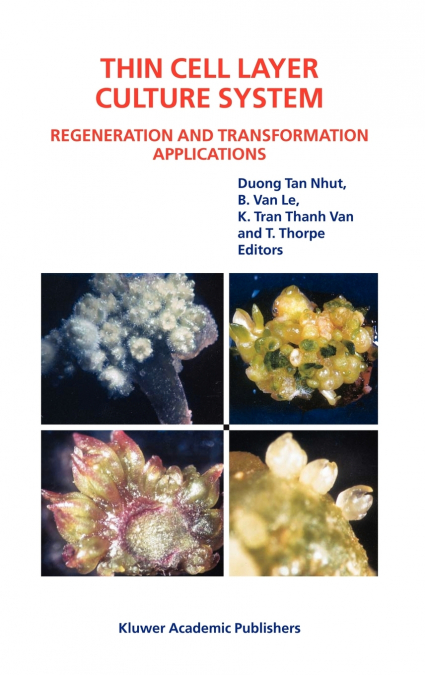
Scientists within the field of plant biotechnology are in a constant search for techniques that can, in the simplest manner possible, answer the genetic and biochemical questions that underlie developmental processes. Thin Cell Layer Culture System not only takes an in-depth look at a technique that has had so much success in attempting, through various practical models and systems, to answer these issues, but also represents a celebration of almost 30 years of research that has covered a massive scope of plant species and areas of study. The initial studies conducted on tobacco thin cell layers (TCLs) - proving that organogenesis can be strictly controlled in vitro - allowed plant research to benefit from this finding, expanding this knowledge in a practical and applied manner into the biotechnological fields of tissue culture and micropropagation, cell and organ genetics and biochemistry. The chapters in this book tell the enigmatic tale of TCLs. An historical perspective opens the scene for an inquiry into the possible cellular, biochemical and genetic processes that allow for the controlled development of a TCL into any organ type. The success of the system is further demonstrated in both monocotyledonous and dicotyledonous species, covering successful organogenesis and in vitro flowering in species within ornamental, leguminous and wood crops, cereals and grasses. Methodologies are outlined in detail, as is the rationale behind the TCL-organogenesis-developmental sequel. The TCL method, shown to be superior to many conventional micropropagation systems, has also shown to be vital in the recovery of transgenic plants. This book is an essential part of every plant, cell and developmental biologist, geneticist and tissue culturalist’s shelf as it addresses the primary issue of any plant: the cell, the tissue, and their subsequent development into a highly organized system.

Artículos relacionados

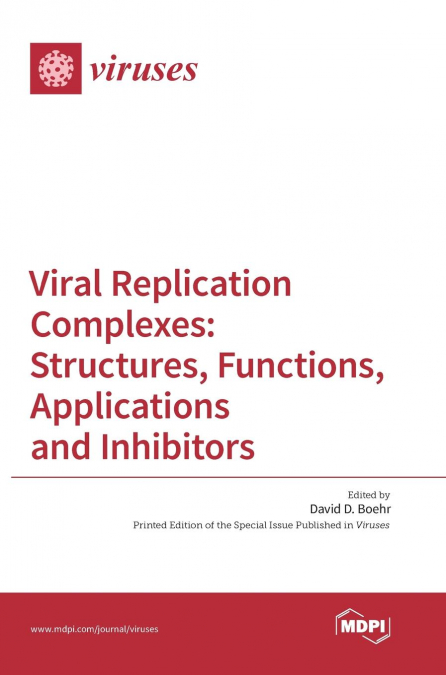
  • Viral Replication Complexes
    Viruses are obligate intracellular parasites that need to co-opt a living cell’s machinery for replication. At the heart of the viral replication machinery are the nucleic acid polymerases, which are responsible for efficiently copying the viral genome. This process must often be coordinated with other viral processes, including protein translation and viral packaging. The poly...
  • Advances in Flavivirus Research
    The flaviviruses are composed almost entirely of arthropod-borne viruses, a subset of which are responsible for millions of cases of human disease each year. Among these viruses are dengue virus—a scourge throughout the tropical regions of Asia and the Americas; yellow fever virus—the “original” hemorrhagic fever virus; and the recently emerged Zika virus. While the flaviviruse...
    Disponible

    51,85 €

  • Brain Asymmetry of Structure and/or Function
    Lesley J. Rogers / Lesley JRogers
    This edited book brings together research reports on the asymmetry of brain function in various species, including humans, dogs, birds, lizards and bees. As shown in a wide range of species, and, as we now know, not solely in humans, the left and right sides of the brain process information in different ways and control different responses or patterns of behaviour. Since this d...
    Disponible

    51,71 €

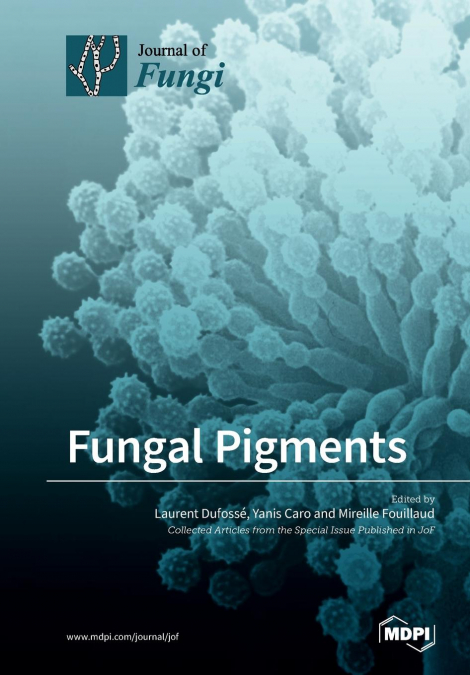
  • Fungal Pigments
    With the impact of globalization in research trends, the search for healthier life styles, the increasing public demand for natural, organic, and ‘clean labelled’ products, as well as the growing global market for natural colorants in economically fast-growing countries all over the world, filamentous fungi started to be investigated as readily available sources of chemically d...
    Disponible

    43,80 €

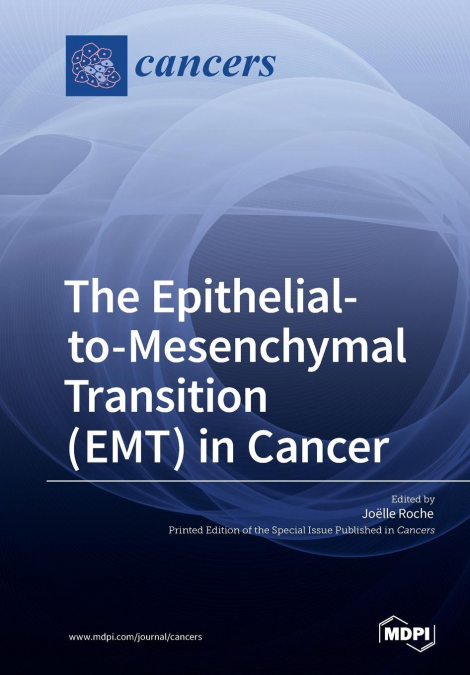
  • The Epithelialto- Mesenchymal Transition ( EMT ) in Cancer
    Joëlle Roche
    The epithelial-to-mesenchymal transition (EMT) is a highly dynamic process with multiple transitional states, by which epithelial cells can convert into a mesenchymal phenotype. This process involves loss of cellular adhesion and cellular polarity, and an improvement in migratory and invasive properties. It occurs during normal embryonic development, tissue regeneration, organ ...
    Disponible

    67,86 €

  • The Biology and Treatment of Myeloid Leukaemias
    There has been an observed decrease in the global mortality from cancer, mostly atributable to improved, particularly early, detection and prevention. For many carcinomas and leukaemias in adults, once the disease has reached a certain stage there are no therapies that are able to erradicate the cancer cells and cure patients. There has been progress in the treatment of acute m...
    Disponible

    51,85 €