 Librería Samer Atenea
 Kálamo Books
 Librería Elías (Asturias)
 Librería Kolima (Madrid)
 Librería Proteo (Málaga)
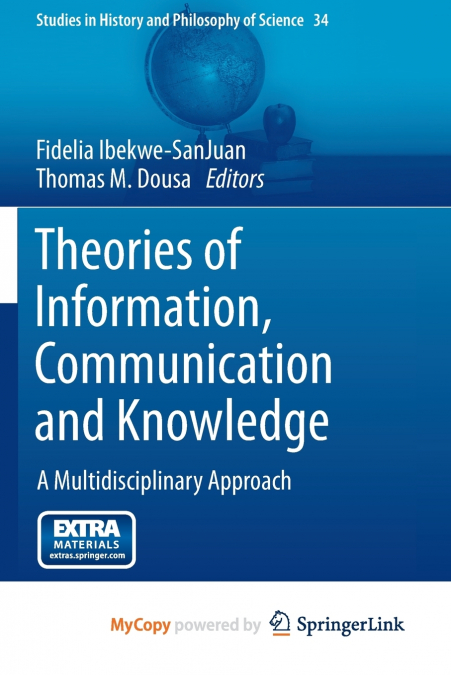
This book addresses some of the key questions that scientists have been asking themselves for centuries: what is knowledge? What is information? How do we know that we know something? How do we construct meaning from the perceptions of things? Although no consensus exists on a common definition of the concepts of information and communication, few can reject the hypothesis that information - whether perceived as object or as process - is a pre-condition for knowledge. Epistemology is the study of how we know things (anglophone meaning) or the study of how scientific knowledge is arrived at and validated (francophone conception). To adopt an epistemological stance is to commit oneself to render an account of what constitutes knowledge or in procedural terms, to render an account of when one can claim to know something. An epistemological theory imposes constraints on the interpretation of human cognitive interaction with the world. It goes without saying that different epistemological theories will have more or less restrictive criteria to distinguish what constitutes knowledge from what is not. If information is a pre-condition for knowledge acquisition, giving an account of how knowledge is acquired should impact our comprehension of information and communication as concepts. While a lot has been written on the definition of these concepts, less research has attempted to establish explicit links between differing theoretical conceptions of these concepts and the underlying epistemological stances. This is what this volume attempts to do. It offers a multidisciplinary exploration of information and communication as perceived in different disciplines and how those perceptions affect theories of knowledge.