
Theorie der Außenwirtschaftspolitik

Theorie der Außenwirtschaftspolitik

Helga Luckenbach

83,66 €
IVA incluido
Disponible
Editorial:
Springer Nature B.V.
Año de edición:
1979
Materia
Economía internacional
ISBN:
9783540091905
83,66 €
IVA incluido
Disponible

Selecciona una librería:

  • Librería Samer Atenea
  • Librería Aciertas (Toledo)
  • Kálamo Books
  • Librería Perelló (Valencia)
  • Librería Elías (Asturias)
  • Donde los libros
  • Librería Kolima (Madrid)
  • Librería Proteo (Málaga)

Theoretische Grundlagen der AuBenwirtschaftspolitik H. Luckenbach o. Erkenntnisobjekt und Systematik der Theorie der AuBenwirtschaftspolitik Die AuBenwirtschaftspolitik ist ein Teilgebiet der Wirtschaftspolitik. Entsprechend ist auch die Theorie der AuBenwirtschaftspolitik ein Teil­ gebiet der Theorie der Wirtschaftspolitik. Erkenntnisobjekt und Syste­ matik der Theorie der AuBenwirtschaftspolitik lassen sich deshalb am leichtesten erlautern, wenn man sich zunachst den Gegenstand der Wirt­ schaftspolitik vergegenwartigt. (1) Zur Wirtschaftspolitik zahlt man aIle MaBnahmen des Staates sowie internationaler und supranationaler offentlicher Institutionen, die mit der Absicht ergriffen werden, den jeweils relevanten wirtschafts­ politischen Zielkatalog durch ordnungs-, prozeB- oder strukturpolitische 1 Eingriffe in das okonomische Geschehen zu realisieren. ) Dabei wird der jeweils relevante Zielkatalog von politischen Entscheidungsgremien auf­ grund von Werturteilen aus der Gesamtheit aller denkbaren Zielkataloge ausgewahlt. Will man sich mit wirtschaftspolitischen Problemen vertraut machen, dann kann man alternative Schwerpunkte setzen. Zum einen ist es moglich, konkrete wirtschaftspolitische EinzelmaBnahmen und ihre institutio­ nellen Voraussetzungen in den Mittelpunkt des Interesses zu rlicken, d. h. man kann sich den Fragen der angewandten wirtschaftspolitik zu­ wenden. Zum anderen kann man sich jedoch auch auf die theoretischen 2 Grundlagen der Wirtschaftspolitik konzentrieren. ) (2) Es ist Ublich, zwei groBe Teilbereiche der wirtschaftspolitik von­ einander zu unterscheiden: die Binnenwirtschaftspolitik und die AuBen­ wirtschaftspolitik. Will man beide Teilbereiche gegeneinander abgrenzen, dann ist es zweckmaBig, auf die Ziele der Wirtschaftspolitik zurlickzu- 2 greifen.


Artículos relacionados

  • Regional Economic Integration and the Global Financial System
    Engin Sorhun / Hasan Dinçer / Unit Hacioglu
    In theory, regionalism and globalization are intended to be viewed as two separate concepts. However, as long as the approaches complement each other, considering these paradigms in tandem can have significantly positive effects on the overall status of the world economy. Regional Economic Integration and the Global Financial System addresses recent trends in regional integrati...
  • Handbook of Research on Impacts of International Business and Political Affairs on the Global Economy
    The growth of global commerce depends on many different factors and strategies in order for multinational corporations to efficiently compete and thrive in the international marketplace. In addition to business strategies, corporations must also be aware of political affairs that may impact their global economic status. The Handbook of Research on Impacts of International Busin...
  • NEXT CONVERGENCE
    MICHAEL SPENCE
    ...
    Disponible

    17,21 €

  • Interest and Prices
    Michael Woodford
    With the collapse of the Bretton Woods system, any pretense of a connection of the world’s currencies to any real commodity has been abandoned. Yet since the 1980s, most central banks have abandoned money-growth targets as practical guidelines for monetary policy as well. How then can pure 'fiat' currencies be managed so as to create confidence in the stability of national unit...
  • War, Wine, and Taxes
    John V.C. Nye
    In War, Wine, and Taxes, John Nye debunks the myth that Britain was a free-trade nation during and after the industrial revolution, by revealing how the British used tariffs-notably on French wine-as a mercantilist tool to politically weaken France and to respond to pressure from local brewers and others. The book reveals that Britain did not transform smoothly from a mercantil...
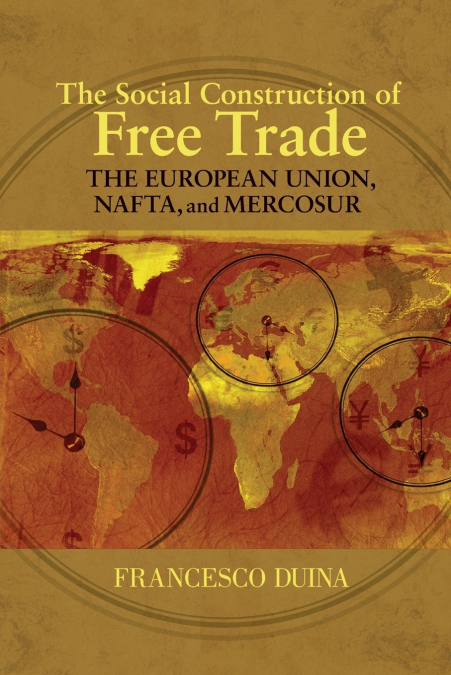
  • The Social Construction of Free Trade
    Francesco Duina
    This book offers a compelling new interpretation of the proliferation of regional trade agreements (RTAs) at the end of the twentieth century. Challenging the widespread assumption that RTAs should be seen as fundamentally similar economic initiatives to pursue free trade, Francesco Duina proposes that the world is reorganizing itself into regions that are highly distinctive an...
    Disponible

    54,25 €