 Librería Samer Atenea
 Kálamo Books
 Librería Elías (Asturias)
 Librería Kolima (Madrid)
 Librería Proteo (Málaga)
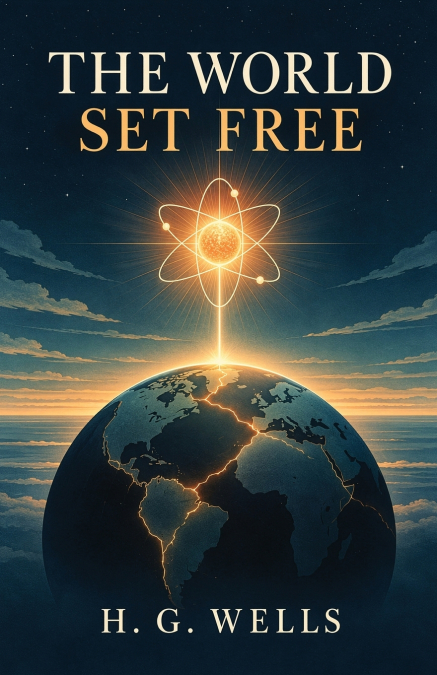
What happens when humanity discovers a source of energy so powerful that old forms of warfare become impossible to contain? In The World Set Free, H. G. Wells imagines atomic power transforming civilization-and then nearly destroying it.Wells begins with the long human search for energy and moves into a future in which scientists learn to release power from the atom. The discovery reshapes industry, transportation, and military strategy, but political institutions remain dangerously attached to nationalism and war.The result is a global conflict fought with atomic bombs. Wells’s weapons differ from later nuclear bombs in important technical ways, but his imaginative leap is extraordinary: cities become uninhabitable, radioactive destruction continues beyond the moment of explosion, and warfare reaches a scale that makes the old international order unsustainable.Yet the novel does not end with catastrophe. Its central political argument is that technologies capable of destroying civilization require institutions capable of governing beyond the nation-state. Out of devastation comes an attempt to create a world government and reorganize political life around cooperation rather than recurring national rivalry.Written in 1913 and published in 1914, The World Set Free reflects Wells’s fascination with radioactivity and his belief that scientific change could force political transformation. The book acknowledges the influence of Frederick Soddy’s work on radium. Part scientific romance, part future-war narrative, and part political speculation, it explores atomic energy, global conflict, technological disruption, and the possibility that survival may require humanity to rethink the scale at which it governs itself.