 Librería Samer Atenea
 Kálamo Books
 Librería Elías (Asturias)
 Librería Kolima (Madrid)
 Librería Proteo (Málaga)
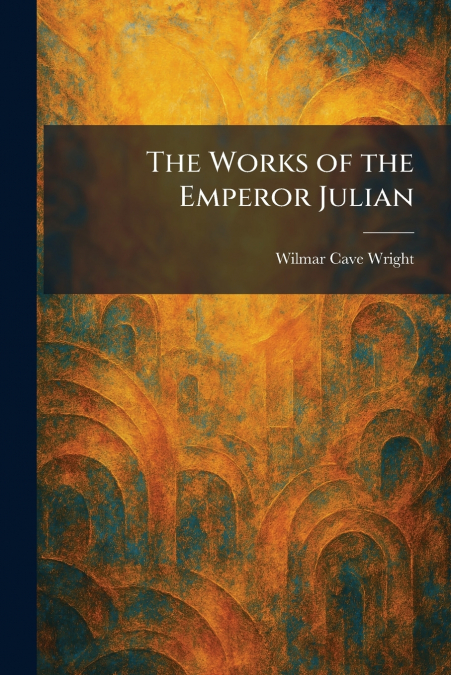
'The Works of the Emperor Julian' is an essential collection of writings from one of the most intriguing figures of late antiquity. As the last non-Christian ruler of the Roman Empire, Julian-often called ’the Apostate’-left behind a significant literary corpus that serves as a testament to his devotion to Hellenism and classical philosophy. This volume brings together his diverse output, including formal orations, philosophical essays, satires, and private letters that illuminate both the public policies and personal convictions of a philosopher-emperor.Through pieces such as his hymns to the gods and his sharp-witted satires, Julian articulates a vision of a world where traditional religious practices and Neoplatonic thought provide the foundation for imperial governance. His correspondence offers a rare, behind-the-scenes look at the administrative and religious challenges of the fourth century, while his polemical works reflect the intense intellectual debates between paganism and the rising tide of Christianity. 'The Works of the Emperor Julian' provides an invaluable primary perspective on a pivotal era in Western history, capturing the voice of a man who stood at the crossroads of two eras, attempting to steer the Roman world back to its ancestral roots. The collection remains a vital resource for understanding the complexities of Roman leadership and the enduring influence of classical Greek thought.This work has been selected by scholars as being culturally important, and is part of the knowledge base of civilization as we know it. This work was reproduced from the original artifact, and remains as true to the original work as possible. Therefore, you may see the original copyright references, library stamps (as most of these works have been housed in our most important libraries around the world), and other notations in the work.This work is in the public domain in the United States of America, and possibly other nations. Within the United States, you may freely copy and distribute this work, as no entity (individual or corporate) has a copyright on the body of the work.As a reproduction of a historical artifact, this work may contain missing or blurred pages, poor pictures, errant marks, etc. Scholars believe, and we concur, that this work is important enough to be preserved, reproduced, and made generally available to the public. We appreciate your support of the preservation process, and thank you for being an important part of keeping this knowledge alive and relevant.