Inicio > Sociedad y ciencias sociales > Educación pedagogía > The Use of Artificial Intelligence for Improving Grammatical Accuracy Among B2 English Learners
The Use of Artificial Intelligence for  Improving Grammatical Accuracy  Among B2 English Learners

The Use of Artificial Intelligence for Improving Grammatical Accuracy Among B2 English Learners

Denis Armijos / Jhimi Vivanco / Mayra Armijos

45,27 €
IVA incluido
Disponible
Editorial:
Eliva Press
Año de edición:
2026
Materia
Educación pedagogía
ISBN:
9789999344661
45,27 €
IVA incluido
Disponible

Selecciona una librería:

  • Librería Samer Atenea
  • Kálamo Books
  • Librería Elías (Asturias)
  • Librería Kolima (Madrid)
  • Librería Proteo (Málaga)

The incorporation of Artificial Intelligence (AI) into second language writing instruction has introduced a dynamic paradigm where automated, instantaneous feedback serves as an interactive scaffolding mechanism. By targeting intermediate (CEFR B2) English learners, this research explores how digital corrective tools intervene during the drafting process to disrupt error fossilization and enhance syntactic precision. Rather than relying solely on traditional, delayed evaluations, the intervention allows students to engage in real-time hypothesis testing across complex linguistic structures. The empirical core of the study monitors shifts in five distinct grammatical dimensions-ranging from morphological agreement to structural punctuation-while simultaneously assessing the cognitive and emotional impact of this automated interaction on the student’s writing experience. The outcomes reveal a dual advancement in both measurable linguistic performance and student self-regulation. Quantitatively, the post-intervention metrics show a clear upward trajectory in grammatical accuracy, demonstrating that targeted automated corrections successfully guide learners toward more precise sentence construction. Qualitatively, the data reflect a significant shift toward learner autonomy, as the immediate nature of the feedback removes conventional classroom anxieties and encourages independent revision habits. Although the scope of the study is constrained by its limited duration and small cohort, the findings provide a strong foundation for integrating hybrid teaching models. This sets the stage for future longitudinal studies to explore the long-term effects of AI on sustainable language development.

Artículos relacionados

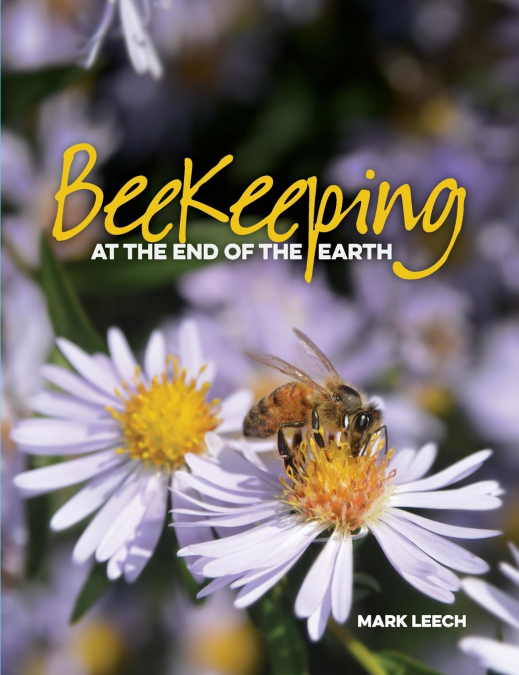
  • Beekeeping At The End Of The Earth
    Mark David Leech
    Beekeeping at the End of the Earth, an essential read for learning about beekeeping in a cool temperate climate with a focus on Tasmania our island home.  One hundred beekeepers one hundred different ways to keep bees.Beekeeping At The End Of The Earth is a practical insight into cool climate beekeeping with a focus on Tasmania, our island home.Richly illustrated with unique di...
    Disponible

    45,16 €

  • Be the One for Kids
    Ryan Sheehy
    One person can make a difference.That person can be you. “I want to show others that one person can make the difference in a child’s life. I want all educators, parents, coaches, and everyone in between to know they have power to Be the One for Kids.” —Ryan Sheehy If you ever feel like you’re all alone or think that no one gets you, just imagine how your students feel. Kids wan...
    Disponible

    27,99 €

  • Handbook of Research on E-Learning Standards and Interoperability
    As the e-learning industry continues to expand and the methods and tools necessary to create and maintain content and infrastructure applications become more complicated, there is an inherent need for these applications to interoperate and exchange data in order to better support the needs of learners and educators. Handbook of Research on E-Learning Standards and Interoperabil...
  • Teaching in the Knowledge Society
    Antonio Cartelli
    ...
  • Enhancing Learning Through Human Computer Interaction
    Elspeth McKay
    ...
  • Learning Objects for Instruction
    Pamela Taylor Northrup
    ...