Inicio > Humanidades > Historia > Historia: acontecimientos y temas específicos > Historia social y cultural > The Un-Polish Poland, 1989 and the Illusion of Regained Historical Continuity
The Un-Polish Poland, 1989 and the Illusion of Regained Historical Continuity

The Un-Polish Poland, 1989 and the Illusion of Regained Historical Continuity

Tomasz Kamusella

72,72 €
IVA incluido
Consulta disponibilidad
Editorial:
Springer Nature B.V.
Año de edición:
2017
Materia
Historia social y cultural
ISBN:
9783319600352

Selecciona una librería:

  • Librería Samer Atenea
  • Librería Aciertas (Toledo)
  • Kálamo Books
  • Librería Perelló (Valencia)
  • Librería Elías (Asturias)
  • Donde los libros
  • Librería Kolima (Madrid)
  • Librería Proteo (Málaga)

This book discusses historical continuities and discontinuities between the Polish-Lithuanian Commonwealth, interwar Poland, the Polish People’s Republic, and contemporary Poland. The year 1989 is seen as a clear point-break that allowed the Poles and their country to regain a ’natural historical continuity’ with the ’Second Republic,’ as interwar Poland is commonly referred to in the current Polish national master narrative. In this pattern of thinking about the past, Poland-Lithuania (nowadays roughly coterminous with Belarus, Latvia, Lithuania, Poland, Russia’s Kaliningrad Region and Ukraine) is seen as the ’First Republic.’ However, in spite of this ’politics of memory’ (Geschichtspolitik) - regarding its borders, institutions, law, language, or ethnic and social makeup - present-day Poland, in reality, is the direct successor to and the continuation of communist Poland. Ironically, today’s Poland is very different, in all the aforementioned aspects, from the First and Second Republics. Hence, contemporary Poland is quite un-Polish, indeed, from the perspective of Polishness defined as a historical (that is, legal, social, cultural, ethnic and political) continuity of Poland-Lithuania and interwar Poland.
Artículos relacionados

  • Arizal
    Raphael Afilalo
    The Ari overflowed with Torah. He was expert in Scripture, Mishnah, Talmud, Midrash, Maaseh Bereishit and Maaseh Merkavah. About all the different levels of prophecy, their details and from which level the prophets had their revelations.  He understood the whistling of the trees, the grass and stones, the language of the birds and other animals, the conversations of angels, the...
  • Rose-tinted Memory
    Michael S Fryer
    “Those who deny Auschwitz would be ready to remake it”.  ~ Primo Levi, Holocaust survivor and author Seventy years after the mass murder of the Jews of Europe, Holocaust denial and Holocaust revisionism are creeping into our overall perception of what actually happened.Christendom has not ‘denied’ Holocaust, but it has attempted to create a memory of Holocaust which suggests th...
    Disponible

    8,84 €

  • Pan Kapitan of Jordanow
    William Leibner
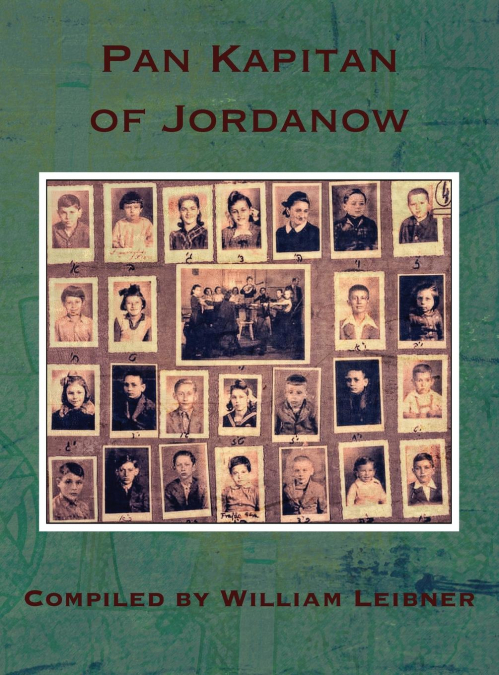
    Yeshayahu Drucker devoted a good part of his life to rescuing Jewish children from non-Jewish homes. Many parents had given their children to Polish neighbors for safekeeping during the war. Unfortunately most of the parents did not survive the Shoah. At the end of the war, there was no one to claim the children and they remained with the “adopted” Polish families. Following hi...
  • Holy Dissent
    Glenn Dynner
    BThe religious communities of early modern Eastern Europe—particularly those with a mystical bent—are typically studied in isolation. Yet the heavy Slavic imprint on Jewish popular mysticism and pervasive Judaizing tendencies among Christian dissenters call into question the presumed binary quality of Jewish-Christian interactions. In Holy Dissent: Jewish and Christian Mystics ...
  • AL-FARD
    Ali Mahdi Muhammad
    The Al-Fard, or the The Dawn, has captured the early rays of Our history. This history is essential if we are to be brought face to face with the One true and living God of the universe. The purpose of this writing is to bring the reader step by step, one degree at a time to the reality of God in person. The teachings of Our Father elevates the believer to the level of Godhood ...
  • Wild Things. Nature and the Social Imagination
    HISTORIES OF HUMAN CONSTRUCTIONS OF NATUREWild Things: Nature and the Social Imagination assembles eleven substantive and original essays on the cultural and social dimensions of environmental history. They address a global cornucopia of social and ecological systems, from Africa to Europe, North America and the Caribbean, and their temporal range extends from the 1830s into th...

Otros libros del autor

  • Politics and the Slavic Languages
    Tomasz Kamusella
    Through the story of Slavic languages, this timely book illustrates that decisions on what counts as a language are neither permanent nor stable, arguing that the politics of language equates politics in central Europe. The monograph will prove to be an essential resource for scholars of linguistics and politics in Central Europe. ...
    Disponible

    76,82 €

  • Politics and the Slavic Languages
    Tomasz Kamusella
    Through the story of Slavic languages, this timely book illustrates that decisions on what counts as a language are neither permanent nor stable, arguing that the politics of language equates politics in central Europe. The monograph will prove to be an essential resource for scholars of linguistics and politics in Central Europe. ...
  • Ethnic Cleansing During the Cold War
    Tomasz Kamusella
    In 1989 the Bulgarian communist regime expelled 360,000 Turks and Muslims to Turkey. It was the single largest ethnic cleansing during the Cold War period in Europe after the winding up the post war ’population transfers’ of mainly ethnic Germans in the early 1950s. This expulsion of Turks and Muslims from Bulgaria was the sole mass expulsion that ever breached the Iron Curtain...
  • Creating Languages in Central Europe During the Last Millennium
    Tomasz Kamusella
    After 1918 Central Europe’s multiethnic empires were replaced by nation-states, which gave rise to an unusual ethnolinguistic kind of nationalism. This book provides a detailed history and linguistic analysis of how the many languages of Central Europe have developed from the 10th century to the present day. ...
  • The Politics of Language and Nationalism in Central Europe
    Tomasz Kamusella
    This interdisciplinary work focuses on the ideological intertwining between Czech, Magyar, Polish, and Slovak, and the corresponding nationalisms steeped in these languages. This politicized symbiotic bonding arose and developed during the last two centuries. The analysis is presented against the background of the earlier political and ideological history of these languages, an...
  • Silesia and Central European Nationalisms
    Tomasz Kamusella
    This book analyzes the problems of nation building in the Central European region of Silesia in 1848 to 1918. The German ethnic model of nation building steeped in language and culture had been replicated in the case of Polish and Czech nationalisms. Silesia became a focal point as an area that was sought after by all three nations. ...
    Disponible

    56,56 €