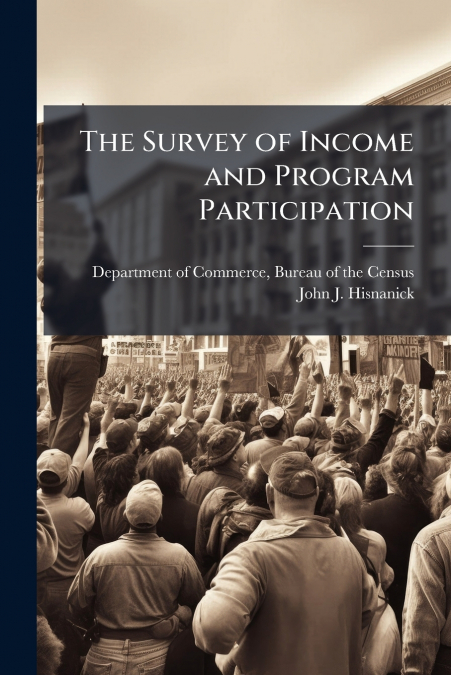
John J. Hisnanick / Bureau of the Ce Department of Commerce
 Librería Samer Atenea
 Kálamo Books
 Librería Elías (Asturias)
 Librería Kolima (Madrid)
 Librería Proteo (Málaga)
Are those in poverty likely to remain there or can they move out of this situation withouthelp from other sources? Our understanding of those in or near poverty is primarily based uponthe analysis of either annual income or the income distribution from cross-sectional survey data.It has been argued in the literature that using this type of data can be misleading when faced withquestions pertaining to transitions in and out of poverty. Studying the persistence of povertyshould focus on those characteristics of individuals and their families, in conjunction with labormarket situations, in order to provide an insight into why the situation continues.Using the Survey of Income and Program Participation (SIPP) 1996 panel, it was possibleto investigate low-income dynamics and model family incomes for the years 1996-1999. Thispaper provides a descriptive analysis that evaluates the low-income dynamics for families, theirexit and re-entry rates into low-income, as well as investigating family income and povertyoutcomes based upon a components-of-variance model that identifies permanent and transitoryfactors and provides insight into low-income dynamics.This work has been selected by scholars as being culturally important, and is part of the knowledge base of civilization as we know it. This work was reproduced from the original artifact, and remains as true to the original work as possible. Therefore, you will see the original copyright references, library stamps (as most of these works have been housed in our most important libraries around the world), and other notations in the work.This work is in the public domain in the United States of America, and possibly other nations. Within the United States, you may freely copy and distribute this work, as no entity (individual or corporate) has a copyright on the body of the work.As a reproduction of a historical artifact, this work may contain missing or blurred pages, poor pictures, errant marks, etc. Scholars believe, and we concur, that this work is important enough to be preserved, reproduced, and made generally available to the public. We appreciate your support of the preservation process, and thank you for being an important part of keeping this knowledge alive and relevant.