
Inicio > Humanidades > Religión y creencias > Cristianismo > Iglesias y confesiones cristianas > The Rise of Canonical Collections Before and in the Time of Gratian
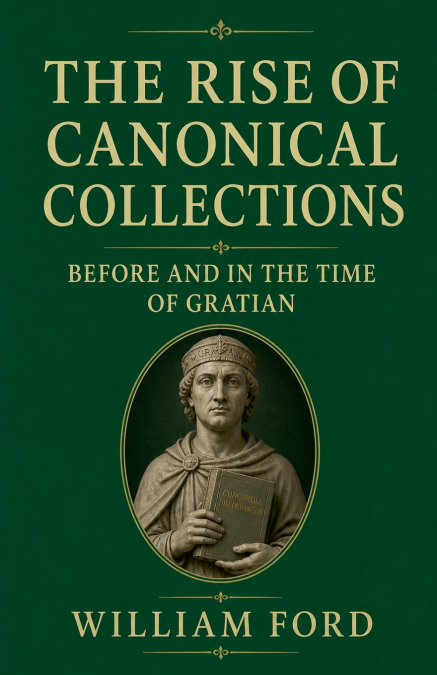
The Rise of Canonical Collections Before and in the Time of Gratian

The Rise of Canonical Collections Before and in the Time of Gratian

William Ford

21,13 €
IVA incluido
Disponible
Editorial:
Colloquium
Año de edición:
2026
Materia
Iglesias y confesiones cristianas
ISBN:
9798235013711
21,13 €
IVA incluido
Disponible

Selecciona una librería:

  • Librería Samer Atenea

  • Kálamo Books
  • Librería Elías (Asturias)
  • Librería Kolima (Madrid)
  • Librería Proteo (Málaga)

The history of canon law begins long before anyone called it 'canon law.' It begins in the lived experience of Christian communities struggling to articulate norms, resolve disputes, and preserve unity across vast distances and diverse cultures. From the earliest centuries, the Church possessed rules, customs, and authoritative voices, yet it lacked a single, coherent legal system. Instead, it inherited a mosaic of texts-conciliar decrees, papal letters, penitential prescriptions, monastic rules, and local traditions-each carrying its own authority, each shaped by the needs of its particular context. The emergence of canonical collections was not an abstract intellectual exercise but a practical response to the Church’s need to organize, interpret, and apply this growing body of normative material. The story of these collections is therefore the story of how the Church learned to think legally, to arrange its sources, and ultimately to conceive of itself as governed by a rational and unified legal order.This book explores that story from its earliest beginnings to the decisive moment represented by Gratian in the twelfth century. Gratian’s Decretum is often treated as the birth of canon law as a discipline, and in many ways this is justified. His work introduced a new method, a new structure, and a new intellectual ambition. Yet Gratian did not emerge from a vacuum. His achievement presupposed centuries of experimentation, compilation, and reflection. Before Gratian, there were countless attempts to gather, arrange, and reconcile the Church’s normative texts. Some were modest and local; others were ambitious and wide‑ranging. Some sought to preserve tradition; others sought to reshape it. All contributed to the gradual emergence of a legal consciousness within the Church. To understand Gratian, one must understand the world that produced him, and to understand that world, one must trace the rise of canonical collections.


Artículos relacionados

  • For the Love of Hymns
    Belliston Rebecca
    Intermediate to Advanced piano solo arrangements of beloved LDS hymns including:  How Great Thou Art Abide With Me 'Tis Eventide Oh, How Lovely Was the Morning Jesus, the Very Thought of Thee A Poor Wayfaring Man of Grief Nearer, Dear Savior, to Thee My Country; 'Tis of Thee Perfect for church services, firesides, or home enjoyment. ...
    Disponible

    9,20 €

  • Expressing a Nazarene Identity
    Floyd T. Cunningham / Floyd TCunningham
    This book focuses on how the Church of the Nazarene has perceived its mission and purpose in the world from beginning days to the present. The book describes the particular reason-to-be of the church and its distinctive character, particularly in relation to its organisational structure, educational philosophy, and missions. It explains some of the ways in which the church has ...
    Disponible

    7,24 €

  • Rest in Green Pastures
    Jay Lockhart / Jerrie Barber
    The role of elder is arguably the church's most thankless job. From putting out fires and dealing with disgruntled members to teaching new Christians and encouraging the weak, all while being a model disciple, an elder's role can seem exhausting and unrelenting. To survive, elders need a place of spiritual solitude and relief where they can draw closer to the Chief Shep...
    Disponible

    14,48 €

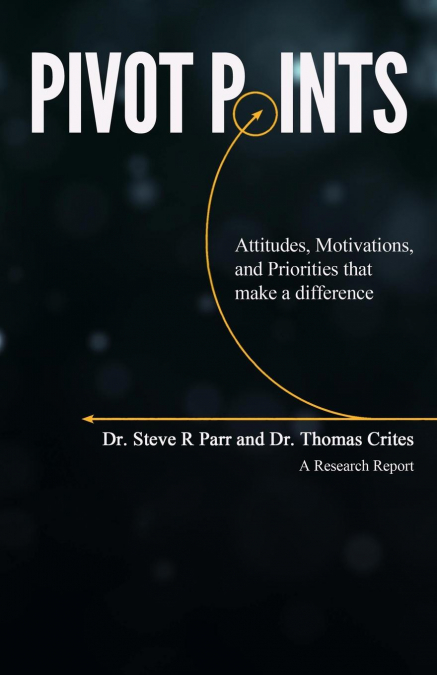
  • PIVOT POINTS
    Dr. Steve R. Parr / Dr. Thomas Crites / DrSteve RParr / DrThomas Crites
    PIVOT POINTS: Attitudes, Motivations, and Priorities That Make a Difference.   Learn how to lead your church in:  Spiritual Renewal, Kingdom Generosity, Church Revitalization, Church Planting, and Authentic Evangelism.Here is a powerfully-insightful  comparative study of several hundred churches that  identifies key differences between churches that are thriving and churches th...
    Disponible

    11,04 €

  • HEARTcore
    Antar Muhammad
    Leadership and servitude can be both rewarding and fulfilling. Both can be quite demanding of you, emotionally, mentally and sometimes physically; however, the thing that is required to be effective at either is HEART! In this book, you will be able to take what is in your HEART and cultivate it to become more effective in your service and leadership role. Neither longevity nor...
    Disponible

    11,94 €

  • Clergy, Culture and Ministry
    Ian Tomlinson
    All too often Church leaders may want to work cooperatively with others, and yet find themselves frustrated. Clergy, Culture and Ministry considers the difficulties and challenges faced by any incumbent wishing to interpret and understand what is going on in their congregation and parish, and why it might be happening.Engaging with the work of Wesley Carr, Ian Tomlinson brings ...

Otros libros del autor

  • History of Textual Criticism and Translation Studies of Medieval Sources
    William Ford
    The history of textual criticism and translation studies is inseparable from the history of humanity’s engagement with its written past. Every civilization that has sought to preserve, interpret, transmit, and understand inherited texts has, whether consciously or unconsciously, confronted the problems that stand at the center of these two disciplines. Medieval sources occupy a...
    Disponible

    20,89 €

  • Medieval Universities and Biblical Scholarship
    William Ford
    Few institutions have exercised a more profound influence on the intellectual history of Europe than the medieval university, and few texts have occupied a more central place within that institution than the Bible. From the emergence of the first universities in the late eleventh and twelfth centuries to the transformations that reshaped learning at the close of the Middle Ages...
    Disponible

    20,99 €

  • Bonaventure and the Franciscan Vision of Scripture
    William Ford
    Among the great theological minds of the Middle Ages, Bonaventure of Bagnoregio occupies a distinctive and enduring place. Renowned as a philosopher, theologian, mystic, preacher, ecclesiastical leader, and Minister General of the Franciscan Order, he has often been remembered for his synthesis of intellectual rigor and spiritual depth. Yet beneath the many dimensions of his th...
    Disponible

    20,94 €

  • Apocalyptic Preaching and the Political Imagination in the Middle Ages
    William Ford
    Few themes exercised a more profound influence upon the medieval imagination than the expectation of the end of history. Throughout the Middle Ages, men and women interpreted wars, epidemics, famines, dynastic conflicts, ecclesiastical controversies, and natural disasters through narrative frameworks drawn from sacred scripture. The language of apocalypse was not confined to mo...
    Disponible

    23,25 €

  • Augustine, History, and the Eschatological Politics
    William Ford
    Few figures in the history of Christian thought have exercised a more enduring influence on the understanding of history, politics, and the destiny of human societies than Augustine of Hippo. Writing during the final decades of Roman imperial predominance in the West and amid the profound uncertainties that accompanied the transformation of the ancient world, Augustine confront...
    Disponible

    23,34 €

  • Scholastic and University Preaching in the Middle Ages
    William Ford
    Among the many institutions that shaped medieval European civilization, none exercised a more profound influence upon the formation of religious thought and intellectual culture than the schools and universities that emerged between the twelfth and fourteenth centuries. At the same time, few instruments proved more effective in disseminating ideas, doctrines, values, and theolo...
    Disponible

    20,99 €