 Librería Samer Atenea
 Kálamo Books
 Librería Elías (Asturias)
 Librería Kolima (Madrid)
 Librería Proteo (Málaga)
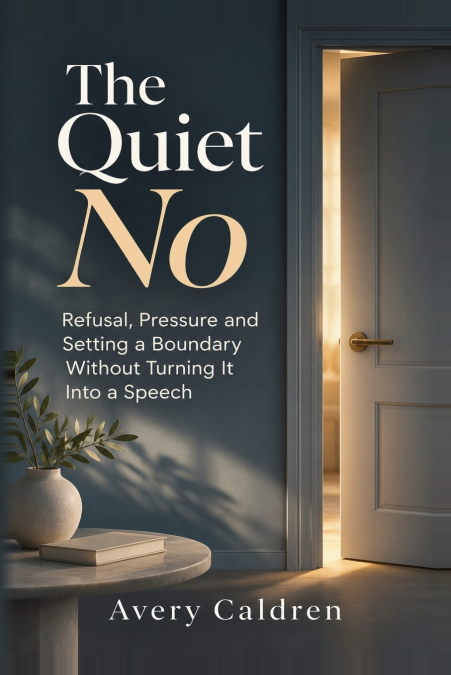
Why does saying no sometimes require more effort than the thing we are being asked to do? An unwanted invitation becomes a lengthy explanation. A simple favour becomes an obligation. A private decision becomes a negotiation, and an ordinary refusal leaves us feeling guilty long after the conversation has ended. The Quiet No explores the psychology of refusal and the invisible pressures that make people agree to things they would rather decline. From family expectations and demanding friendships to workplace hierarchies, financial requests and digital availability, Avery Caldren examines why personal boundaries can feel so difficult to establish and maintain. Through relatable everyday situations and psychologically informed insights, this book explores how to: Decline requests without excessive explanation or apology. Distinguish genuine responsibility from unnecessary obligation. Manage guilt without automatically reversing a decision. Respond to persistence, persuasion and disappointment. Protect personal time, privacy and financial resources. Maintain meaningful relationships without becoming permanently available. Recognise when ordinary interpersonal pressure becomes coercive or unsafe. Rather than encouraging confrontation, rigid independence or emotional detachment, The Quiet No presents a balanced approach to personal boundaries that preserves kindness, accountability and genuine generosity. It is not about saying no to everything. It is about recovering the freedom to decide when your answer should be yes, when it should be no, and when no further explanation is necessary. Because an answer is still an answer, even when someone would have preferred a different one. Disclaimer: This book is intended for educational and informational purposes only and does not constitute psychological, medical, legal or professional advice. The examples are illustrative and are not intended to diagnose individuals or relationships. Readers experiencing abuse, coercion, significant emotional distress or unsafe circumstances should seek appropriate professional or specialist support.