 Librería Samer Atenea
 Kálamo Books
 Librería Elías (Asturias)
 Librería Kolima (Madrid)
 Librería Proteo (Málaga)
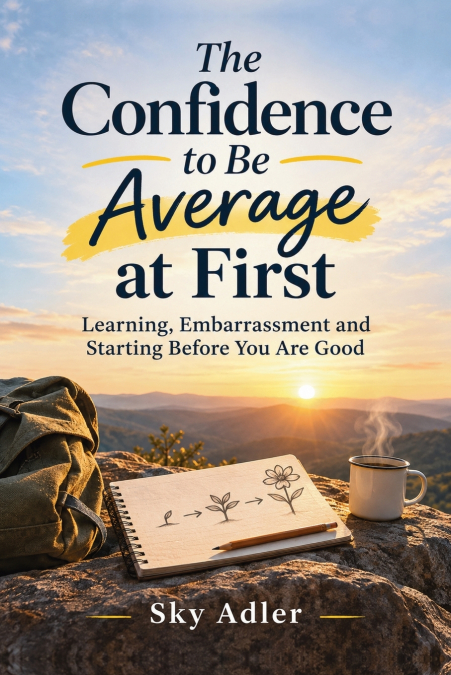
Why does being temporarily bad at something sometimes feel more threatening than never learning it at all? We admire people who speak another language, play an instrument, create beautiful things or perform unfamiliar skills with effortless confidence. Yet when we consider learning those same abilities, the prospect of embarrassment, mistakes and disappointing results can keep us from beginning. The Confidence to Be Average at First explores the psychological barriers that make learning as an adult unnecessarily difficult. From perfectionism and social comparison to established identities, unrealistic expectations and the fear of asking elementary questions, Avery Caldren examines why we struggle to accept the very experiences through which competence develops. Drawing on psychological research and recognisable everyday situations, this thoughtful and practical book offers a realistic approach to starting before you feel ready, receiving feedback without feeling inadequate, returning after interruptions and recognising progress when improvement becomes difficult to see. It also challenges the assumption that every worthwhile pursuit must lead to excellence. You can learn something simply because it interests you. You can become good enough to enjoy it without turning it into a competition, a business or a public demonstration of achievement. You do not need exceptional talent to begin. You do not need extraordinary results to justify continuing. You need the freedom to be inexperienced without treating inexperience as a personal failure. Because the life you want may contain abilities you have not yet allowed yourself to learn. Disclaimer: This book is intended for informational, educational and personal development purposes only. It is not a substitute for professional psychological, medical or educational advice. Individual learning experiences, abilities and circumstances vary, and no particular outcome is guaranteed. Readers should seek appropriate professional guidance where necessary. The illustrative situations presented throughout this book are fictional or composite examples created to explain general psychological and educational principles.