 Librería Samer Atenea
 Kálamo Books
 Librería Elías (Asturias)
 Librería Kolima (Madrid)
 Librería Proteo (Málaga)
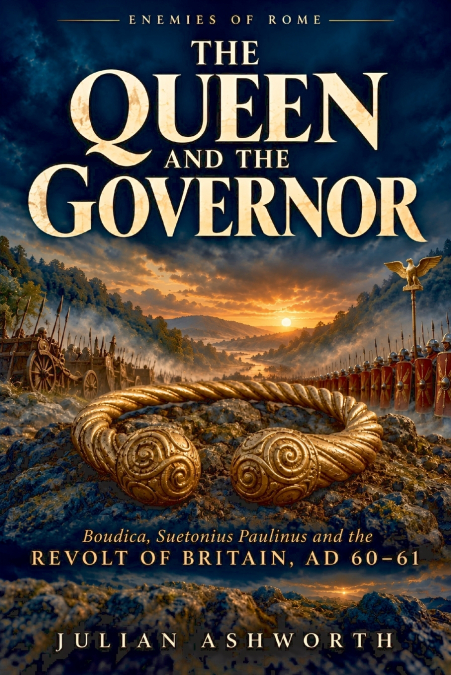
In AD 60 Prasutagus, king of the Iceni, died and left his kingdom to his two daughters and to the emperor. Rome took all of it. His widow was flogged and his daughters were violated. The widow was Boudica, and before long the province of Britain was close to lost.The Iceni rose, and the Trinovantes joined them. Camulodunum (Colchester) was destroyed. It was the colony of discharged Roman veterans, and it held the temple of the deified Claudius. Londinium burned, then Verulamium. The governor, Gaius Suetonius Paulinus, was far to the west with his army, fighting on the island of Mona.Paulinus came back down the great road with the men he could gather, about ten thousand. He gave up Londinium to save the province. Then he chose his ground and waited for a host that every Roman account makes far larger than his own.Julian Ashworth tells the revolt from both camps. Nearly every word we have about that summer was written by Tacitus, whose father-in-law Agricola served on the governor’s staff. Most of the rest is Cassius Dio, read through a monk’s abridgment. Nothing Boudica said survives. The book weighs what each witness could know and why he wrote as he did. It sets their words against the ground, where the burned towns still lie in a red layer.The story begins with Claudius’s invasion and the kings who ruled by Rome’s leave, and it follows the war into its aftermath. Figures who usually stand at the edge of the story get their full share:- Decianus Catus, the procurator Tacitus blames for the war- Seneca, and the loan Dio says he called in all at once- Classicianus, the new procurator, known from his tomb in London- Polyclitus, the freedman Nero sent to Britain- the Ninth Legion under Cerialis and the Second under its camp prefect, Poenius PostumusA final chapter traces how Boudica’s name came down, from the copyists of her enemies’ books to the Boadicea of the seventeenth-century printed histories.The book includes a note on names, a cast of characters that gives the source for every person, a note on sources, chapter notes and a selected bibliography. It is the fourth volume in the Enemies of Rome series.