 Librería Samer Atenea
 Kálamo Books
 Librería Elías (Asturias)
 Librería Kolima (Madrid)
 Librería Proteo (Málaga)
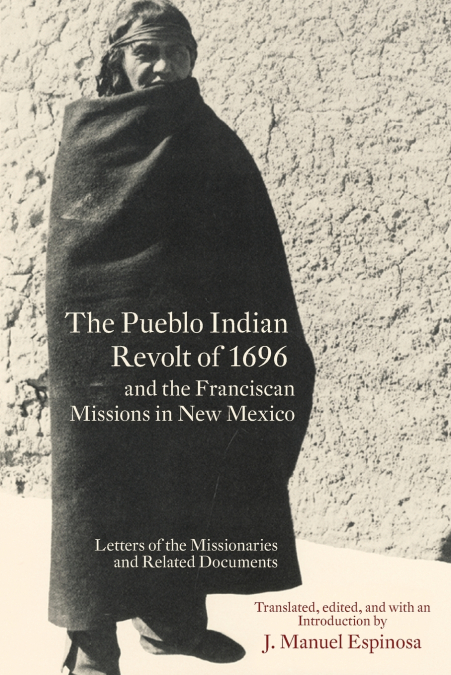
The Franciscan letters and related documents, translated into English and published here for the first time, describe in detail the Pueblo Indian revolt of 1696 in New Mexico and the destruction of the Franciscan missions. The events are related by the missionaries themselves as they lived side by side with their Indian charges. The suppression of the revolt by the Spaniards, and the reestablishment of the missions, was a turning point in the history of the Southwest. The New Mexican colony had been founded and settled in 1598 and had endured until 1680, when an earlier Pueblo Indian revolt had forced the Spaniards co retreat south co El Paso. In 1692, Governor Diego de Vargas led a military expedition into New Mexico that met virtually no resistance, convincing him that he could return and reconquer and resettle the region for Spain. In 1693, after a bloody battle at Santa Fe, the Spanish colony was reestablished in the midst of the concentration of Indian pueblos along the upper Rio Grande. It was then that hostile Pueblo Indian leaders, recalling their victory in 1680, secretly plotted the revolt that cook place in 1696. J. Manuel Espinosa has written a superb introduction placing the Pueblo Indian revolt of 1696 in historical perspective and presenting the important events recorded in the documents that constitute the major part of the book. The letters and writs, by mission friars and Spanish military authorities, reveal the agonizing decisions that the colony of priests, soldiers, and farmers faced in meeting the challenge of undaunted Indian leaders. The documents also contain information on the pueblos and Indian life not found in any other source. This book presents a remarkable view, from the Spaniards’ perspective, of the clash of cultures in the pueblos, as well as insights into the causes and results of the Pueblo revolt. The documents contribute greatly to our knowledge of events in northern New Spain that proved very significant in the development of the region. No other work deals in such detail with this period in New Mexico history or provides such broad documentary coverage.J. Manuel Espinosa studied folklore at Stanford University under his father, and received his Ph.D. from the University of California, Berkeley, in 1934, where he studies southwestern history under Herbert E. Bolton. He is the editor of The Pueblo Indian Revolt of 1696 and the Franciscan Missions in New Mexico: Letters of the Missionaries and Related Documents, also published by the University of Oklahoma Press.'The first translation of the Franciscan letters and other documents related to the Pueblo revolt of 1696, this collection is a major contribution to the history of northern New Spain. Nearly 100 documents have been translated from copies of the originals....They provide an informative and dramatic portrait of the conflict between Franciscan missionary zeal and the Pueblo holy men, who fought a losing battle to preserve their traditional way of life. The professional quality of the translations is matched by an incisive historical introduction to the documents. No serious student of the Spanish invasion of the American southwest can afford to ignore this major contribution to the understanding of the ’Rim of Christendom.’' - Choice. 'Although only nine of the ninety-four selections deal directly with the revolt, all demonstrate well the volatile atmosphere of late-seventeenth century New Mexico. We see a human side of the Franciscans in their mistrust and fear of the Indians and in their continual appeals to Governor Vargas for military support. This is a valuable documentary collection.' - Western Historical Quarterly. 3