Albert G. Mackey / Albert GMackey
 Librería Samer Atenea
 Kálamo Books
 Librería Elías (Asturias)
 Librería Kolima (Madrid)
 Librería Proteo (Málaga)
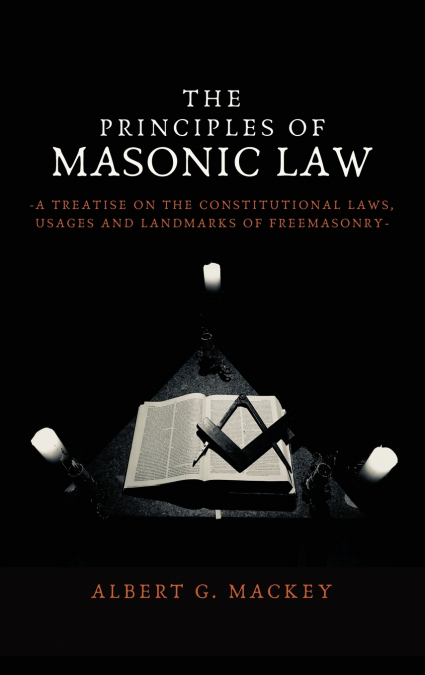
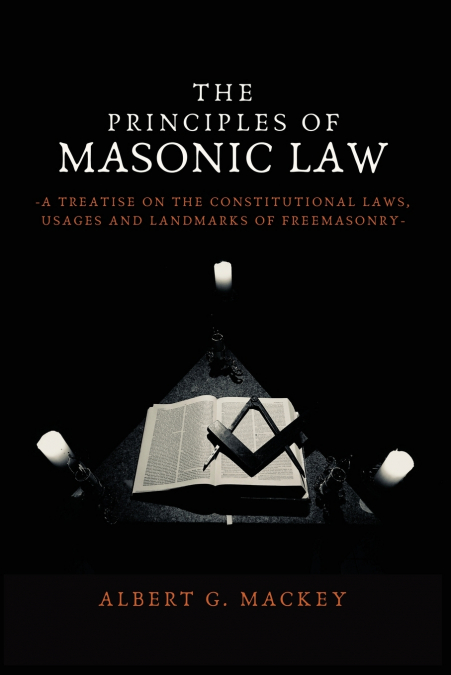
A foundational work on the law and constitution of Freemasonry.In this authoritative treatise, Albert G. Mackey-one of the most respected scholars of Masonic history and jurisprudence-presents a systematic study of the constitutional laws, usages, and landmarks that govern the Masonic fraternity.Drawing on historical sources, ritual practice, and long-standing tradition, Mackey clarifies the legal structure of lodges, the authority of Grand Lodges, the nature of Masonic discipline, and the enduring principles that define regular Freemasonry. His work establishes a coherent framework for understanding the juridical and institutional foundationsof the Order.Long regarded as an essential reference for students of Freemasonry, this volume remains indispensable for readers interested in fraternal law, institutional history, and the governance of initiatic societies.This edition contains the Fourth Book and complete footnotes (over 100), providing readers with a fuller and more reliable scholarly resource.Excerpt: 'In presenting to the fraternity a work on the Principles of Masonic Law, it is due to those for whom it is intended, that something should be said of the design with which it has been written, and of the plan on which it has been composed. It is not pretended to present to the craft an encyclopedia of jurisprudence, in which every question that can possibly arise, in the transactions of a Lodge, is decided with an especial reference to its particular circumstances. Were the accomplishment of such an herculean task possible, except after years of intense and unremitting labor, the unwieldy size of the book produced, and the heterogeneous nature of its contents, so far from inviting, would rather tend to distract attention, and the object of communicating a knowledge of the Principles of Masonic Law, would be lost in the tedious collation of precedents, arranged without scientific system, and enunciated without explanation.When I first contemplated the composition of a work on this subject, a distinguished friend and Brother, whose opinion I much respect, and with whose advice I am always anxious to comply, unless for the most satisfactory reasons, suggested the expediency of collecting the decisions of all Grand Masters, Grand Lodges, and other masonic authorities upon every subject of Masonic Law, and of presenting them, without commentary, to the fraternity.'