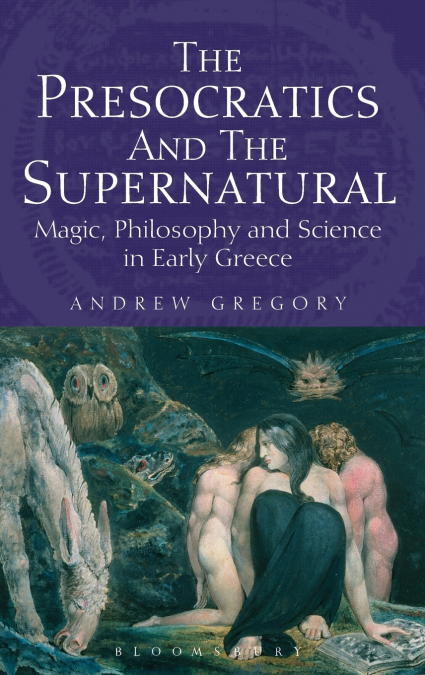

The Presocratics and the Supernatural

The Presocratics and the Supernatural

Andrew Gregory

258,59 €
IVA incluido
Consulta disponibilidad
Editorial:
Bloomsbury Publishing plc
Año de edición:
2013
Materia
Filosofía occidental: antigua, hasta c. 500
ISBN:
9781780932033

Selecciona una librería:

  • Librería Samer Atenea
  • Librería Aciertas (Toledo)
  • Kálamo Books
  • Librería Perelló (Valencia)
  • Librería Elías (Asturias)
  • Donde los libros
  • Librería Kolima (Madrid)
  • Librería Proteo (Málaga)

This book examines the relationship between magic, philosophy and the investigation of nature in presocratic Greece. Did the presocratic thinkers, often praised for their rejection of the supernatural, still believe in gods and the divine and the efficacy of magical practices? Did they use animism, astrology, numerology and mysticism in their explanations of the world? This book analyses the evidence in detail and argues that we need to look at each of these beliefs in context.

Artículos relacionados

  • The Nature of Things
    Lucretius Lucretius
    De rerum natura (On the Nature of Things) is a 1st century BC didactic poem by the Roman poet and philosopher Lucretius with the goal of explaining Epicurean philosophy to a Roman audience. Lucretius presents the principles of atomism; the nature of the mind and soul; explanations of sensation and thought; the development of the world and its phenomena; and explains a variety o...
  • Pompeii
    Fergus Mason
    Pompeii was one of most advanced cities of its time; it had a complex water system, gymnasium, and an amphitheater. Despite it's advancements, there was one thing it wasn't ready for: Mount Vesuvius—the volcano that led to its ultimate doom.  The 79 AD eruption of Mount Vesuvius was one of the worst disasters in all of European history. In a near instant, over 15,000 p...
    Disponible

    10,36 €

  • Middle Platonism and Neoplatonism, Volume 1
    Stephen Gersh
    'It is generally agreed that those types of philosophy that are loosely called ’Platonic’ and ’Neoplatonic’ played a crucial role in the history of European culture during the centuries between antiquity and the Renaissance. However, until now no scholar has attempted to describe the evolution of these forms of thought in a single comprehensive academic study.' So writes Stephe...
  • Middle Platonism and Neoplatonism, Volume 2
    Stephen Gersh
    It is generally agreed that those types of philosophy that are loosely called 'Platonic' and 'Neoplatonic' played a crucial role in the history of European culture during the centuries between antiquity and the Middle Ages. However, until now no scholar has attempted to describe the evolution of these forms of thought in a single comprehensive academic study. Middle Platonism a...
  • Porphyry’s Commentary on Ptolemy’s Harmonics
    Andrew Barker
    ...
    Disponible

    77,17 €

  • The Roots of Platonism
    John Dillon
    ...
    Disponible

    25,29 €

Otros libros del autor

  • Choral Evensong
    Andrew Gregory
    A short, lively introduction to Choral Evensong and to the Christian faith and spirituality that it presupposes and presents. It approaches the service from the perspective of people of religious faith, and of those who might describe themselves as atheists or as 'religious nones'. It asks questions and discusses topics that will interest to anyone who enjoys the space for refl...
    Disponible

    14,54 €

  • Early Greek Philosophies of Nature
    Andrew Gregory
    This book examines the philosophies of nature of the early Greek thinkers and argues that a significant and thoroughgoing shift is required in our understanding of them. In contrast with the natural world of the earliest Greek literature, often the result of arbitrary divine causation, in the work of early Ionian philosophers we see the idea of a cosmos: ordered worlds where th...
    Disponible

    52,37 €

  • Early Greek Philosophies of Nature
    Andrew Gregory
    This book examines the philosophies of nature of the early Greek thinkers and argues that a significant and thoroughgoing shift is required in our understanding of them. In contrast with the natural world of the earliest Greek literature, often the result of arbitrary divine causation, in the work of early Ionian philosophers we see the idea of a cosmos: ordered worlds where th...
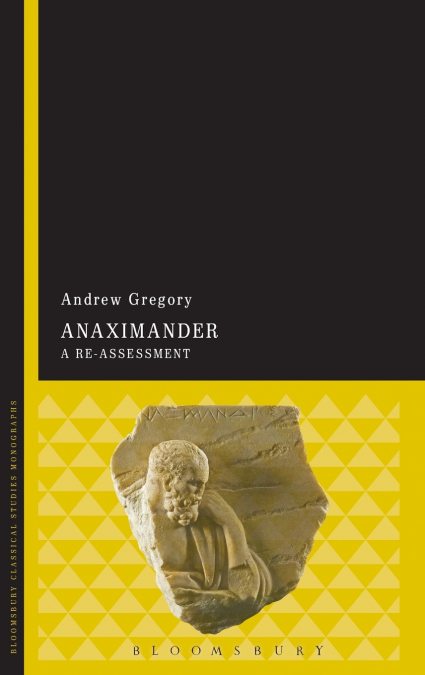
  • Anaximander
    Andrew Gregory
    Anaximander, the sixth-century BCE philosopher of Miletus, is often credited as being the instigator of both science and philosophy. The first recorded philosopher to posit the idea of the boundless cosmos, he was also the first to attempt to explain the origins of the world and humankind in rational terms. Anaximander’s philosophy encompasses theories of justice, cosmogony, g...
    Disponible

    66,48 €

  • Anaximander
    Andrew Gregory
    Anaximander, the sixth-century BCE philosopher of Miletus, is often credited as being the instigator of both science and philosophy. The first recorded philosopher to posit the idea of the boundless cosmos, he was also the first to attempt to explain the origins of the world and humankind in rational terms. Anaximander’s philosophy encompasses theories of justice, cosmogony, g...
  • The Presocratics and the Supernatural
    Andrew Gregory
    This book examines the relationship between magic, philosophy and the investigation of nature in presocratic Greece. Did the presocratic thinkers, often praised for their rejection of the supernatural, still believe in gods and the divine and the efficacy of magical practices? Did they use animism, astrology, numerology and mysticism in their explanations of the world? This boo...
    Disponible

    66,55 €