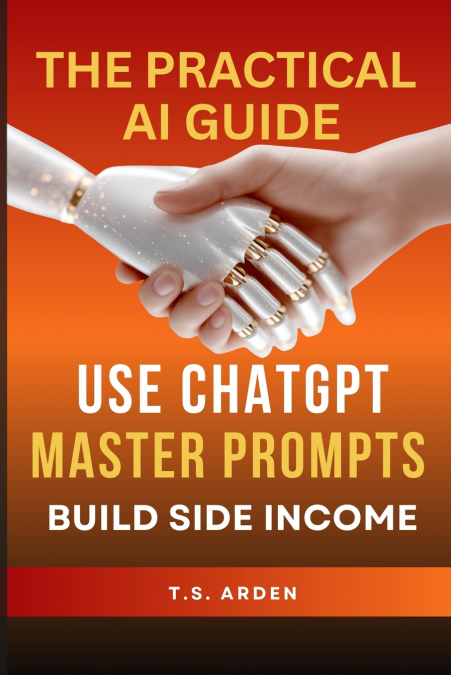

The Practical AI Guide

The Practical AI Guide

T.S. Arden

11,56 €
IVA incluido
Disponible
Editorial:
White Rockit Books
Año de edición:
2026
Materia
Inteligencia artificial
ISBN:
9781067129880
11,56 €
IVA incluido
Disponible

Selecciona una librería:

  • Librería Samer Atenea

  • Kálamo Books
  • Librería Elías (Asturias)
  • Librería Kolima (Madrid)
  • Librería Proteo (Málaga)

Artificial intelligence is everywhere-promising speed, income, and opportunity. But alongside the excitement comes confusion, hype, and more than a few questionable shortcuts. How to Use AI cuts through the noise with a calm, practical approach to what actually works-and what doesn’t.This is not a book of hacks, overnight success stories, or technical overwhelm. Instead, it offers a clear, grounded understanding of AI as a tool-one that supports your thinking rather than replaces it. You’ll learn how AI really works, how to use it effectively in everyday tasks, and where its limits matter most.Designed for freelancers, creators, small business owners, and the quietly curious, this guide shows how to use AI to organise ideas, improve writing, streamline workflows, and support income-without losing your voice, your judgement, or your integrity. It explores how to work with AI, not hide behind it, and how to build something sustainable rather than chasing trends that quickly collapse.Importantly, this book also sets boundaries. It makes clear what should never be outsourced-decision-making, relationships, accountability-and why these human elements remain the true source of value.Written in a straightforward, no-nonsense style, How to Use AI is less about technology and more about clarity-helping you think better, work smarter, and use AI in a way that fits your life rather than consuming it.There are no secrets here. Just practical insight, honest guidance, and a steady reminder: AI is the assistant. You are the one in charge.
Artículos relacionados

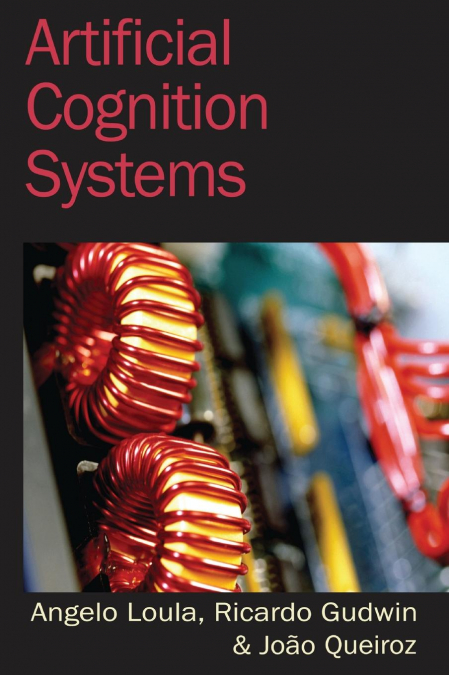
  • Artificial Cognition Systems
    ...
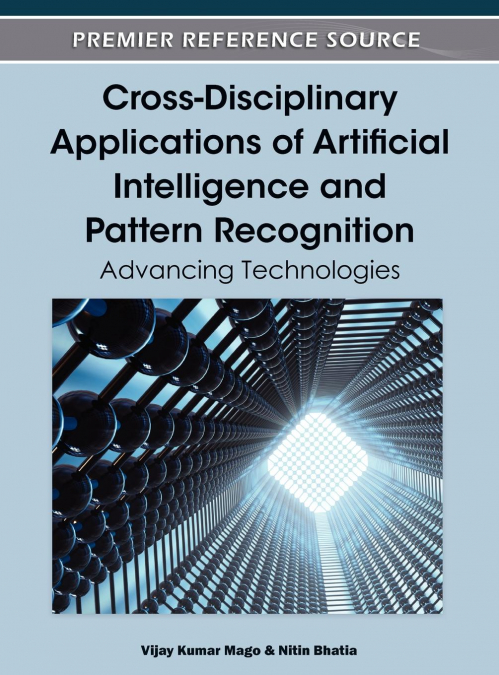
  • Cross-Disciplinary Applications of Artificial Intelligence and Pattern Recognition
    Vijay Kumar Mago
    The need for intelligent machines in areas such as medical diagnostics, biometric security systems, and image processing motivates researchers to develop and explore new techniques, algorithms, and applications in this evolving field. Cross-Disciplinary Applications of Artificial Intelligence and Pattern Recognition: Advancing Technologies provides a common platform for researc...
  • Emerging Applications of Natural Language Processing
    Over the last few years, the area of Natural Language Processing has drastically grown in recognition, not only within the research and development community, but also with industry professionals. As NLP continues to be discussed and researched, certain areas continue to grow and mature. As a result, the need for advanced research and information is in high demand. Emerging App...
  • Androids, Cyborgs, and Robots in Contemporary Culture and Society
    Steven John Thompson
    Mankind’s dependence on artificial intelligence and robotics is increasing rapidly as technology becomes more advanced. Finding a way to seamlessly intertwine these two worlds will help boost productivity in society and aid in a variety of ways in modern civilization. Androids, Cyborgs, and Robots in Contemporary Culture and Society is an essential scholarly resource that delve...
  • Deep Learning Innovations and Their Convergence With Big Data
    The expansion of digital data has transformed various sectors of business such as healthcare, industrial manufacturing, and transportation. A new way of solving business problems has emerged through the use of machine learning techniques in conjunction with big data analytics. Deep Learning Innovations and Their Convergence With Big Data is a pivotal reference for the latest sc...
  • Computational Psychoanalysis and Formal Bi-Logic Frameworks
    Giuseppe Iurato
    Computational psychoanalysis is a new field stemming from Freudian psychoanalysis. The new area aims to understand the primary formal structures and running mechanisms of the unconscious while implementing them into computer sciences. Computational Psychoanalysis and Formal Bi-Logic Frameworks provides emerging information on this new field which uses psychoanalysis and the unc...