
Inicio > Economía, finanzas, empresa y gestión > Economía > Economía internacional > The One Belt One Road (OBOR) Initiative and the Port of Piraeus
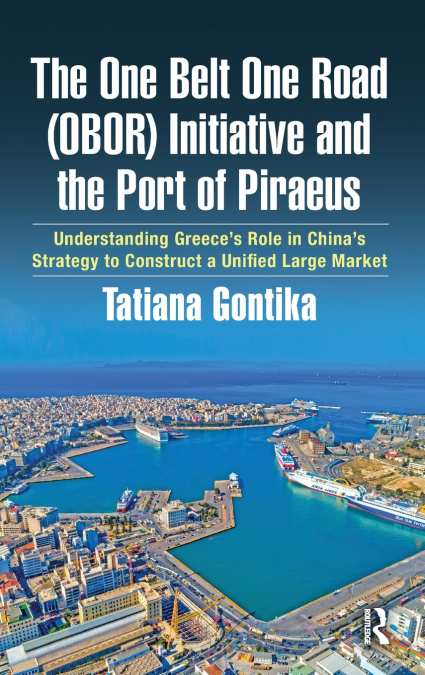
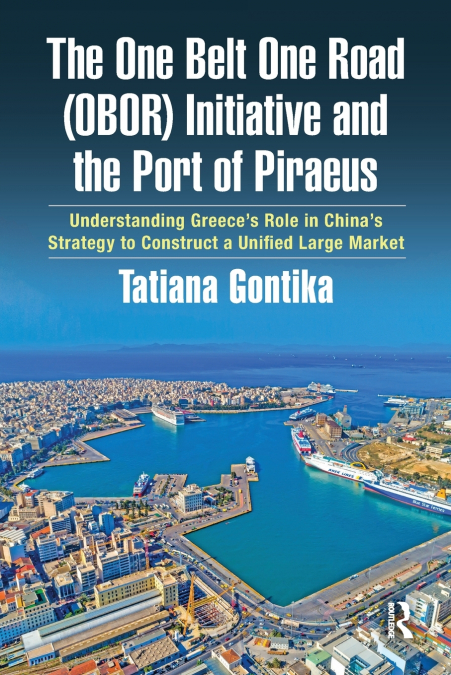
The One Belt One Road (OBOR) Initiative and the Port of Piraeus

The One Belt One Road (OBOR) Initiative and the Port of Piraeus

Tatiana Gontika

53,45 €
IVA incluido
Disponible
Editorial:
Taylor & Francis Ltd
Año de edición:
2023
Materia
Economía internacional
ISBN:
9781032051529
53,45 €
IVA incluido
Disponible

Selecciona una librería:

  • Librería Samer Atenea
  • Librería Aciertas (Toledo)
  • Kálamo Books
  • Librería Perelló (Valencia)
  • Librería Elías (Asturias)
  • Donde los libros
  • Librería Kolima (Madrid)
  • Librería Proteo (Málaga)

This book provides the reader with a better understanding of the One Belt One Road (OBOR) initiative, its various projects around the world, and its consequences at a local as well as an international level. Background information on both Chinese and Greek sociopolitical history and their maritime industry is provided. The book also provides readers with the opinions of people directly involved with the Piraeus Port-China Ocean Shipping (Group) Company (COSCO) deal through interviews conducted and included in the book.OBOR, a signature initiative of Chinese President Xi Jinping, is currently one of the most frequently discussed enterprises worldwide. This controversial mix of worldwide projects has put both China and Xi at the center of attention, and not in a positive way. Of course, not all projects included in the initiative have been or are likely to be successful, but the initiative has far-ranging economic, cultural, and political potential. OBOR, in its essence, is an attempt by the Chinese government to secure a paramount position in global finance for the country and ensure that primacy extends far into the future. In particular, it is an attempt to ensure that there are enough natural resources for China to support itself in the long term. Therefore, the areas selected for the implementation and development of OBOR are deliberately strategic. One of the countries that China has chosen to invest in is Greece, specifically the Port of Piraeus. The OBOR initiative has many similarities with the ancient Silk Road. Although the ancient route and modern concept are in no way identical, many similarities become evident when the two are compared. To understand China’s motivation to build such a network, looking back at history is required. This project was long in the making. Various discussions took place both on an international and a domestic level until all parties came to an agreement. The deal at Piraeus between Greece and China affected more people than the politicians and the shipowners-it affected everyone involved in the operations of the port as well as the residents of the area. To further comprehend the impact on their lives, one must see things through their eyes, and there is no better way than contacting individuals and conversing with them.In conclusion, the specific deal at Piraeus and the OBOR initiative as a whole have the potential of benefiting the international and local communities. However, specific measures must be taken, and governments must collaborate in order for the deal in Piraeus and the OBOR initiative to have the most beneficial and the least negative impact.
Artículos relacionados

  • Regional Economic Integration and the Global Financial System
    Engin Sorhun / Hasan Dinçer / Unit Hacioglu
    In theory, regionalism and globalization are intended to be viewed as two separate concepts. However, as long as the approaches complement each other, considering these paradigms in tandem can have significantly positive effects on the overall status of the world economy. Regional Economic Integration and the Global Financial System addresses recent trends in regional integrati...
  • Handbook of Research on Impacts of International Business and Political Affairs on the Global Economy
    The growth of global commerce depends on many different factors and strategies in order for multinational corporations to efficiently compete and thrive in the international marketplace. In addition to business strategies, corporations must also be aware of political affairs that may impact their global economic status. The Handbook of Research on Impacts of International Busin...
  • NEXT CONVERGENCE
    MICHAEL SPENCE
    ...
    Disponible

    17,21 €

  • Interest and Prices
    Michael Woodford
    With the collapse of the Bretton Woods system, any pretense of a connection of the world’s currencies to any real commodity has been abandoned. Yet since the 1980s, most central banks have abandoned money-growth targets as practical guidelines for monetary policy as well. How then can pure 'fiat' currencies be managed so as to create confidence in the stability of national unit...
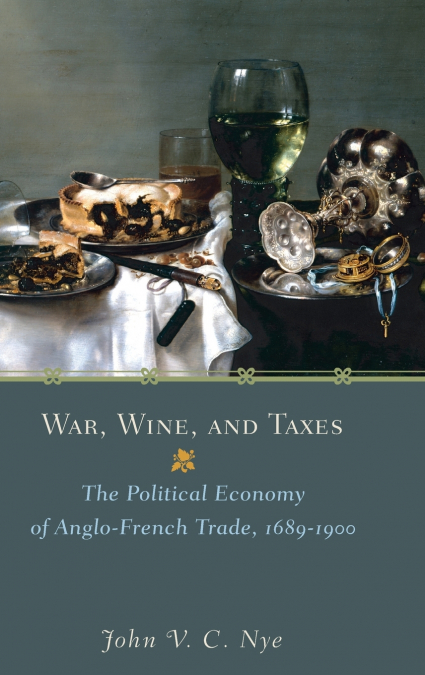
  • War, Wine, and Taxes
    John V.C. Nye
    In War, Wine, and Taxes, John Nye debunks the myth that Britain was a free-trade nation during and after the industrial revolution, by revealing how the British used tariffs-notably on French wine-as a mercantilist tool to politically weaken France and to respond to pressure from local brewers and others. The book reveals that Britain did not transform smoothly from a mercantil...
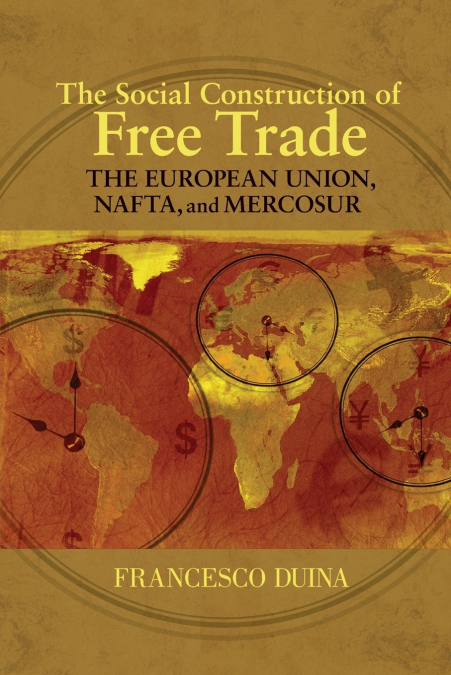
  • The Social Construction of Free Trade
    Francesco Duina
    This book offers a compelling new interpretation of the proliferation of regional trade agreements (RTAs) at the end of the twentieth century. Challenging the widespread assumption that RTAs should be seen as fundamentally similar economic initiatives to pursue free trade, Francesco Duina proposes that the world is reorganizing itself into regions that are highly distinctive an...
    Disponible

    54,25 €

Otros libros del autor

  • The One Belt One Road (OBOR) Initiative and the Port of Piraeus
    Tatiana Gontika
    One Belt One Road (OBOR), a signature initiative of Chinese President Xi Jinping, is currently one of the most frequently discussed enterprises. This controversial mix of worldwide projects has put China and Xi in the center of attention, and not always in a positive way. ...