 Librería Samer Atenea
 Kálamo Books
 Librería Elías (Asturias)
 Librería Kolima (Madrid)
 Librería Proteo (Málaga)
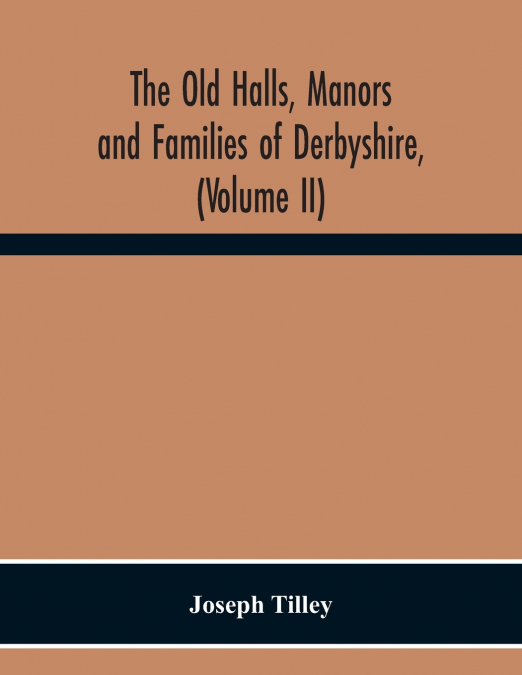
Discover the vanished halls and lineages of Derbyshire.A landmark study of manors, families and rural life in nineteenth century England.History lives in every stone.In Volume II Joseph Tilley concentrates on the Appletree Hundred and the Wapentake of Wirksworth, assembling careful local research, place-by-place description and genealogical detail that make it indispensable for English country houses history and family history research. His prose is economical and exact, recording ownership, social ties and the worn fabric of manor houses without romanticising the past. Readers tracking historic Derbyshire families or studying English manor houses will recognise the patience of an author who turns parish notes and estate memory into a vivid county narrative. As both a practical local historians’ reference and a British genealogy resource, the volume bridges antiquarian curiosity and methodical inquiry. Out of print for decades and now republished by Alpha Editions. Restored for today’s and future generations. More than a reprint - a collector’s item and a cultural treasure.Literarily and historically significant, the book stands among Joseph Tilley works as a defining example of Victorian local history and the wider tradition of British antiquarian books. It maps the shifting fortunes of Derbyshire rural estates, gives texture to village life and supplies the kind of names and places that reward serious family history research. Casual readers find accessible sketches of place and lineage; classic-literature collectors and regional heritage collection curators prize its steady scholarship and archival value. Its careful recording of owners, tenures and place-names offers practical leads for those undertaking family history research or tracing the descent of local property. As a piece of Victorian scholarship it encapsulates the enquiry and tone of its age while providing the modern reader with a direct route into the county’s material and social past. Precise without being remote, the text offers scholarship and lively detail, restoring a part of nineteenth century England to view and inviting new generations of readers to explore the social geography of historic Derbyshire families.