Librería Samer Atenea
 Kálamo Books
 Librería Elías (Asturias)
 Librería Kolima (Madrid)
 Librería Proteo (Málaga)
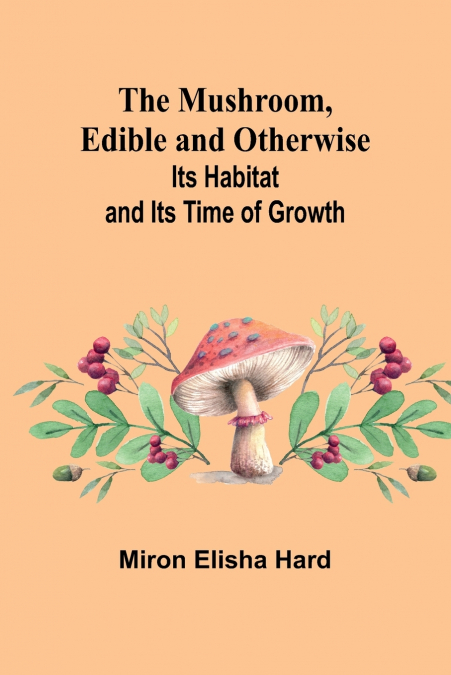
A luminous field companion to the fungi beneath our feet. Study them where they grow. Miron Elisha Hard’s practical early photographic handbook brings together photographic illustrations of nearly all the common species with focused chapters on habitat and time of growth, plain guidance that assists edible mushroom identification, and a poisonous mushroom guide to recognise hazards. Presented as a field guide to mushrooms, it is both an illustrated nature handbook and a compact mushroom study reference: clear captions, comparative photographs and straightforward language make it a student naturalist resource and suitable for the beginner mushroom collector, yet the observational rigour will reward attentive amateurs. The tone is direct rather than academic; the emphasis is on seeing and noting the features that separate table-worthy species from their dangerous lookalikes, making it a useful companion for anyone curious about wild mushroom foraging or the diversity of North American fungi. Its vintage mycology book charm is matched by practicality - a photographic mushroom guide that remains satisfying to browse and useful in the field.Republished by Alpha Editions in a careful modern edition, this volume preserves the spirit of the original while making it effortless to enjoy today - a heritage title prepared for readers and collectors alike. Historically significant within early 20th century botany, the book marks a moment when photography began to change how naturalists recorded and taught about organisms; it stands as both a reference and a document of changing scientific practice. Casual readers will find hands-on usefulness and readable description; classic-literature collectors and those building a library of vintage mycology book editions will appreciate its place in the lineage of field guides. For students, foragers and curious readers alike, this is a restored resource that invites slow looking, careful comparison and a renewed appreciation for the low-growing lives of the woodlands.