 Librería Samer Atenea
 Librería Aciertas (Toledo)
 Kálamo Books
 Librería Perelló (Valencia)
 Librería Elías (Asturias)
 Donde los libros
 Librería Kolima (Madrid)
 Librería Proteo (Málaga)
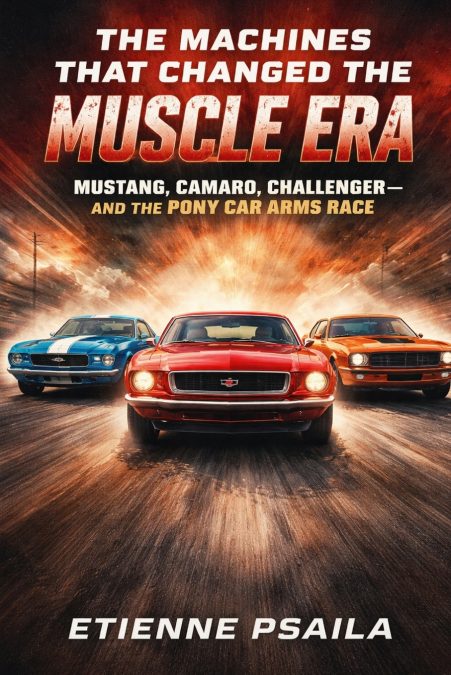
When the pony car arrived, it did not simply add three new badges to American roads-it rewired how Detroit competed. Ford’s Mustang proved that image could be engineered at scale, that one platform could become a showroom universe, and that speed could be sold in layers: stripes first, horsepower later. General Motors answered with the Camaro and its internal cousins, turning rivalry into a rolling comparison test that played out in ads, road tests, and stoplight folklore. Chrysler entered with the Challenger as both a statement and a gamble-bigger, bolder, and timed at the exact moment the rules of the game began to change.This book treats the era as an industrial sprint. Styling studios fought for proportion and presence under hard constraints of tooling and regulation. Engineering teams chased power while juggling drivability, warranty risk, and parts durability. Dealers sold identity as much as sheetmetal, while insurers and policymakers quietly became performance’s most consequential opponents. The result was a decade where what buyers wanted, what manufacturers could build, and what regulators and markets would tolerate collided-sometimes elegantly, sometimes violently.By following the Mustang, Camaro, and Challenger across their defining years-and tracking the pressure of racing, safety mandates, emissions controls, and insurance math-this narrative explains how the pony car became both a product category and a cultural instrument. It also shows why the arms race never truly ended: it simply evolved, returning in modern form as heritage design met 21st-century engineering and constraints.