Inicio > Humanidades > Historia > Historia general y mundial > The Levant Voyage of the Blackham Galley (1696-1698)
The Levant Voyage of the Blackham Galley (1696-1698)

The Levant Voyage of the Blackham Galley (1696-1698)


39,86 €
IVA incluido
Disponible
Editorial:
Boydell & Brewer Ltd
Año de edición:
2022
Materia
Historia general y mundial
ISBN:
9781916931060
39,86 €
IVA incluido
Disponible

Selecciona una librería:

  • Librería Samer Atenea

  • Kálamo Books
  • Librería Elías (Asturias)
  • Librería Kolima (Madrid)
  • Librería Proteo (Málaga)

This volume publishes for the first time, the journal kept by John Looker (?1670-1715) recording his service as ship’s surgeon on the Blackham Galley, a London-built merchantman on its second trading voyage to the Levant, between December 1696 and March 1698. divides naturally into three parts. The Blackham Galley’s outward and homeward voyages were largely without incident. The time spent by the Blackham Galley in Turkish waters, covers its voyage from Smyrna to Constantinople, where the ship stayed for a month, and then returned to Smyrna. Captain Newnam’s ill-advised and disastrous attempt at privateering in Ottoman waters on the return journey to Smyrna, led to the detention of his vessel at Smyrna. Looker’s account of the Blackham Galley’s enforced stay in Smyrna furnishes a detailed account of social life in the international merchant community, as well as portside life seen ’from below’, with its taverns and prostitutes, and the activities and frequent ’debauches’ of an increasingly bored and fractious crew. Looker’s record also provides interesting detail of his professional approach to treatment of the illnesses, accidents and occasional deaths of members of the company of his own and other ships anchored off Smyrna.
Artículos relacionados

  • The life of Sir Richard Fanshawe, 1608 - 1666
    H C Fanshawe
    Sir Richard Fanshawe (1608-1666), was a diplomat, poet and linguist. As Ambassador to Spain and Portugal he negotiated the marriage of Charles II and Catherine of Braganza. He was also acclaimed for his poetry and his translations of Latin and European works such as the Lusiads by Luis de Camoes and Il Pastor Fido (the Faithful Shepherd) by Giovanni Battista Guarini. Sir Richar...
    Disponible

    18,93 €

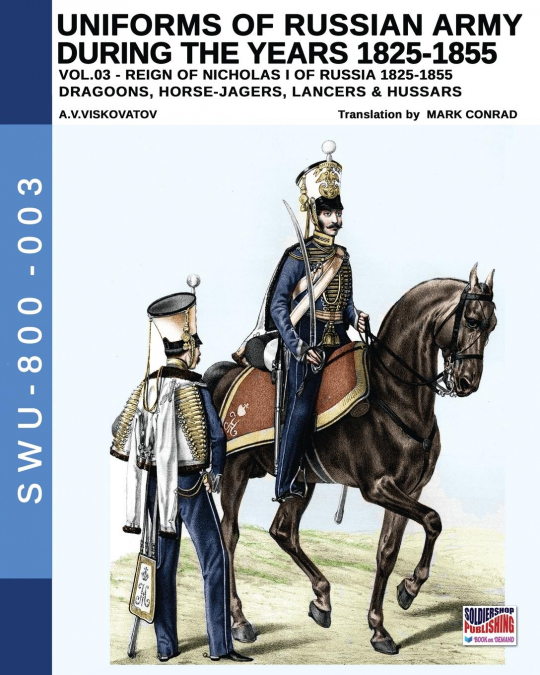
  • Uniforms of Russian Army during the years 1825-1855. Vol. 3
    Aleksandr Vasilevich Viskovatov / Mark Conrad
    This volume is related to the Russian Army during the zar Nicolas Ist era, and are about the uniforms cavalry in use from 1825 to 1855. Compiled at Saint Petersburg during the year from 1837 and 1851, the Historical Description of the Clothing and Arms of the Russian Army has had an enormous impact and great importance for the study on the history of Russian costume and uniform...
    Disponible

    56,91 €

  • Archaeology and Entomology in the Eastern Mediterranean
    Eva Panagiotakopulu
    ...
    Disponible

    83,45 €

  • Luoghi e Architetture della Transizione
    Maria Antonietta Breda
    I sistemi difensivi di confine e la protezione antiaerea nelle città. Storia conservazione riuso / Border defense system and air raid protection in the cities. History conservation reuseThis book collects the papers presented at the Second International Congress on Conoscenza e valorizzazione delle opere militari moderne - Knowledge and development of modern military structures...
    Disponible

    155,07 €

  • Le mura di Bergamo e l’esercito veneto fra 500 e 600
    Luca Stefano Cristini
    Correva l'Anno del Signore 1590. Così scriveva un soddisfatto e pago Alvise Grimani, l'allora comandante veneto della piazza di Bergamo, al termine dei lavori di realizzazione degli oltre cinque chilometri di mura porte e bastioni : 'La città è tutta serrata con baluardi e i suoi membri quasi tutti terrapienati, compite le piazze, i parapetti e le traverse per coprirsi ...
    Disponible

    40,24 €

  • Psychology of Revolution
    Gustave Lebon
    The present age is not merely an epoch of discovery; it is also a period of revision of the various elements of knowledge. Having recognised that there are no phenomena of which the first cause is still accessible, science has resumed the examination of her ancient certitudes, and has proved their fragility. To-day she sees her ancient principles vanishing one by one. ...