 Librería Samer Atenea
 Kálamo Books
 Librería Elías (Asturias)
 Librería Kolima (Madrid)
 Librería Proteo (Málaga)
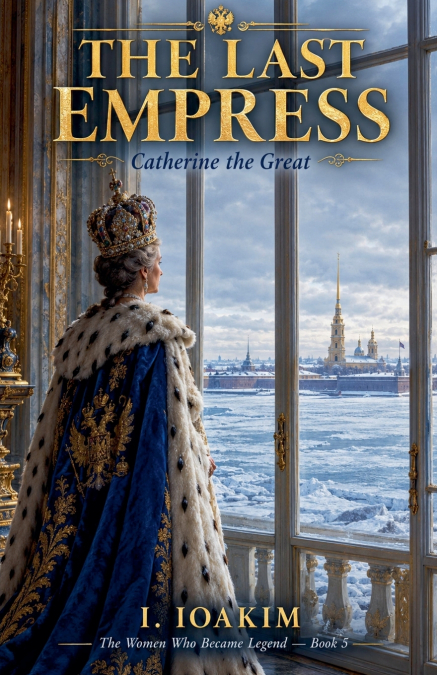
She arrived in Russia in February 1744, fourteen years old, in the middle of the Russian winter, a minor German princess from a principality of no particular importance. She died in the Winter Palace in St. Petersburg in November 1796, having ruled Russia for thirty-four years as Catherine II - Catherine the Great - the most powerful woman in the world, the empress who had expanded the Russian empire to the Black Sea and partitioned Poland and organized the Hermitage and corresponded with Voltaire and written the Nakaz and built the administrative structure that the subsequent Russian empire governed from.In between, she converted to Russian Orthodoxy. She learned Russian. She married the heir to the Russian throne who despised her and despised Russia. She survived eighteen years of the marriage. She organized the coup that deposed her own husband six months into his reign. She ruled.She is Catherine the Great. The German princess who made herself Russian and then made Russia European.The Last Empress: Catherine the Great is a literary novel that enters the consciousness of the woman who arrived in Russia with nothing but the intelligence and the ambition and the specific willingness to become whoever Russia needed her to be - who studied the Russian language through the nights to the point of illness, who built the political coalition of the Guards over eighteen years of the marriage, who rode at the head of the troops in military uniform on the day of the coup, and who then spent thirty-four years governing the largest country on earth and organizing its transformation into the European great power.The novel follows the full arc of the becoming. The minor German childhood and the maternal ambition. The Russian arrival and the conversion and the language. The eighteen years of the Peter marriage. The coup of 1762. The enlightened despotism - Voltaire, the Nakaz, the Hermitage, the administrative reforms, the serf system unchanged. The Turkish wars and the Black Sea. The Polish partitions. Potemkin. The Pugachev rebellion. The French Revolution’s horror. The death in the Winter Palace having governed thirty-four years.The central contradiction: she corresponded with Voltaire about the natural rights of man and strengthened the serfdom that denied those rights to thirty million Russian serfs. The contradiction was the reign.The Last Empress is the fifth book in The Women Who Became Legend series by I. Ioakim.