 Librería Samer Atenea
 Kálamo Books
 Librería Elías (Asturias)
 Librería Kolima (Madrid)
 Librería Proteo (Málaga)
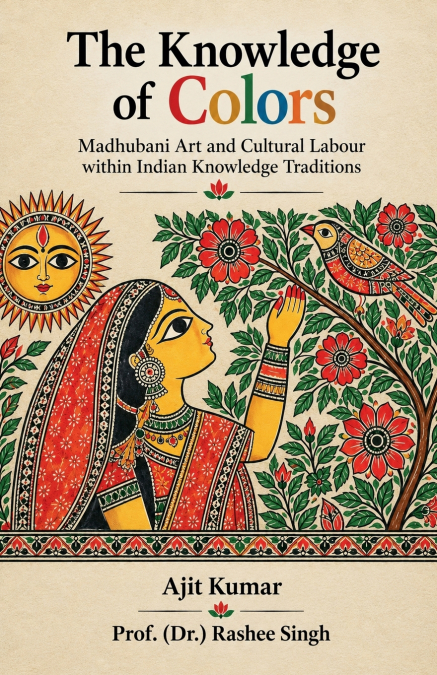
The Knowledge of Colors: Madhubani Art and Cultural Labour within Indian Knowledge Traditions explores Madhubani painting as a living knowledge tradition rooted in the cultural landscape of Mithila. Originating in northern Bihar and adjoining areas of Nepal, Madhubani has evolved from domestic walls, rituals, marriage ceremonies, and seasonal practices into galleries, museums, exhibitions, markets, and digital platforms.The book places Madhubani within the framework of Indian Knowledge Traditions (IKS) and highlights the ways knowledge is created, preserved, practiced, and transmitted across generations. Artistic knowledge has traditionally been learned through observation, participation, imitation, experimentation, memory, and apprenticeship within families and communities.A central theme of the book is cultural labour. Madhubani painting involves creativity, technical skill, physical effort, cultural memory, identity, and social responsibility. Artists preserve inherited knowledge while adapting it to changing cultural and economic circumstances. The artwork becomes a visible expression of accumulated skills, memories, rituals, relationships, and community practices.The book gives special attention to women’s contribution to Madhubani traditions. Through domestic rituals, storytelling, teaching, observation, and artistic practice, women have played an important role in transmitting cultural knowledge across generations. It also examines caste and community, showing how different communities have contributed distinctive themes, techniques, and visual identities.Another major theme is the transformation of Madhubani from ritual wall painting to portable and commercial art. This transformation has created new opportunities for artists while raising questions about cultural value, recognition, ownership, and economic benefit.Overall, the book presents Madhubani as a rich form of visual knowledge and cultural memory. Through colours, symbols, motifs, nature, mythology, ritual, and labour, it demonstrates how Indian knowledge traditions continue through creativity, adaptation, and intergenerational transmission.