Lynn Sakasegawa / Mae Sakasegawa / Mae Sakesagawa
 Librería Samer Atenea
 Kálamo Books
 Librería Elías (Asturias)
 Librería Kolima (Madrid)
 Librería Proteo (Málaga)
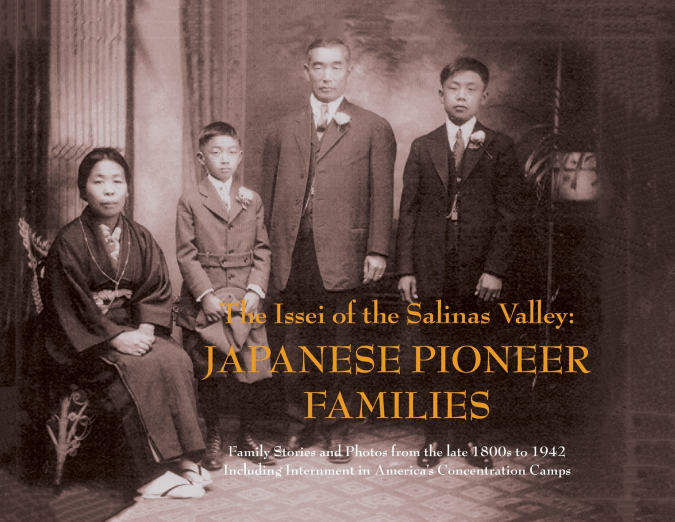
In 1942, President Franklin D. Roosevelt signed Executive Order 9066, which ordered 120,000 Japanese/Japanese Americans to be compulsorily incarcerated in concentration camps (often referred to as war relocation camps) during World War II. This evacuation affected all Japanese Americans and Japanese living on the West Coast, including men, women, children, the elderly, and the infirm. They had only a few days to dispose of all their property, gather their belongings (only what they could carry), and settle their affairs, surrendering their homes, their possessions, and their livelihoods. Businesses were lost, personal property was stolen or vandalized, land was seized ... and lives were changed forever.Who were these people? Why had they come to the United States? What were their lives like before the war? How were they spending their time? In The Issei of the Salinas Valley: Japanese Pioneer Families, Mae Sakasegawa dedicates her book to the Issei, the first generation of Japanese to come to the United States. These Issei trace their Salinas origins to the 19th century. They came to find peace in 1900s Japan in economic and social turmoil. They came to find the ¨American Dream¨ which they believed they could achieve through their values of hard work, family, and community. The men came first to Salinas to work for the Spreckels sugar company. Later, alongside the Chinese, due to the racial prejudice they encountered, they formed their own community, beginning with boarding houses, grocery stores, and other businesses. As a result of the incarceration, they left these businesses, homes, and property that they had spent decades building. Family heirlooms were thrown away in irrigation ditches that they had helped to develop for Salinas agriculture. What remained has been collected to preserve the memories of these early Japanese immigrants to Salinas. The Japanese word ¨gaman¨ means enduring the seemingly unbearable with patience and dignity. Coming to a strange country, becoming established and ultimately successful in a place that was unwelcoming, and seeking to build community and businesses, these Issei practiced ¨gaman.¨ This is the epitome of the Japanese spirit and the endurance of the Issei. They had to ¨gaman¨ - accept what was with patience and dignity. This sense of community, loyalty, duty, and family, taught by the Issei to their Nissei (second-generation Japanese American) children, enabled the Japanese American soldiers of the 442nd Regimental Combat Team to valiantly rescue the Lost Battalion of Texans during WWII. This heroic sacrifice by a segregated unit of Nissei, ultimately brought honor and recognition by Presidents Roosevelt and Truman that solidified the Japanese with ¨American¨ status and their acceptance as Americans in the United States. The 442nd Regimental Combat Team is the most decorated unit, for its size and length of service, in U.S. military history. Mae Sakasegawa, a Sansei (third-generation Japanese American), did not want the struggles of the Issei to be forgotten. These are their stories and legacy for generations to come, and for all Americans who face racial discrimination. Caroline T. Haskell, Co-Author/Editor with A. T. Jealous, of Combined Destinies: Whites Sharing Grief About Racism; Lynn Sakesagawa, daughter of Roy (of the 442nd RCT) and Mae Sakasegawa.