
Inicio > Matemáticas y ciencia > Ciencia: cuestiones generales > Influencia de la ciencia y la tecnología sobre la sociedad > The Invention of Humanism and the Reconfiguration of the Concept of Nature in the 19th Century
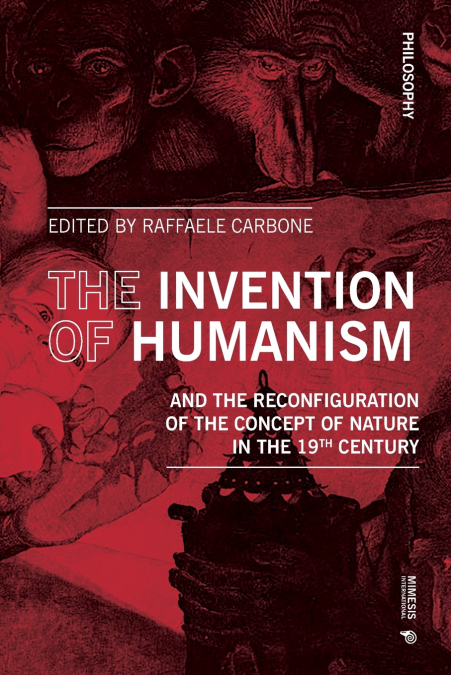
The Invention of Humanism and the Reconfiguration of the Concept of Nature in the 19th Century

The Invention of Humanism and the Reconfiguration of the Concept of Nature in the 19th Century

Raffaele Carbone

33,72 €
IVA incluido
Disponible
Editorial:
Rotomail Italia S.p.A.
Año de edición:
2026
Materia
Influencia de la ciencia y la tecnología sobre la sociedad
ISBN:
9788869775260
33,72 €
IVA incluido
Disponible

Selecciona una librería:

  • Librería Samer Atenea

  • Kálamo Books
  • Librería Elías (Asturias)
  • Librería Kolima (Madrid)
  • Librería Proteo (Málaga)

In the second half of the eighteenth century, in an article by Quesnay that appeared in Éphémérides du citoyen, the word 'humanism' first entered the European philosophical-cultural lexicon with the meaning of 'general love of humanity'. However, it was the nineteenth century that marked a decisive turning point for the concept, thanks to the publication of a work by the philosopher and educationalist Friedrich I. Niethammer, Der Streit des Philanthropinismus und Humanismus in der Theorie des Erziehungs-Unterrichts unsrer Zeit (1808). Nevertheless, it seems significant, if not paradoxical, that in the very century in which the term 'humanism' gained usage in philosophical, pedagogical, and literary contexts, a radically new conception of nature - and, consequently, of the link between man and nature - emerged. This conception called into question, on new foundations, the teleological vision and stylised image of nature as a set of resources and instruments that human beings could exploit for their own fulfilment and for the improvement of their living conditions. To address these issues, the chapters in this volume reconstruct the history of the concept of humanism in the nineteenth century and discuss various aspects of the relationship between humanism and a new (Darwinian) vision of nature that, on a scientific basis, entails a biological decentralisation of the human being.
Artículos relacionados

  • Interactive Media Use and Youth
    Modern advancements in technology have changed the way that young people use interactive media. Learning from such methods was not even considered until recently. It is now slowly defining the landscape of contemporary pedagogical practices. Interactive Media Use and Youth: Learning, Knowledge Exchange and Behavior provides a comprehensive collection of knowledge based on diffe...
  • Social and Economic Effects of Community Wireless Networks and Infrastructures
    Abdelaal
    It is surprising to think that in today’s rapidly evolving world of technology, over half of the globe still does not have access to high speed internet. Creating community wireless networks has in the past been a way to provide remote communities with internet and network access. Social and Economic Effects of Community Wireless Networks and Infrastructures highlights the succ...
  • The New Atlantis
    Francis Bacon
    In this work, Bacon portrayed a vision of the future of human discovery and knowledge, expressing his aspirations and ideals for humankind. The novel depicts the creation of a utopian land where 'generosity and enlightenment, dignity and splendour, piety and public spirit' are the commonly held qualities of the inhabitants of 'Bensalem'. ...
  • Sport 2.0
    Andy Miah
    ...
    Disponible

    32,16 €

  • Productivity Machines
    Corinna Schlombs
    ...
    Disponible

    54,45 €

  • Open Space
    Mariel Borowitz
    ...
    Disponible

    42,57 €

Otros libros del autor

  • Humanism and Nature in Horkheimer and Adorno
    Raffaele Carbone
    In the early Frankfurt School, especially in Horkheimer and Adorno, we find a critical attitude towards the traditional concepts of 'humanism' and 'nature'. Frankfurt thinkers tackle these concepts of Western philosophy but with the aim of showing their internal limits and their dialectical connections. Indeed, they also consider the possibility of resemantising these concepts ...
    Disponible

    24,62 €