The Interplay between Urban Development, Vulnerability, and Risk Management

The Interplay between Urban Development, Vulnerability, and Risk Management

Ebru A. Gencer / Ebru AGencer

68,09 €
IVA incluido
Disponible
Editorial:
Springer Nature B.V.
Año de edición:
2013
Materia
Planificación urbana y municipal
ISBN:
9783642294693
68,09 €
IVA incluido
Disponible

Selecciona una librería:

  • Librería Samer Atenea
  • Librería Aciertas (Toledo)
  • Kálamo Books
  • Librería Perelló (Valencia)
  • Librería Elías (Asturias)
  • Donde los libros
  • Librería Kolima (Madrid)
  • Librería Proteo (Málaga)

Natural disasters are increasingly affecting the world, taking lives unexpectedly and leaving many others injured and homeless. Moreover, disasters disrupt local, national and even global economies, instantly changing the direction of development. In the first half of 2011 alone, 108 natural disasters occurred, killing over 23 thousand people, affecting nearly 44 million others and causing more than 253 billion US dollars of economic damages (CRED 2011,1). Large urban settlements have become increasingly vulnerable to the impacts of natural disasters. The concentration of substandard infrastructure and housing, material assets, and inherent socio-economic inequalities increase vulnerability to disasters in large urban areas, especially in developing countries. The size, number, functions, and geographical distribution of large- and megacities create a special concern for disaster risk. Good urban management practices can be a powerful catalyst for reducing losses from natural disasters, while simultaneously helping to develop a sustainable environment. Yet, the existing situation indicates that sustainable planning and risk management measures are not taken into consideration or may not be put into practice for a variety of financial, political, and social reasons. This book argues that, on one hand, socio-economic disparities resulting from unsustainable urban development can increase vulnerability to natural hazards, and on the other hand, when paired with natural hazards this increased vulnerability can negatively affect urban areas, resulting in further inequality. This book will showcase this argument with theoretical reviews and quantitative analyses on the interplay between sustainable development and disaster vulnerability as well as an in-depth case study of the role of urban planning and risk management practices in creating the socio-economic and spatial vulnerabilities and predicted earthquake risk in the megacity of Istanbul.
Artículos relacionados

  • New Approaches, Methods, and Tools in Urban E-Planning
    Carlos Nunes Silva
    Recent advances in information and communication technologies have enhanced the standards of metropolitan planning and development. With the increase in mobile communication, this will help to deliver innovative new services and apps in the field of urban e-planning. New Approaches, Methods, and Tools in Urban E-Planning is a key resource for the latest academic research on rec...
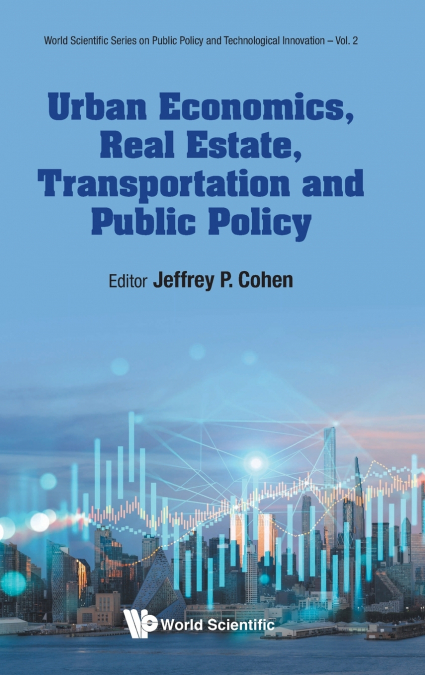
  • URBAN ECONOMICS, REAL ESTATE, TRANSPORTATION & PUBLIC POLICY
    COHEN JEFFREY P / JEFFREY P COHEN
    The chapters of this book synthesize papers on the inter-related topics of urban economics, real estate, transportation and public policy and include applied and empirical research on a variety of sub-topics. These include innovative econometric techniques that are applied to timely problems, such as impacts of flooding in Vancouver, BC Canada on property values; and the determ...
  • Moscow under Construction
    Robert Argenbright / Anastasia Rudakova
    Moscow under Construction explores the growth of place-based opposition to redevelopment practices in Moscow and consequent changes in city’s governance regime. Groups of citizens have struggled to defend homes, neighborhoods, heritage buildings, and historic districts. Although their aims typically have been specific and limited, an important consequence of their activism has ...
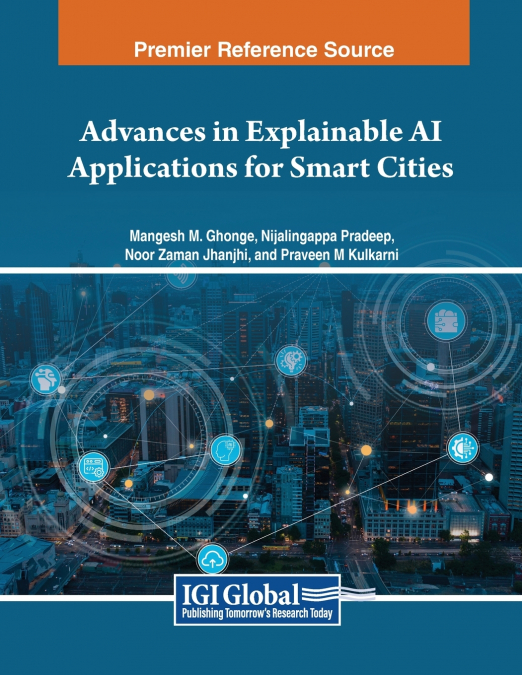
  • Advances in Explainable AI Applications for Smart Cities
    As smart cities become more prevalent, the need for explainable AI (XAI) applications has become increasingly important. Advances in Explainable AI Applications for Smart Cities is a co-edited book that showcases the latest research and development in XAI for smart city applications. This book covers a wide range of topics, including medical diagnosis, finance and banking, judi...
    Disponible

    269,06 €

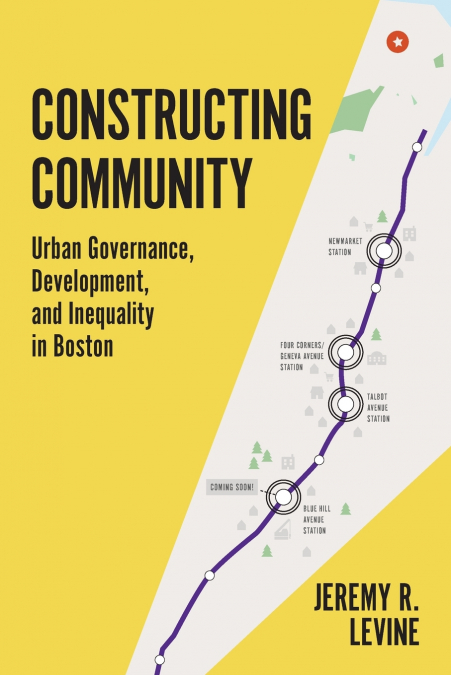
  • Constructing Community
    Jeremy Levine
    A look at the benefits and consequences of the rise of community-based organizations in urban developmentWho makes decisions that shape the housing, policies, and social programs in urban neighborhoods? Who, in other words, governs? Constructing Community offers a rich ethnographic portrait of the individuals who implement community development projects in the Fairmount Corrido...
    Disponible

    40,37 €

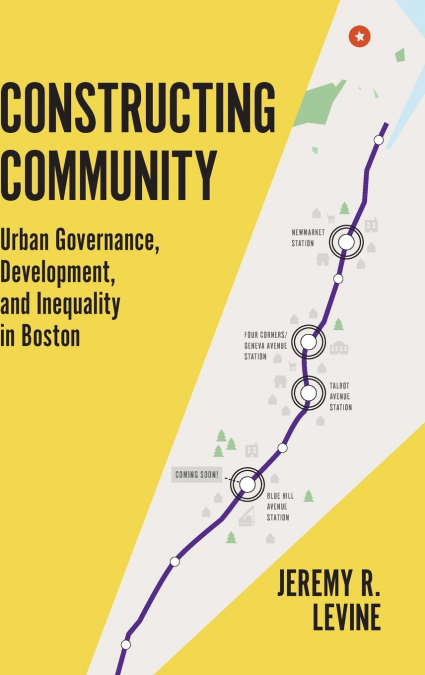
  • Constructing Community
    Jeremy Levine
    A look at the benefits and consequences of the rise of community-based organizations in urban developmentWho makes decisions that shape the housing, policies, and social programs in urban neighborhoods? Who, in other words, governs? Constructing Community offers a rich ethnographic portrait of the individuals who implement community development projects in the Fairmount Corrido...