 Librería Samer Atenea
 Kálamo Books
 Librería Elías (Asturias)
 Librería Kolima (Madrid)
 Librería Proteo (Málaga)
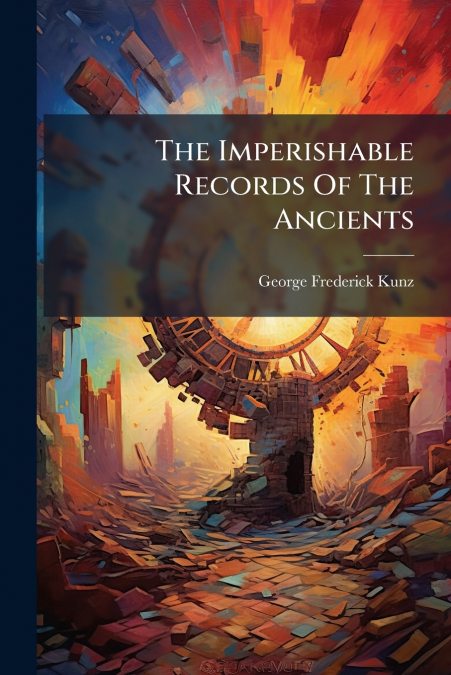
Delve into the fascinating world of ancient record-keeping with George Frederick Kunz’s 'The Imperishable Records Of The Ancients.' This detailed exploration compares the methods used by ancient civilizations to preserve their histories with those employed in more modern times. Discover the enduring techniques and materials that allowed ancient texts and inscriptions to survive through the ages, offering invaluable insights into past cultures and societies. From monumental inscriptions to delicate scrolls, this book examines a wide range of ancient records and the means by which they were created and maintained. Ideal for historians, archaeologists, and anyone interested in the preservation of knowledge, 'The Imperishable Records Of The Ancients' provides a unique perspective on the challenges and triumphs of recording history.This work has been selected by scholars as being culturally important, and is part of the knowledge base of civilization as we know it. This work was reproduced from the original artifact, and remains as true to the original work as possible. Therefore, you will see the original copyright references, library stamps (as most of these works have been housed in our most important libraries around the world), and other notations in the work.This work is in the public domain in the United States of America, and possibly other nations. Within the United States, you may freely copy and distribute this work, as no entity (individual or corporate) has a copyright on the body of the work.As a reproduction of a historical artifact, this work may contain missing or blurred pages, poor pictures, errant marks, etc. Scholars believe, and we concur, that this work is important enough to be preserved, reproduced, and made generally available to the public. We appreciate your support of the preservation process, and thank you for being an important part of keeping this knowledge alive and relevant.