
Inicio > Humanidades > Historia > Historia regional y nacional > Historia de América > The History of Equipment Finance, Volume 4, 1845-1897
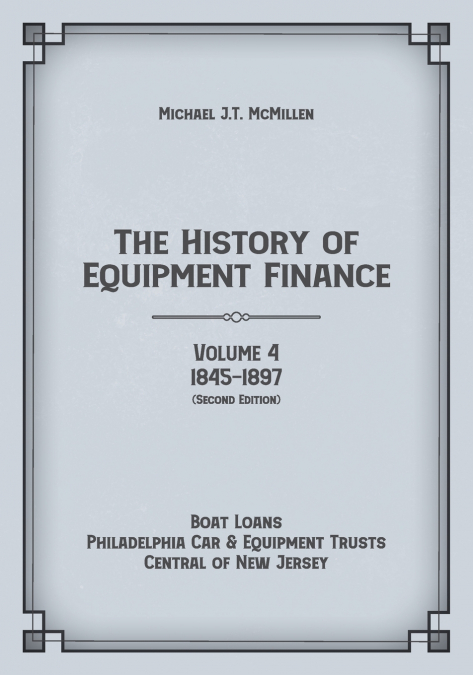
The History of Equipment Finance, Volume 4, 1845-1897

The History of Equipment Finance, Volume 4, 1845-1897

Michael J.T. McMillen

77,76 €
IVA incluido
Disponible
Editorial:
River Stone Publishing Group
Año de edición:
2026
Materia
Historia de América
ISBN:
9781957948324
77,76 €
IVA incluido
Disponible

Selecciona una librería:

  • Librería Samer Atenea

  • Kálamo Books
  • Librería Elías (Asturias)
  • Librería Kolima (Madrid)
  • Librería Proteo (Málaga)

Frederick Fraley became the president of Schuylkill Navigation in 1847. He inherited the boat loan structure of 1845. That structure was originally developed in an effort to repopulate the navigation with coal boats after their near total destruction by a massive flood. Under the new financing structure, SNC borrowed money and gave it to a trust that acquired boats and railroad cars and leased them to SNC. SNC subleased the boats to boat captains.By 1863, through five remarkably innovative iterations, Fraley transformed the boat loan trust from a collateral holder into an independent business unit. It borrowed and lent money, owned boats, cars, locomotives, and, eventually, financial assets, leased boats to captains, provided collateral for, and paid, other SNC debt, and engaged in mergers, among other activities. In addressing SNC’s 1852 receivership and the boat loan structure, the Pennsylvania legislature, for the first time, defined equipment finance and its limited recourse features. From desperation, debt, and default, equipment finance was born.In 1868 and 1869, Lehigh Coal & Navigation transformed the boat loan into the car and equipment trust, incorporating an installment payment structure it used since the 1832 cholera pandemic. The idea for the transformation was planted in the mind of Edward W. Clark, a financier that became president of Lehigh C&N in an effort to rescue the faltering company. The structure was given shape by the Philadelphia lawyer, Charles Gibbons. Did Mendes Cohen make a contribution to the new structure?In 1871, the Central Railroad of New Jersey leased LC&N, taking control of the LC&N car and equipment trusts. The CNJ soon replicated the trusts in four new financings, acquiring thousands of rail cars as it became a leading transporter of Pennsylvania coal to New York. The trust and its documents became the Philadelphia Plan of equipment finance and survive to the present as one of the two dominant structures.These are stories told in this volume.

Artículos relacionados

  • Pan-Africanism and Education
    Kenneth J. King / Kenneth JKing
    This is an analysis of the complex links between Black America and Africa in the period of 1880 to 1945. It examines an extended white attempt to pattern politics and education in colonial Africa upon the example of the U.S. South. This export of United States race relations to Africa was resisted by Black intellectuals in the United States and many of the early nationalists in...
    Disponible

    27,21 €

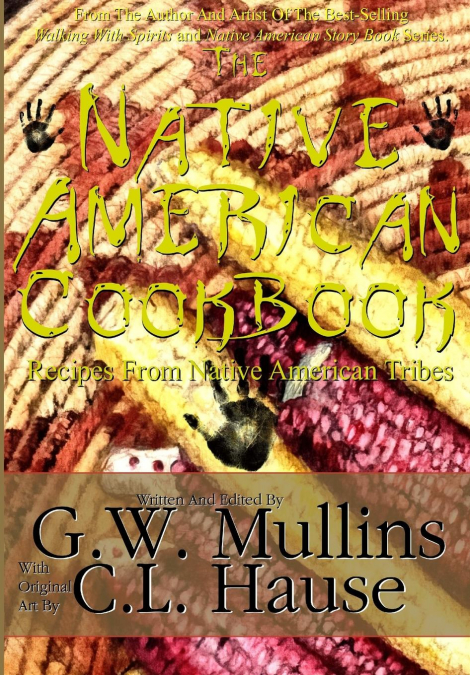
  • The Native American Cookbook Recipes From Native American Tribes
    G.W. Mullins
    Light Of The Moon Publishing along with Author G.W. Mullins and Illustrator / Artist C.L. Hause have joined together to explore Native American Indian Cooking.  More than just a cookbook, this Native American recipe collection offers a look into a forgotten past.  'The Native American Cookbook Recipes From Native American Tribes,' offers a large collection of recipes from and i...
  • A Public Spirit
    George H. Atkinson
    George Henry Atkinson (1819-89) was a son of New England who arrived in the Oregon Territory in 1848, sent by the American Home Missionary Society. Although his commission from the Society specified that his work was to be ecclesiastical and educational, he took an approach to that assignment which went well beyond his mandate. Well-informed and energetic, he made an impact on ...
    Disponible

    12,10 €

  • North Carolina Women of the Confederacy
    Lucy London Anderson
    Long out of print, this volume of recollections, stories, and verse provides a glimpse of women's lives on the home front-and sometimes in the thick of battle-during the War between the States. Nearly fifty years after the American Civil War, Lucy Worth London Anderson (Mrs. John Huske Anderson) of Fayetteville, N.C., compiled one of the first memorial collections honoring the...
    Disponible

    20,80 €

  • Freedom by a Thread
    Freedom by a Thread: The History of Quilombos in Brazil brings together some of the best scholars in the world working on the history of quilombos (maroon societies) in Brazil from a variety of perspectives and approaches. Over 40 percent of the total volume of captive Africans arrived in Brazil during a 400-year period of legal and contraband transatlantic slaving. If slavery ...
    Disponible

    40,62 €

  • Nashville Baseball History
    Bill Traughber
    Nashville is a Big League city despite never having been home to a major league team. From the Civil War era, to star-studded exhibitions, to outstanding Negro Leagues teams, to some of the great minor league franchises of all time, few cities have as rich a baseball tradition as Nashville, Tennessee.Nashville sports historian Bill Traughber, who has been writing about baseball...
    Disponible

    15,68 €

Otros libros del autor

  • The History of Equipment Finance, Volume 4, 1845-1897
    Michael J.T. McMillen
    Frederick Fraley became the president of Schuylkill Navigation in 1847. He inherited the boat loan structure of 1845. That structure was originally developed in an effort to repopulate the navigation with coal boats after their near total destruction by a massive flood. Under the new financing structure, SNC borrowed money and gave it to a trust that acquired boats and railroad...
    Disponible

    46,70 €

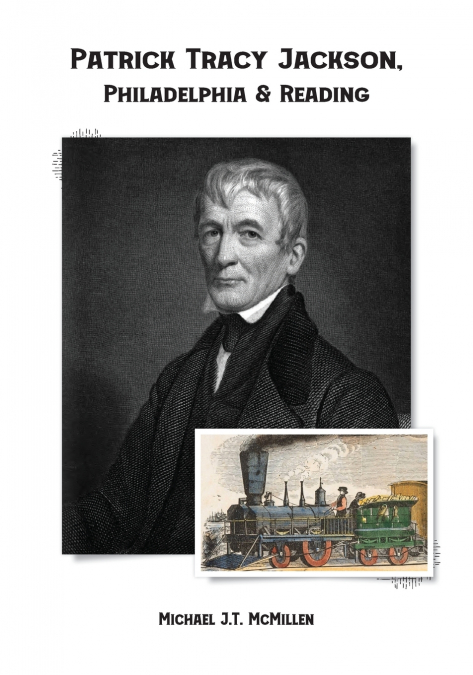
  • Patrick Tracy Jackson, Philadelphia & Reading
    Michael J.T. McMillen
    After the Panic of 1837, the Locks & Canals machine shop had little work; it was to be sold or converted to a twist mill. The L&C treasurer, Patrick Tracy Jackson, strove to keep the shop busy pending sale or conversion. An 1841 plea to Jackson from Elihu Chauncey, president of the Philadelphia & Reading railroad, seemed salvation. Despite incomplete infrastructure, the P&R wou...
    Disponible

    41,08 €

  • Patrick Tracy Jackson, Philadelphia & Reading
    Michael J.T. McMillen
    After the Panic of 1837, the Locks & Canals machine shop had little work; it was to be sold or converted to a twist mill. The L&C treasurer, Patrick Tracy Jackson, strove to keep the shop busy pending sale or conversion. An 1841 plea to Jackson from Elihu Chauncey, president of the Philadelphia & Reading railroad, seemed salvation. Despite incomplete infrastructure, the P&R wou...
    Disponible

    87,79 €

  • Patrick Tracy Jackson, Philadelphia & Reading
    Michael J.T. McMillen
    After the Panic of 1837, the Locks & Canals machine shop had little work; it was to be sold or converted to a twist mill. The L&C treasurer, Patrick Tracy Jackson, strove to keep the shop busy pending sale or conversion. An 1841 plea to Jackson from Elihu Chauncey, president of the Philadelphia & Reading railroad, seemed salvation. Despite incomplete infrastructure, the P&R wou...
    Disponible

    76,35 €