Inicio > Humanidades > Historia > Historia: acontecimientos y temas específicos > Historia social y cultural > The History and Antiquities of Freemasonry - Condensed Essential Edition - Edited - by The Concise Masonic Library
The History and Antiquities of Freemasonry - Condensed Essential Edition - Edited - by The Concise Masonic Library

The History and Antiquities of Freemasonry - Condensed Essential Edition - Edited - by The Concise Masonic Library

George Fort

13,72 €
IVA incluido
Disponible
Editorial:
Masonic Light Publishing
Año de edición:
2026
Materia
Historia social y cultural
ISBN:
9781913881443
13,72 €
IVA incluido
Disponible

Selecciona una librería:

  • Librería Samer Atenea

  • Kálamo Books
  • Librería Elías (Asturias)
  • Librería Kolima (Madrid)
  • Librería Proteo (Málaga)

Where did Freemasonry come from-and how did the working traditions of medieval builders develop into one of the world’s most enduring fraternal institutions?In The History and Antiquities of Freemasonry, George F. Fort traces the development of the Craft through the architecture, guilds, religious institutions, legends, symbols, and social traditions of medieval Europe. Moving from the decline of the classical world and the preservation of architectural knowledge in Byzantium to the rise of monasteries, cathedral builders, stonecutters’ guilds, and organised lodges, Fort presents a sweeping investigation into the historical roots of Freemasonry.Particular attention is given to the transmission of architectural knowledge from Byzantine craftsmen to Western Europe, the growth of the medieval building guilds, and the emergence of organised bodies of operative Masons. Fort follows these traditions through France, Britain, Germany, and Italy, examining apprenticeship, degrees, lodge government, obligations, secrecy, travelling craftsmen, and the great Gothic building tradition.The story then follows the transformation of Freemasonry from an operative craft into a speculative fraternity. Fort examines the decline of the old working guild system, the admission of non-operative members, the survival of Masonic rites and moral instruction, and the eventual emergence of speculative Freemasonry and the Grand Lodge tradition.But this is more than a history of institutions. Fort also ventures into the legendary and symbolic inheritance of the Craft: the Seven Liberal Arts, Solomon’s Temple, Hiram, the Lost Word, medieval Masonic legends, Gothic and Teutonic traditions, mythology, sacred names, ritual symbolism, and the relationship he perceived between older religious traditions and later Masonic forms.This Condensed Essential Edition, published as part of The Concise Masonic Library, preserves the central narrative, arguments, historical material, and symbolic investigations of Fort’s work in a more approachable format for the modern reader. It is intended as an introduction and gateway to the original rather than a replacement for the complete scholarly text.Ideal for readers interested in Freemasonry, Masonic history, Masonic symbolism, medieval guilds, cathedral builders, Gothic architecture, secret societies, Western esotericism, and the historical development of operative and speculative Masonry.
Artículos relacionados

  • Arizal
    Raphael Afilalo
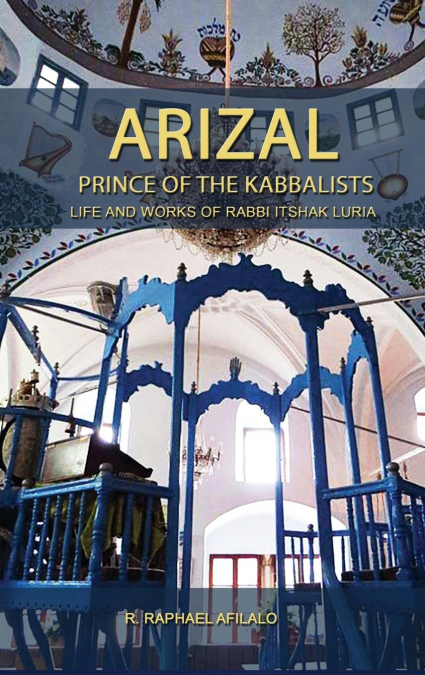
    The Ari overflowed with Torah. He was expert in Scripture, Mishnah, Talmud, Midrash, Maaseh Bereishit and Maaseh Merkavah. About all the different levels of prophecy, their details and from which level the prophets had their revelations.  He understood the whistling of the trees, the grass and stones, the language of the birds and other animals, the conversations of angels, the...
  • Rose-tinted Memory
    Michael S Fryer
    “Those who deny Auschwitz would be ready to remake it”.  ~ Primo Levi, Holocaust survivor and author Seventy years after the mass murder of the Jews of Europe, Holocaust denial and Holocaust revisionism are creeping into our overall perception of what actually happened.Christendom has not ‘denied’ Holocaust, but it has attempted to create a memory of Holocaust which suggests th...
  • Pan Kapitan of Jordanow
    William Leibner
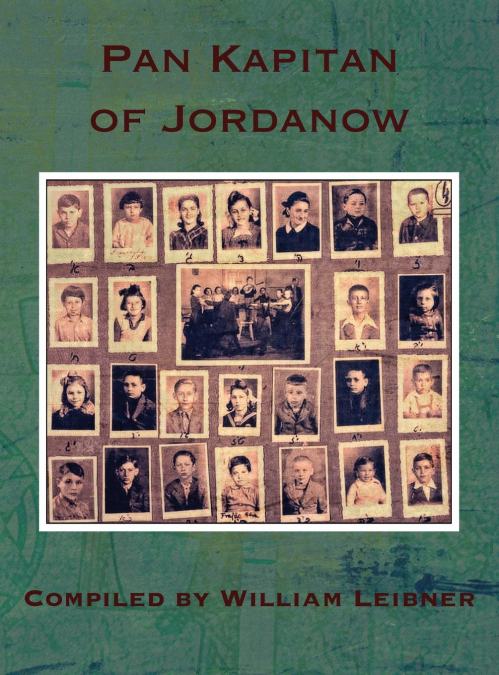
    Yeshayahu Drucker devoted a good part of his life to rescuing Jewish children from non-Jewish homes. Many parents had given their children to Polish neighbors for safekeeping during the war. Unfortunately most of the parents did not survive the Shoah. At the end of the war, there was no one to claim the children and they remained with the “adopted” Polish families. Following hi...
  • Holy Dissent
    Glenn Dynner
    BThe religious communities of early modern Eastern Europe—particularly those with a mystical bent—are typically studied in isolation. Yet the heavy Slavic imprint on Jewish popular mysticism and pervasive Judaizing tendencies among Christian dissenters call into question the presumed binary quality of Jewish-Christian interactions. In Holy Dissent: Jewish and Christian Mystics ...
  • AL-FARD
    Ali Mahdi Muhammad
    The Al-Fard, or the The Dawn, has captured the early rays of Our history. This history is essential if we are to be brought face to face with the One true and living God of the universe. The purpose of this writing is to bring the reader step by step, one degree at a time to the reality of God in person. The teachings of Our Father elevates the believer to the level of Godhood ...
  • Wild Things. Nature and the Social Imagination
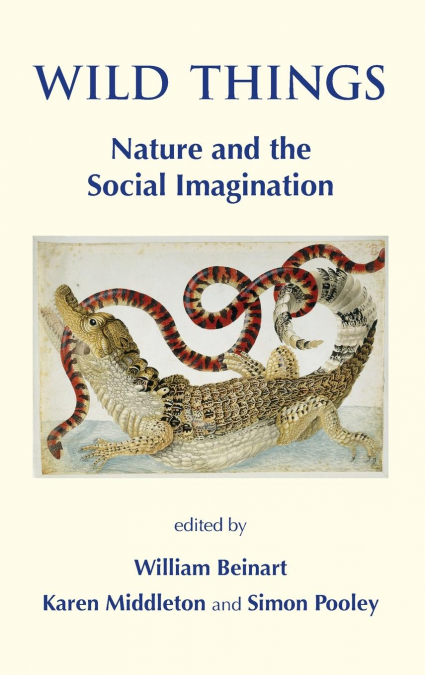
    HISTORIES OF HUMAN CONSTRUCTIONS OF NATUREWild Things: Nature and the Social Imagination assembles eleven substantive and original essays on the cultural and social dimensions of environmental history. They address a global cornucopia of social and ecological systems, from Africa to Europe, North America and the Caribbean, and their temporal range extends from the 1830s into th...