 Librería Samer Atenea
 Kálamo Books
 Librería Elías (Asturias)
 Librería Kolima (Madrid)
 Librería Proteo (Málaga)
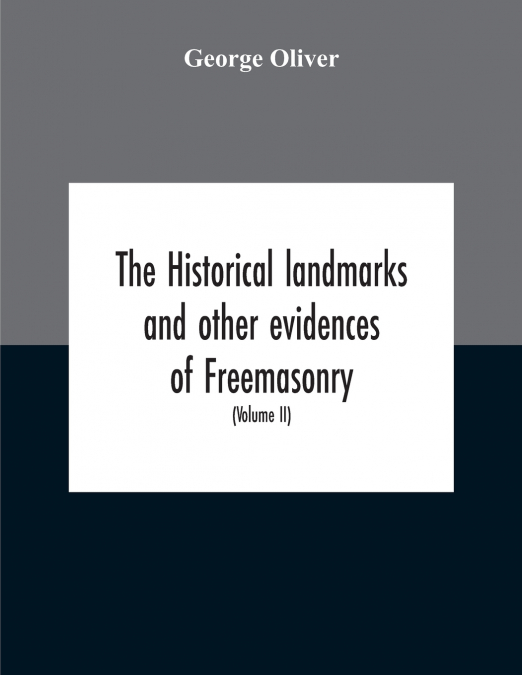
Enter the measured world of Masonic proof and practice. A living record of craft. George Oliver’s The Historical Landmarks And Other Evidences Of Freemasonry, Explained (Volume II) compiles practical lectures with copious notes, arranged on the system enjoined by the Grand Lodge of England following the Lodge of Reconciliation at the Union of 1813. It presents a readable masonic lectures anthology in which historical landmarks of Freemasonry are set beside analytical commentary that clarifies ritual structure, symbolism and provenance. The author’s tone is plain and forensic: masonic rituals are explained not as mystery but as precedent, enabling comparative fraternal orders to be read against one another. Useful to newcomers intrigued by secret societies history and to seasoned scholars, the work functions equally as a reference for masonic study and as a freemason researcher resource.Republished by Alpha Editions in a careful modern edition, this volume preserves the spirit of the original while making it effortless to enjoy today - a heritage title prepared for readers and collectors alike. Its historical significance is considerable: a nineteenth century masonry document rooted in British masonic tradition, it records the usages and arguments that informed the Grand Lodge of England’s settled practice after the Lodge of Reconciliation. As such, it belongs in any serious freemasonry history collection and is invaluable to those tracing the evolution of ritual and institutional custom.Casual readers will find clear exposition and context; classic-literature collectors will appreciate the fidelity of the notes and the edition’s archival value. Collectors, libraries and student researchers will prize it within any freemasonry history collection, while curators of comparative fraternal orders will consult it as a durable reference for masonic study. Scholars and comparative historians of secret societies and fraternal orders will recognise the work as a primary source that rewards careful study. Clear, authoritative and respectfully restored, this edition brings a formative voice back into circulation for today’s readers and for future generations. A judicious bridge between scholarship and curious minds everywhere.