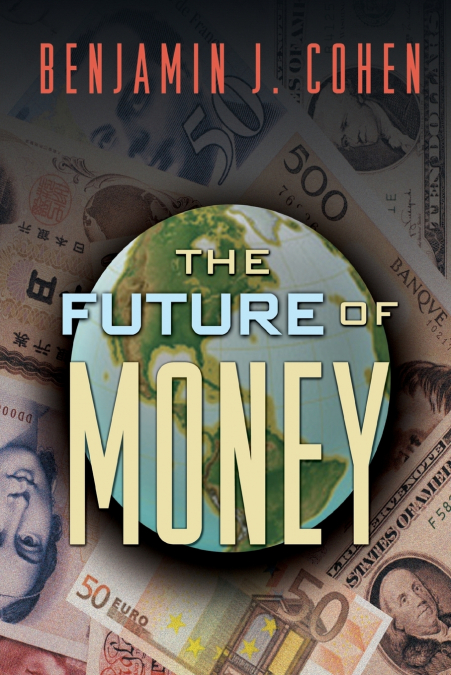
The Future of Money

The Future of Money

Benjamin J. Cohen / Benjamin JCohen

56,85 €
IVA incluido
Disponible
Editorial:
Princeton University Press
Año de edición:
2006
Materia
Economía internacional
ISBN:
9780691116662
56,85 €
IVA incluido
Disponible

Selecciona una librería:

  • Librería Samer Atenea
  • Librería Aciertas (Toledo)
  • Kálamo Books
  • Librería Perelló (Valencia)
  • Librería Elías (Asturias)
  • Donde los libros
  • Librería Kolima (Madrid)
  • Librería Proteo (Málaga)

Is globalization leading us toward a world of fewer and fewer currencies and, consequently, simplified monetary management? Many specialists believe this is the case, as the territorial monopolies national governments have long claimed over money appears to be eroding. In The Future of Money, Benjamin Cohen argues that this view--which he calls the 'Contraction Contention'--is wrong. Rigorously argued, written with extraordinary clarity, and thoroughly up-to-date, this book demonstrates that the global population of currencies is set to expand greatly, not contract, making monetary governance more difficult, not less. At the book’s core is an innovative theoretical model for understanding the strategic preferences of states in monetary management. Should governments defend their traditional monetary sovereignty, or should they seek some kind of regional consolidation of currencies? The model offers two broad advances. First, whereas most scholarly work evaluates strategic options individually or in comparison to just one other alternative, this model emphasizes the three-dimensional nature of the decisions involved. Second, the model emphasizes degrees of currency regionalization as a central determinant of state preferences. Cohen also systematically explores the role of the private sector as an alternative source of money. The book concludes with two key policy proposals. First, fiscal policy should be resurrected as a tool of macroeconomic management, to offset the present-day erosion in the effectiveness of monetary policy. Second, the International Monetary Fund should more actively help coordinate the decentralized strategic decision-making of governments. The future of money will be perilous. But, by mapping out the alternative policies countries can follow, The Future of Money shows it need not be chaotic.
Artículos relacionados

  • Regional Economic Integration and the Global Financial System
    Engin Sorhun / Hasan Dinçer / Unit Hacioglu
    In theory, regionalism and globalization are intended to be viewed as two separate concepts. However, as long as the approaches complement each other, considering these paradigms in tandem can have significantly positive effects on the overall status of the world economy. Regional Economic Integration and the Global Financial System addresses recent trends in regional integrati...
  • Handbook of Research on Impacts of International Business and Political Affairs on the Global Economy
    The growth of global commerce depends on many different factors and strategies in order for multinational corporations to efficiently compete and thrive in the international marketplace. In addition to business strategies, corporations must also be aware of political affairs that may impact their global economic status. The Handbook of Research on Impacts of International Busin...
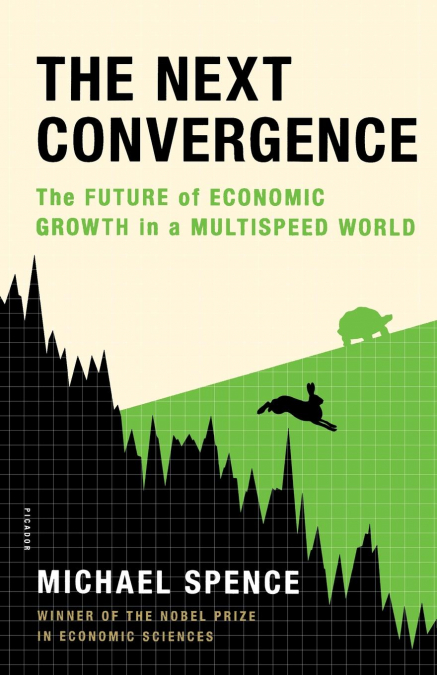
  • NEXT CONVERGENCE
    MICHAEL SPENCE
    ...
    Disponible

    17,21 €

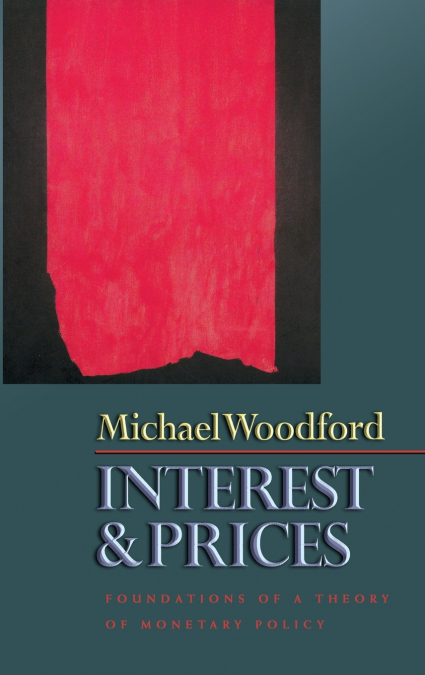
  • Interest and Prices
    Michael Woodford
    With the collapse of the Bretton Woods system, any pretense of a connection of the world’s currencies to any real commodity has been abandoned. Yet since the 1980s, most central banks have abandoned money-growth targets as practical guidelines for monetary policy as well. How then can pure 'fiat' currencies be managed so as to create confidence in the stability of national unit...
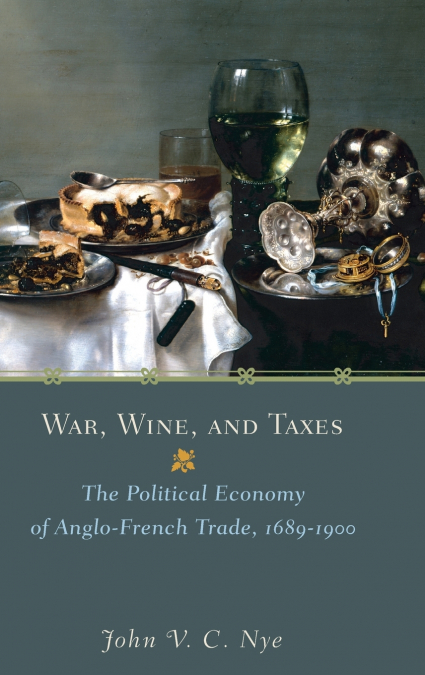
  • War, Wine, and Taxes
    John V.C. Nye
    In War, Wine, and Taxes, John Nye debunks the myth that Britain was a free-trade nation during and after the industrial revolution, by revealing how the British used tariffs-notably on French wine-as a mercantilist tool to politically weaken France and to respond to pressure from local brewers and others. The book reveals that Britain did not transform smoothly from a mercantil...
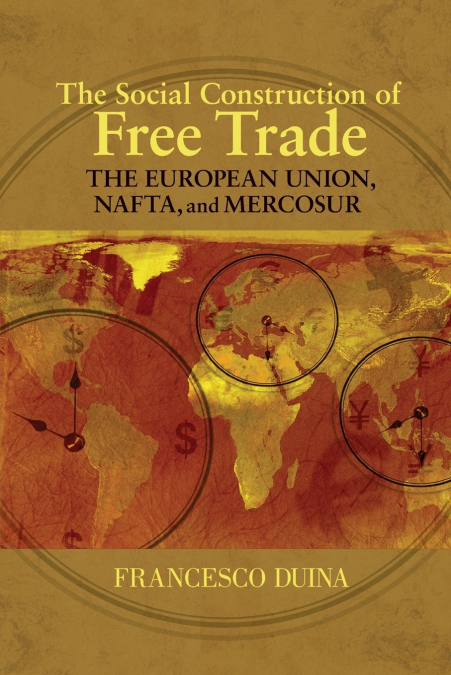
  • The Social Construction of Free Trade
    Francesco Duina
    This book offers a compelling new interpretation of the proliferation of regional trade agreements (RTAs) at the end of the twentieth century. Challenging the widespread assumption that RTAs should be seen as fundamentally similar economic initiatives to pursue free trade, Francesco Duina proposes that the world is reorganizing itself into regions that are highly distinctive an...
    Disponible

    54,25 €

Otros libros del autor

  • International Political Economy
    Benjamin J. Cohen / Benjamin JCohen
    The field of international political economy gained prominence in the early 1970s--when the Arab oil embargo and other crises ended the postwar era of virtually unhindered economic growth in the United States and Europe--and today is an essential part of both political science and economics. This book offers the first comprehensive examination of this important field’s developm...
    Disponible

    68,29 €