 Librería Samer Atenea
 Kálamo Books
 Librería Elías (Asturias)
 Librería Kolima (Madrid)
 Librería Proteo (Málaga)
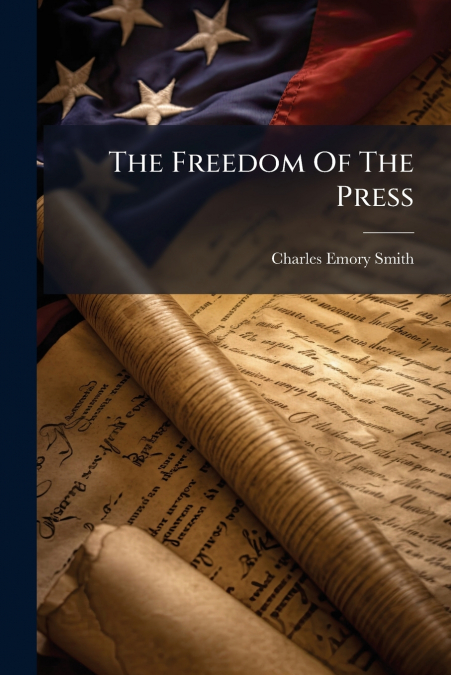
This volume presents two significant documents related to a critical moment in the history of press freedom. It includes Governor Samuel W. Pennypacker’s message explaining his approval of a bill restricting the liberty of the press, alongside Charles Emory Smith’s powerful editorial protesting this decision. These documents offer insight into the tensions between governmental authority and the fundamental right to a free press during the late 19th century.Pennypacker’s message outlines the rationale behind the restrictive bill, while Smith’s editorial passionately defends the importance of an unfettered press as a cornerstone of democracy. The juxtaposition of these opposing viewpoints provides a valuable historical perspective on the ongoing debate surrounding freedom of expression and the role of the media in society. A must-read for anyone interested in constitutional law, political science, and the history of civil rights in the United States.This work has been selected by scholars as being culturally important, and is part of the knowledge base of civilization as we know it. This work was reproduced from the original artifact, and remains as true to the original work as possible. Therefore, you will see the original copyright references, library stamps (as most of these works have been housed in our most important libraries around the world), and other notations in the work.This work is in the public domain in the United States of America, and possibly other nations. Within the United States, you may freely copy and distribute this work, as no entity (individual or corporate) has a copyright on the body of the work.As a reproduction of a historical artifact, this work may contain missing or blurred pages, poor pictures, errant marks, etc. Scholars believe, and we concur, that this work is important enough to be preserved, reproduced, and made generally available to the public. We appreciate your support of the preservation process, and thank you for being an important part of keeping this knowledge alive and relevant.