Chris W Steinle / Douglas Hamp
 Librería Samer Atenea
 Kálamo Books
 Librería Elías (Asturias)
 Librería Kolima (Madrid)
 Librería Proteo (Málaga)
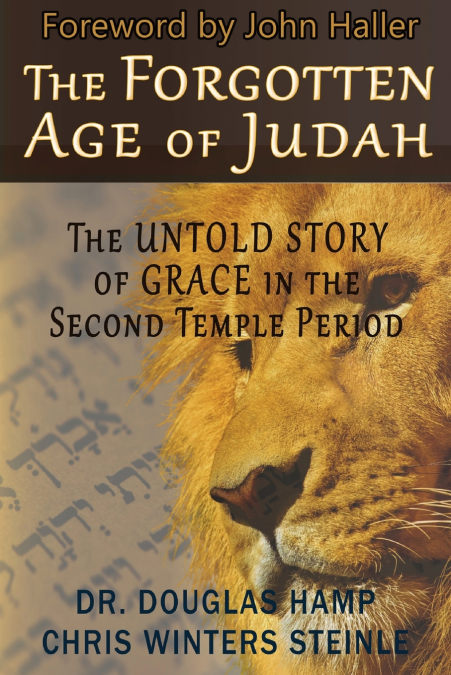
The Forgotten Age of Judah reveals the story of God’s grace toward the House of Judah and reverses a rewritten history that has distorted Judeo-Christian theology for nearly 2,000 years.The Old and New Testaments provide striking evidence that the House of Judah’s national sins were forgiven; and that Judah was in good standing, covenantally, during the Second Temple Period.-until Messiah was rejected; at which time the sin of rejecting the prophet like Moses (Deut. Ch. 18) became a stumbling block. Jesus told the Jews of Jerusalem: 'If I had not come . . . you [the house of Judah] would have no sin.' The House of Israel was 'divorced' by God and scattered among the nations. But, for the sake of the Davidic promise, the House of Judah was never divorced; and was never declared, 'not My people' (Hosea). Previous publications by the Commonwealth of Israel Foundation have focused on the inclusion of the Gentiles (Nations) and God’s intended peace between 'believers from the Nations' and the House of Judah (Jews), according to Ephesians Ch. 2 and Ezekiel Ch. 37. Yes, there is a difference between: being chosen (elect); being in good covenantal standing nationally; and Messianic salvation resulting in eternal life. Dr. Hamp provides several chapters making these distinctions clear according Scriptures. In this book, the reader will discover the importance of tracking the two houses through the Bible, how the two houses relate to the Great Commission and to end-times prophecy. Learn why both Replacement Theology and Dispensationalism fall short by failing to account for God’s continuing grace and mercy upon Judah through the Davidic covenant. Did the Jews have religion, or relationship, in the Second Temple Period? Paul commented on the Spirit-endowed Jew in his opening chapters of Romans: 'but he is a Jew who is one inwardly; and circumcision is that of the heart, in the Spirit, not in the letter; whose praise is not from men but from God' (Rom. 2:29). Yes, 'he is a Jew.' If-as mainstream theologies suggest-no Jews met these criteria, Paul wouldn’t have used such a Jew as a model to the Church of a genuine spirit-led walk that is pleasing to God. Just what did happen to the Jews-like the ones in Ephesus (Acts 19)-, who 20-30 years after the cross had never heard about Jesus? Did their relationship with God suddenly change as the Church emerged, as both Replacement and Dispensation Theologies insist? Or, in the absence of any prophetic pronouncement to the contrary, did these innocent Jews continue as before-in good standing under the shadow of the Davidic covenant? This does not imply a dual covenant, but two different ways in which God handled the House of Israel and the House of Judah under the Sinaitic covenant. Failure to recognize the covenantal status of Judah from the time of Ezra until Christ has contributed to a continued alienation between believers among the nations (Gentiles) and the Jewish house. Such alienation is contrary to the Commonwealth of Israel described in Ephesians Chs. 2-3. Although the way of salvation has always been through faith and repentance, Christian theology has disregarded Judah’s national good standing during the Second Temple period. For too long the Church has denied the relationship and fellowship that the Old Testament saints enjoyed with the Holy One of Israel. Acknowledging this blessed Age of Judah is a step toward honesty and goodwill between Christians and Jews.