The Fertility Transition in Iran

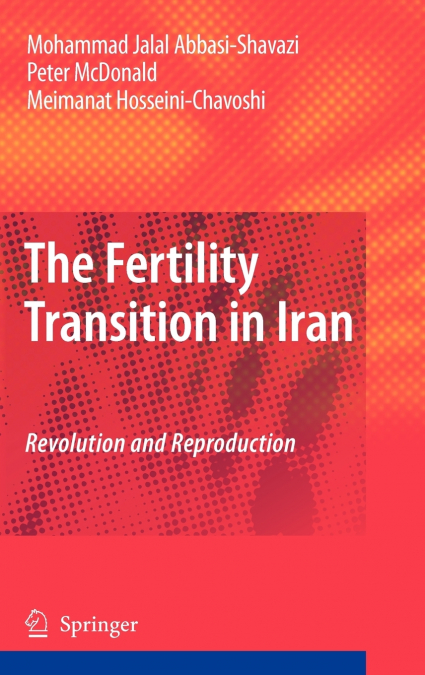
The Fertility Transition in Iran

Meimanat Hosseini-Chavoshi / Mohammad Jalal Abbasi-Shavazi / Peter McDonald

92,99 €
IVA incluido
Disponible
Editorial:
Springer Nature B.V.
Año de edición:
2011
Materia
Población y demografía
ISBN:
9789400718258
92,99 €
IVA incluido
Disponible

Selecciona una librería:

  • Librería Samer Atenea
  • Librería Aciertas (Toledo)
  • Kálamo Books
  • Librería Perelló (Valencia)
  • Librería Elías (Asturias)
  • Donde los libros
  • Librería Kolima (Madrid)
  • Librería Proteo (Málaga)

Confounding all conventional wisdom, the fertility rate in the Islamic Republic of Iran fell from around 7.0 births per woman in the early 1980s to 1.9 births per woman in 2006. That this, the largest and fastest fall in fertility ever recorded, should have occurred in one of the world’s few Islamic Republics demands explanation. This book, based upon a decade of research is the first to attempt such an explanation. The book documents the progress of the fertility decline and displays its association with social and economic characteristics. It addresses an explanation of the phenomenal fall of fertility in this Islamic context by considering the relevance of standard theories of fertility transition. The book is rich in data as well as the application of different demographic methods to interpret the data. All the available national demographic data are used in addition to two major surveys conducted by the authors. Demographic description is preceded by a socio-political history of Iran in recent decades, providing a context for the demographic changes. The authors conclude with their views on the importance of specific socio-economic and political changes to the demographic transition. Their concluding arguments suggest continued low fertility in Iran.The book is recommended to not only demographers, social scientists, and gender specialists, but also to policy makers and those who are interested in social and demographic changes in Iran and other Islamic countries in the Middle East. It is also a useful reference for demography students and researchers who are interested in applying fertility theories in designing surveys and analysing data.


Artículos relacionados

  • The Nature of Demography
    Hervé Le Bras
    Rapid changes over the last twenty years have impacted every branch of demographic analysis, from birth rates and immigration, to marriage rates and aging. The Nature of Demography is a response to these enormous changes. Written by one of the world’s leading demographers, this authoritative text offers a systematic and coherent overview of the fundamental ideas governing the s...
    Disponible

    110,57 €

  • Interaction Ritual Chains
    Randall Collins
    Sex, smoking, and social stratification are three very different social phenomena. And yet, argues sociologist Randall Collins, they and much else in our social lives are driven by a common force: interaction rituals. Interaction Ritual Chains is a major work of sociological theory that attempts to develop a 'radical microsociology.' It proposes that successful rituals create s...
    Disponible

    56,26 €

  • Migration, Mobility and Multiple Affiliations
    ...
  • Finding Strength in Numbers
    Alan Blackshaw
    A topical exploration of how communities can help heal trauma in individuals and groupsThere are many books dedicated to trauma. What sets ’Finding Strength in Numbers’ apart from these books is that it is one of the very few, or even the first, focussing on trauma and its relationship to community as the place where we heal. Trauma is a common human experience. Almost all of u...
    Disponible

    18,45 €

  • India Population Report
    ...
  • Death and the Metropolis
    John Landers
    ...
    Disponible

    49,91 €

Otros libros del autor

  • The Fertility Transition in Iran
    Meimanat Hosseini-Chavoshi / Mohammad Jalal Abbasi-Shavazi / Peter McDonald
    Confounding all conventional wisdom, the fertility rate in the Islamic Republic of Iran fell from around 7.0 births per woman in the early 1980s to 1.9 births per woman in 2006. That this, the largest and fastest fall in fertility ever recorded, should have occurred in one of the world’s few Islamic Republics demands explanation. This book, based upon a decade of research is th...