 Librería Samer Atenea
 Kálamo Books
 Librería Elías (Asturias)
 Librería Kolima (Madrid)
 Librería Proteo (Málaga)
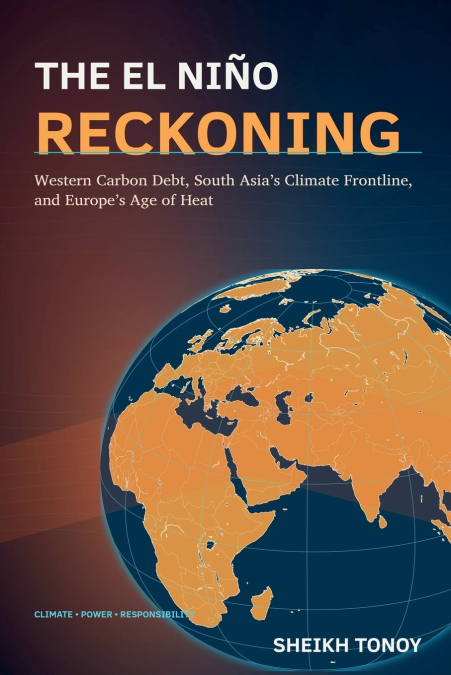
Climate change is often argued one statistic at a time: the biggest emitter this year, the hottest season on record, a single flood, or the next El Niño forecast. THE EL NIÑO RECKONING takes a wider view.It connects the accumulated carbon history of industrial development to the present-day physics of climate variability, then follows the consequences through South Asia, Bangladesh, and a Europe discovering that wealth does not create climate immunity.The book asks a harder set of questions. Who contributed most to the atmospheric burden over time? Who gained from carbon-intensive development? Why do countries with smaller historical contributions often face greater exposure? How should readers distinguish annual emissions from cumulative responsibility, hazard from vulnerability, and scientific observation from political or moral judgment?Drawing on climate science, emissions accounting, development evidence, public-health research, and political economy, Sheikh Tonoy builds a climate-justice argument around causality rather than slogans. The discussion moves from coal and empire to the carbon ledger; from El Niño mechanics to monsoon, heat, food, work, finance, and adaptation; and from South Asia’s climate frontline to Europe’s growing confrontation with extreme heat.THE EL NIÑO RECKONING is written for serious general readers who want climate responsibility explained with evidence, historical context, and a clear separation between what the data show, what forecasts can reasonably say, and what political choices remain open.