Inicio > Economía, finanzas, empresa y gestión > Economía > Macroeconomía > Economía monetaria > The Economics of Inflation - A Study of Currency Depreciation in Post War Germany
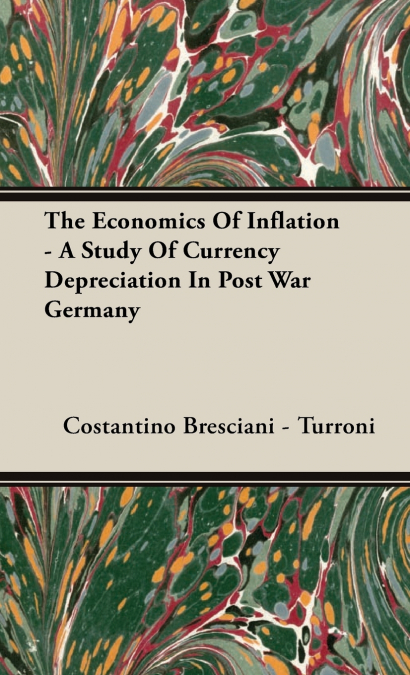
The Economics of Inflation - A Study of Currency Depreciation in Post War Germany

The Economics of Inflation - A Study of Currency Depreciation in Post War Germany

Costantino Bresciani - Turroni / Costantino Bresciani-Turroni

55,54 €
IVA incluido
Consulta disponibilidad
Editorial:
Hesperides Press
Año de edición:
2008
Materia
Economía monetaria
ISBN:
9781443723527

Selecciona una librería:

  • Librería Samer Atenea
  • Librería Aciertas (Toledo)
  • Kálamo Books
  • Librería Perelló (Valencia)
  • Librería Elías (Asturias)
  • Donde los libros
  • Librería Kolima (Madrid)
  • Librería Proteo (Málaga)

The depreciation of the mark of 1914-23, which is the subject of this work, is one of the outstanding episodes in the history of the twentieth century. Not only by reason of its magnitude but also by reason of its effects, it looms large on our horizon. It was the most colossal thing of its kind in history: and, next probably to the Great War itself, it must bear responsibility for many of the political and economic difficulties of our generation. It destroyed the wealth of the more solid elements in German society: and it left behind a moral and economic disequilibrium, apt breeding ground for the disasters which have followed. Hitler is the foster-child of the inflation. The financial convulsions of the Great Depression were, in part at least, the product of the distortions of the system of international borrowing and lending to which its ravages had given rise. If we are to understand correctly the present position of Europe, we must not neglect the study of the great German inflation. If we are to plan for greater stability in the future, we must learn to avoid the mistakes from which it sprang.There is another reason why the history of this episode is peculiarly significant to students of the social sciences. Accidents to the body politic, like accidents to the physical body, often permit observations of a kind which would not be possible under normal conditions. In peaceful times we may speculate concerning the consequences of violent change. But we are naturally precluded from verifying our conclusions: we cannot upset the smooth current of things for the advancement of abstract knowledge. But when disturbance takes place, it is sometimes possible to snatch good from evil and to obtain insight into the working of processes which are normally concealed. No doubt there are dangers here. We must not ignore the possibility that the processes thus revealed are themselves abnormal: we must not infer, for instance, that propositions which apply to large inflations necessarily apply, without modification, to small inflations. But the dangers are clear: it is net difficult to keep them in mind and to guard against them. And the opportunities of fruitful research are enormous. In this matter of the depreciation of the mark, there is hardly any branch of the theory of economic dynamics which is not illuminated by examination of its grim events.For both these reasons, therefore, I hope that this book will obtain a wide circulation among the English-speaking public.

Artículos relacionados

  • The Principles Governing Wealth & Finance
    MARVEN BILLS
    Many people want to improve their well-being, happiness, and opportunities by managing their wealth and finances effectively. However, this is not an easy task, as it requires knowledge, skills, and discipline. There are some basic guidelines that can help us achieve our financial goals, increase our income, save and invest wisely, and use our resources for good purposes. These...
    Disponible

    32,29 €

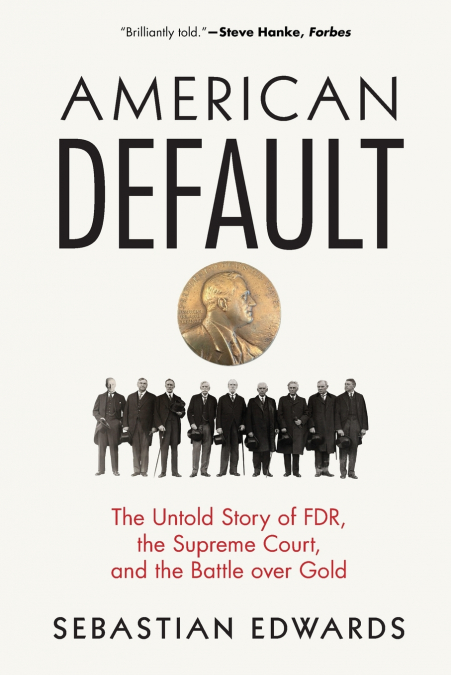
  • American Default
    Sebastian Edwards
    The untold story of how FDR did the unthinkable to save the American economyThe American economy is strong in large part because nobody believes that America would ever default on its debt. Yet in 1933, Franklin D. Roosevelt did just that, when in a bid to pull the country out of depression, he depreciated the US dollar in relation to gold, effectively annulling all debt contra...
    Disponible

    26,48 €

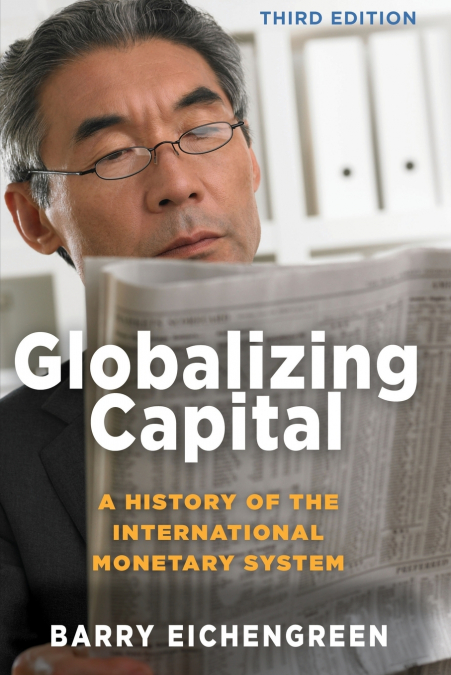
  • Globalizing Capital
    Barry Eichengreen
    Essential reading for understanding the international economy-now thoroughly updatedLucid, accessible, and provocative, and now thoroughly updated to cover recent events that have shaken the global economy, Globalizing Capital is an indispensable account of the past 150 years of international monetary and financial history-from the classical gold standard to today’s post-Bretto...
    Disponible

    43,05 €

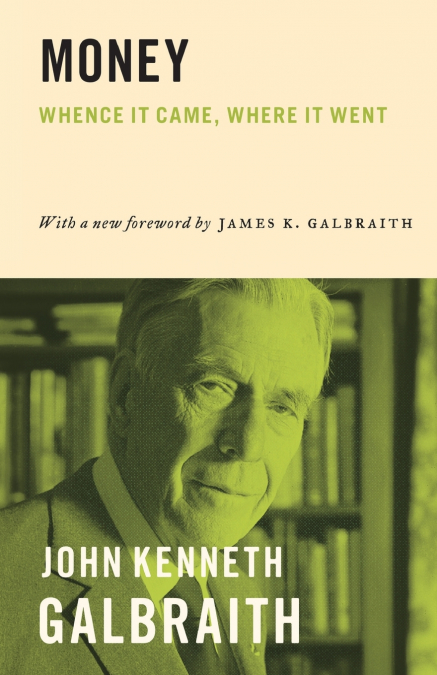
  • Money
    John Kenneth Galbraith
    Money is nothing more than what is commonly exchanged for goods or services, so why has understanding it become so complicated? In Money, renowned economist John Kenneth Galbraith cuts through the confusions surrounding the subject to present a compelling and accessible account of a topic that affects us all. He tells the fascinating story of money, the key factors that shaped ...
    Disponible

    37,12 €

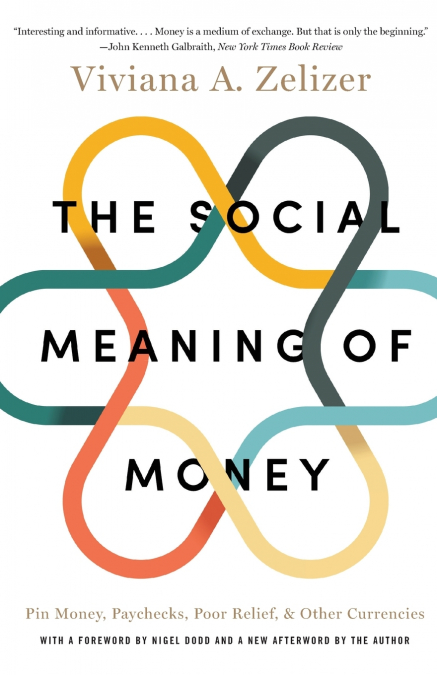
  • The Social Meaning of Money
    Viviana A. Zelizer
    A dollar is a dollar—or so most of us believe. Indeed, it is part of the ideology of our time that money is a single, impersonal instrument that impoverishes social life by reducing relations to cold, hard cash. After all, it’s just money. Or is it? Distinguished social scientist and prize-winning author Viviana Zelizer argues against this conventional wisdom. She shows how peo...
    Disponible

    33,29 €

  • Debt-Free Living
    SREEKUMAR V T / V T SREEKUMAR
    'Debt-Free Living: A Guide to Managing and Eliminating Debt' is a comprehensive resource for anyone looking to take control of their finances and achieve freedom from debt. This book provides practical advice, strategies, and tools for managing debt, creating a budget, saving money, and building wealth.Readers will learn how to assess their financial situation, set realistic go...