D. S. Margoliouth / DSMargoliouth / Henry Frederick Amedroz
 Librería Samer Atenea
 Kálamo Books
 Librería Elías (Asturias)
 Librería Kolima (Madrid)
 Librería Proteo (Málaga)
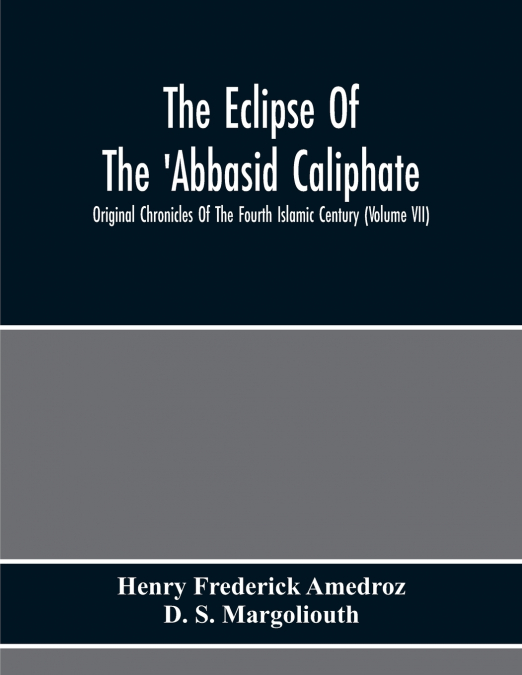
A pivotal eyewitness record of a fading empire. Primary voices break formal silence.Meticulously gathered islamic history chronicles, The Eclipse Of The ’Abbasid Caliphate brings together medieval arabic sources as primary historical documents that chart political rupture and cultural change across the fourth islamic century. These original chronicles trace the abbasid caliphate decline and the manoeuvres of competing middle eastern dynasties, offering immediate reportage on governance, court life and communal experience, small details that map onto the wider sweep of the islamic golden age. Readers encounter the streets and markets of 10th century Baghdad, the administrative dispatches and chronologies that scholars rely on, and a body of texts that sits at the heart of classical arabic literature and other sources of islamic history. The volume’s direct testimony makes it indispensable both as narrative history and as material for specialised study, delivering substance for classroom use and narrative force for general readers. The texts here are raw and unmediated, chronological entries, official notes and eyewitness accounts that supply the foundation for modern reconstructions of policy, sectarian tensions and cultural patronage. Collectors and newcomers alike will find in these pages the human scale behind dynastic change, and a compact window onto the contested world of 10th century Baghdad.Republished by Alpha Editions in a careful modern edition, this volume preserves the spirit of the original while making it effortless to enjoy today - a heritage title prepared for readers and collectors alike. Ideal for casual readers and classic-literature collectors, this historians reference edition also serves as an academic research collection for libraries and scholars seeking primary accounts of 10th century Baghdad and the transformations of the Abbasid world. Accessible without sacrificing fidelity to the sources, it connects students, historians and curious readers to the essential materials that underpin study of middle eastern dynasties and the broader corpus of sources of islamic history. Frederick Amedroz and Henry’s stewardship secures the book’s place among enduring, collectible works of classical arabic literature.