
Inicio > Matemáticas y ciencia > Biologia, ciencias de la vida > Hidrobiología > Biología marina > The Eastern Mediterranean as a Laboratory Basin for the Assessment of Contrasting Ecosystems
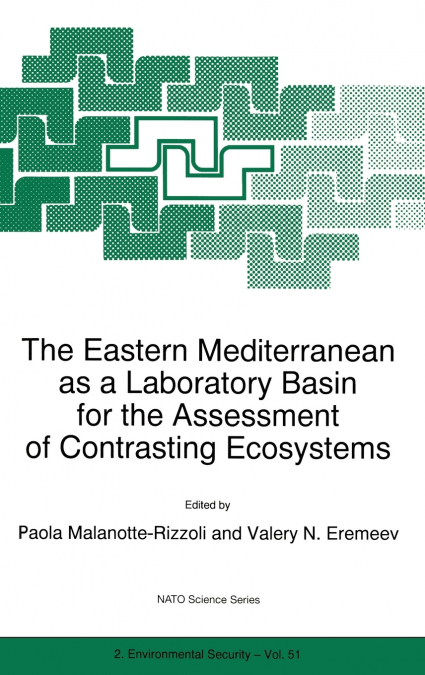
The Eastern Mediterranean as a Laboratory Basin for the Assessment of Contrasting Ecosystems

The Eastern Mediterranean as a Laboratory Basin for the Assessment of Contrasting Ecosystems


131,36 €
IVA incluido
Consulta disponibilidad
Editorial:
Springer Nature B.V.
Año de edición:
1999
Materia
Biología marina
ISBN:
9780792355854

Selecciona una librería:

  • Librería Samer Atenea
  • Librería Aciertas (Toledo)
  • Kálamo Books
  • Librería Perelló (Valencia)
  • Librería Elías (Asturias)
  • Donde los libros
  • Librería Kolima (Madrid)
  • Librería Proteo (Málaga)

This book is the outcome of a NATO Advanced Research Workshop on 'The Eastern Mediterranean as a laboratory basin for the assessment of contrasting ecosystems' that was held in Kiev, Ukraine, March 23-27, 1998. The scientific rationale of the workshop can be summarized as follows. The Eastern Mediterranean is the most nutrient impoverished and oligotrophic large water body known. There is a well-defined eastward trend in nutrient ratios over the entire Mediterranean that starts at the Gibraltar Straits and, through the western basin, proceeds to the Ionian and Levantine Seas. Supply of nutrients to the entire Mediterranean is limited by inputs from the North Atlantic and various river systems along the sea. The unique feature of the Mediterranean is the presence of an eastward longitudinal trend in available nitrate/phosphate ratios. This apparently induces a west-to-east variation in the structure of the pelagic food web and trophic interactions. In this context the Mediterranean, and in particular its Eastern basin, provides probably a unique platform to explore the hypotheses related to the suggested phosphate-limitation on production and to the shift between 'microbial' and 'classical' modes of operation of the photic food web. The major exception of the overall oligotrophic nature of the Eastern Mediterranean is the highly eutrophic system of the Northern Adriatic Sea. Here, during the last two decades the discharges of the northern rivers (especially of the Po), together with municipal sewage, have led to a very marked increase of nutrients and subsequent imponent eutrophication events.
Artículos relacionados

  • Marine Polysaccharides Volume 1
    Paola Laurienzo
    The field of marine polysaccharides is constantly evolving, due to progress in the discovery and production of new marine polysaccharides. Seaweed remains the most abundant source of polysaccharides, but recent advances in biotechnology have allowed the production of large quantities of polysaccharides from a variety of micro-algae, by controlling growth conditions and tailorin...
    Disponible

    75,60 €

  • The Extreme Life of the Sea
    Anthony R. Palumbi / Stephen R. Palumbi
    A thrilling tour of the sea’s most extreme species, coauthored by one of the world’s leading marine scientistsThe ocean teems with life that thrives under difficult situations in unusual environments. The Extreme Life of the Sea takes readers to the absolute limits of the ocean world-the fastest and deepest, the hottest and oldest creatures of the oceans. It dives into the icy ...
    Disponible

    23,83 €

  • Sensuous Seas
    Eugene H. Kaplan
    Learning marine biology from a textbook is one thing. But take readers to the bottom of the sea in a submarine to discover living fossils or to coral reefs to observe a day in the life of an octopus, and the sea and its splendors come into focus, in brilliant colors and with immediacy. In Sensuous Seas, Eugene Kaplan offers readers an irresistibly irreverent voyage to the worl...
  • Cold-Water Corals
    André Freiwald / Andrew Wheeler / J. Murray Roberts
    ...
    Disponible

    86,12 €

  • Shark
    David Owen
    A superlative study of our planet’s dominant predator for millions of years. A major and fully indexed contribution to the preservation of this amazing creature, now much threatened by human activity - with losses from overfishing, pollution, and the destruction of their habitat.Although scientific knowledge of sharks is increasing rapidly, the author shows that there is still ...
    Disponible

    43,01 €

  • Marine Metabolites in Disease Management, VOL 1
    In recent years, the exploration of marine ecosystems has unveiled a plethora of bioactive compounds with remarkable therapeutic potential. The oceans, covering over 70% of the Earth’s surface, are a rich source of biodiversity, harbouring organisms that have evolved unique biochemical pathways to survive in extreme conditions. These marine metabolites, produced by marine micro...