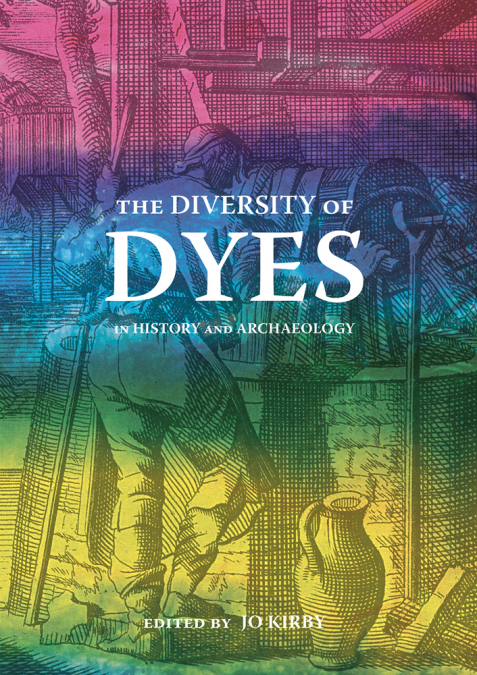

The Diversity of Dyes

The Diversity of Dyes

Jo Kirby Atkinson

145,93 €
IVA incluido
Disponible
Editorial:
Archetype Publications Ltd
Año de edición:
2017
Materia
Conservación, restauración y cuidado de obras de arte
ISBN:
9781909492530
145,93 €
IVA incluido
Disponible

Selecciona una librería:

  • Librería Samer Atenea

  • Kálamo Books
  • Librería Elías (Asturias)
  • Librería Kolima (Madrid)
  • Librería Proteo (Málaga)

Historical and archaeological research has revealed the importance of colour for our forefathers in every aspect of life. Much of this colour was provided by dyes, initially from naturally occurring sources, later produced by chemical means to give colours of a brilliance hitherto unimagined. The papers published in this collection (supported by a generous donation from Abegg-Stiftung), all presented at Dyes in History and Archaeology meetings, demonstrate how dyes were used through the centuries. If one century is chosen - the 17th century, for example - a fascinating comparison can be made between the dyes and dyeing methods used in Europe, in Turkey, in South America and in Japan, not only on textiles, but also in the pigments used for painting. Taking a different approach, chemical analysis has assisted detective work enabling a distinction to be made between rather similar 18th-century textiles with chinoiserie motifs, not all of which were Chinese in origin. Chemical research also shows how much we have still to understand: madder has been one of the most widely used dyes, for textile dyeing and also in pigment preparation, but why are madder pigments in 15th- and 16th-century paintings so variable in their composition? The methods of dyeing have been studied extensively, but the process taking place during the mordanting and dyeing of cellulosic fibres such as linen or cotton with alizarin, a major component of madder dye, is still a matter for discussion. Over the long time scale covered in this book, many developments took place and are described in its pages. One of the most exotic of dyes, shellfish purple, was used in Late Bronze Age wall paintings dated to the 17th century BC at Akrotiri, while over 3000 years later the brilliantly coloured, but sometimes impermanent synthetic dyes, devised by chemists, appeared on the market: the azo dyes, fluorescein, the eosins and others. A long and distinguished history of the use of colour, a glorious variety of dyes revealed - the diversity of dyes in history and archaeology. 6
Artículos relacionados

  • GRACE
    Francisca Oliviera / Priyasa Banerjee / Sam Polkar
    In a rapidly evolving world, where ancient traditions and cultural knowledge are increasingly at risk of being forgotten, GRACE: Timekeepers of Ancient Cultural Legacy takes readers on an extraordinary journey through the efforts to safeguard humanity’s most precious heritage. Born from the visionary minds behind the Advocacy Unified Network (AUN) and headquartered in Santipur,...
    Disponible

    29,03 €

  • Technology, Intellectual Property Law and Culture
    Megan Rae Blakely
    Focusing on cultural expressions that are most likely to intermingle with copyright law, trademark and IP-adjacent regulations, this book examines contemporary issues in technology, intellectual property law, and culture. ...
  • Conservation of Time-Based Media Art
    This volume is the first to evaluate current practices and conceptual frameworks that have developed around the collection, preservation, and display of time-based media art. A critical resource for conservation students and professionals engaging with time-based media art. ...
  • The Chemistry and Mechanism of Art Materials
    Michael J. Malin
    Presents an integrated approach to the chemistry of art materials, exploring the many chemical processes involved. It explores the chemical structures and stepwise transformation of starting materials to final products. The approach is descriptive and non-mathematical throughout. ...
  • Museums of the Commons
    Nikos Papastergiadis
    Museums of the Commons examines L’Internationale, an ongoing confederation between six museums and contemporary art institutions in Europe.  ...
  • Introducing Peace Museums
    Joyce Apsel
    This volume examines peace museums, a small and important (but often overlooked) series of museums whose numbers have multiplied internationally since the 1970s. It introduces the history and significance of peace museums and their different approaches through a selected series of peace museum sites. ...