 Librería Samer Atenea
 Librería Aciertas (Toledo)
 Kálamo Books
 Librería Perelló (Valencia)
 Librería Elías (Asturias)
 Donde los libros
 Librería Kolima (Madrid)
 Librería Proteo (Málaga)
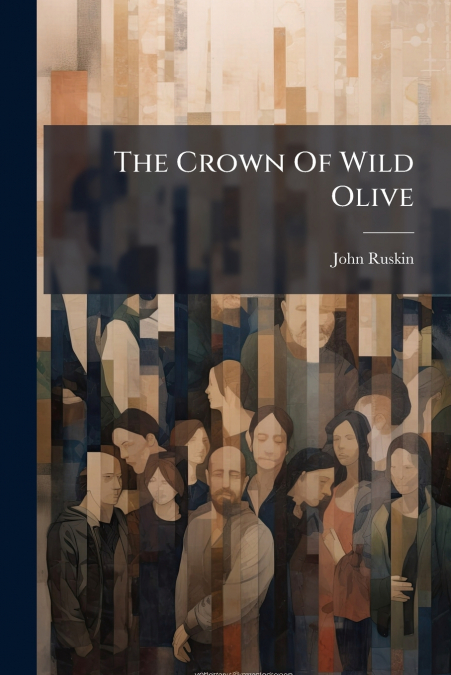
The Crown of Wild Olive by John Ruskin is a collection of four lectures on work, traffic, war, and the future of England, first published in 1866. Ruskin’s passionate critiques address the moral and social responsibilities of individuals and nations, advocating for justice, integrity, and the recognition of the inherent dignity of labor. Accompanying this volume is The Ethics of the Dust, a series of ten lectures presented in the form of dialogues concerning the basic principles of crystallography and their relationship to ethical and social issues. Ruskin employs the metaphor of crystal formation to illustrate moral structures and the importance of individual and collective virtue. Ruskin’s insightful analysis of Victorian society, coupled with his vision for a more equitable future, makes The Crown of Wild Olive and The Ethics of the Dust enduring works relevant to contemporary discussions of social justice and ethical conduct.This work has been selected by scholars as being culturally important, and is part of the knowledge base of civilization as we know it. This work was reproduced from the original artifact, and remains as true to the original work as possible. Therefore, you will see the original copyright references, library stamps (as most of these works have been housed in our most important libraries around the world), and other notations in the work.This work is in the public domain in the United States of America, and possibly other nations. Within the United States, you may freely copy and distribute this work, as no entity (individual or corporate) has a copyright on the body of the work.As a reproduction of a historical artifact, this work may contain missing or blurred pages, poor pictures, errant marks, etc. Scholars believe, and we concur, that this work is important enough to be preserved, reproduced, and made generally available to the public. We appreciate your support of the preservation process, and thank you for being an important part of keeping this knowledge alive and relevant.