 Librería Samer Atenea
 Kálamo Books
 Librería Elías (Asturias)
 Librería Kolima (Madrid)
 Librería Proteo (Málaga)
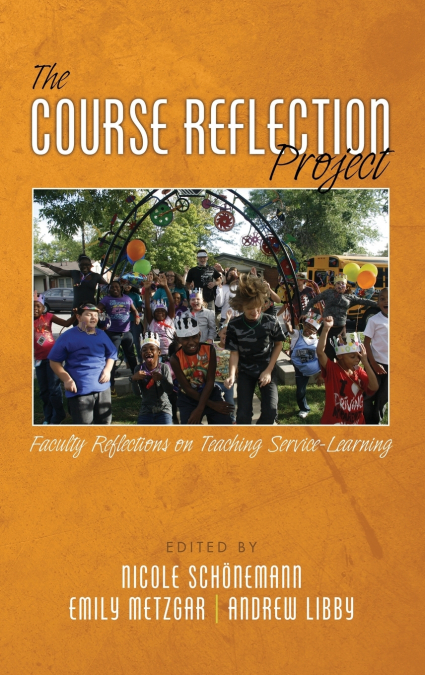
Service-learning is entering a post-initiatory phase. At tertiary institutions of all types and sizes,service-learning programs are common and service-learning requirements for graduation aregrowing in popularity. Taken together -- alongside continued faculty interest in effective teaching-- these factors have raised the visibility and popularity of service-learning. Now the greater needin service-learning is not to prove the need for, or efficacy of, service-learning, but to turn thefocus squarely back on practice. Following established best practice is not enough; instructorsalso need to reflect on how this fits within the specific context and application of each uniquecourse and service-learning partnership. While there are many excellent resources that detail bestpractice and showcase exemplary service-learning courses, faculty reflection and course revisionoften goes unmentioned. In response to the lack of attention on the role of reflection and courserevision, we convened groups of faculty from a variety of disciplines to reflect deeply on their courses, paying specific attention toobstacles and challenges. These conversations were converted to articles for this edited collection, each chapter representing theprocess of reflection and revision and serving as a guide to develop effective practice in varied curricular contexts.This text contributes to the body of literature on service-learning in a unique and practical manner. Faculty teaching or interested inteaching service-learning classes would benefit from this text as well as university administrators and community service directorsinvolved in service-learning at a programmatic and institutional level. This book should be marketed to faculty teaching disciplinaryservice-learning classes and service-learning pedagogy classes and administrative offices involved in service-learning. This could be asupplementary text for graduate-level pedagogy courses. Higher education institutional libraries would benefit from this text, as well asthe national and state campus compact offices.