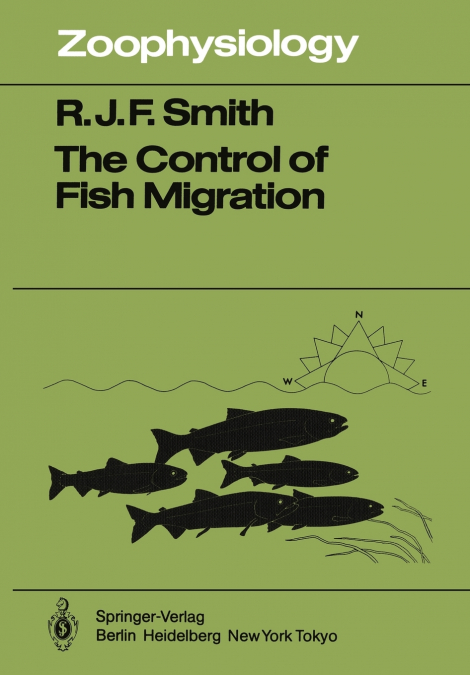

The Control of Fish Migration

The Control of Fish Migration

R.J.F. Smith

134,04 €
IVA incluido
Disponible
Editorial:
Springer Nature B.V.
Año de edición:
2011
Materia
Zoología y ciencias animales
ISBN:
9783642823503
134,04 €
IVA incluido
Disponible

Selecciona una librería:

  • Librería Samer Atenea
  • Librería Aciertas (Toledo)
  • Kálamo Books
  • Librería Perelló (Valencia)
  • Librería Elías (Asturias)
  • Donde los libros
  • Librería Kolima (Madrid)
  • Librería Proteo (Málaga)

Fish migration is important and spectacular. Migratory fish gather energy in one portion of the environment and transport it to other areas, where it often becomes available to humans or to other elements in the ecosystem. Migration brings fish into situations that allow easy harvest as they concentrate along migration routes. Their journeys also make them vulnerable to human intereference at critical points along their route. Salmon, for example, may harvest plankton in the open ocean and transport that food energy to coastal and inland regions, where it is captured by fisheries or deposited in inland streams and utilized by the flora and fauna of the region. These salmon are able to complete journeys of thousands of kilometers from their natal streams to oceanic feeding grounds and back to the same home streams, an accomplishment that strains our credi bili ty . We now understand some of the timing and guiding stimuli used in these migrations, and mechanisms can be logically proposed, on the basis of the established abilities of fishes, to account for the unexplained portions of the migrations. There is no single factor guiding these fish. Instead, they are dependent on the presence in their environment of a great variety of appropriate orienting and timing stimuli. These stimuli are vulnerable to human interference. The more widespread and easily available the information on these requirements, the more readily fish can be protected from such interference.

Artículos relacionados

  • Animaltown
    Urban space constitutes a place where people and animals live together in close proximity with each other, creating changing landscapes of co-existence, conflict, mutual dependencies and exploitation. The medieval animals found in the articles of Animaltown: Beasts in Medieval Urban Space, appear in text and image, as well as archaeological find materials in the form of butcher...
    Disponible

    109,24 €

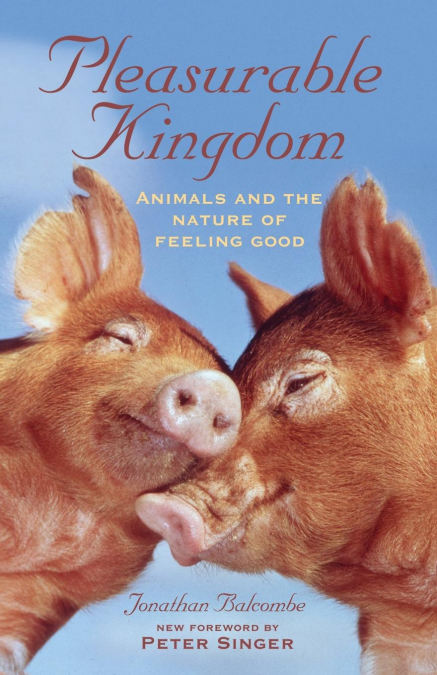
  • Pleasurable Kingdom
    Jonathan Balcombe
    Pleasurable Kingdom presents new evidence that animals--like humans--enjoy themselves. From birds to baboons, insects to iguanas, animals feel good thanks to play, sex, touch, food, anticipation, comfort, aesthetics, and more. Combining rigorous evidence, elegant argument and amusing anecdotes, leading animal behavior researcher Jonathan Balcombe shows that the possibility of p...
    Disponible

    18,96 €

  • SECOND NATURE
    Jonathan Balcombe
    ...
    Disponible

    16,52 €

  • Experimental Zoology
    Manisha R Gejage / Ramesh M Gejage
    The goal of the book is to present the practical knowledge of Zoology. Animal diversity, venomous and non-venomous snakes, study of birds, brain of fowl and hyoid apparatus, sclerotic plates, pecten and collumella of fowl, scales of fishes, biochemical tests, activity of salivary amylase, estimation of total protein and lipid, DNA isolation and estimation of uric acid are given...
    Disponible

    38,40 €

  • TOXICOLOGY
    M A SUBRAMANIAN
    In an era defined by burgeoning human populations, rampant industrialization, cutting-edge technological progress, and expanding urban landscapes, the integrity of our natural environment faces unprecedented challenges. The relentless march of progress has ushered in a flood of chemicals, seeping into the very fabric of our ecosystems and posing insidious threats to biological ...
    Disponible

    23,69 €

  • Leaders in Animal Behavior
    Donald Dewsbury / Lee Drickamer
    ...
    Disponible

    64,68 €