AA.VV
 Librería Samer Atenea
 Librería Aciertas (Toledo)
 Kálamo Books
 Librería Perelló (Valencia)
 Librería Elías (Asturias)
 Donde los libros
 Librería Kolima (Madrid)
 Librería Proteo (Málaga)
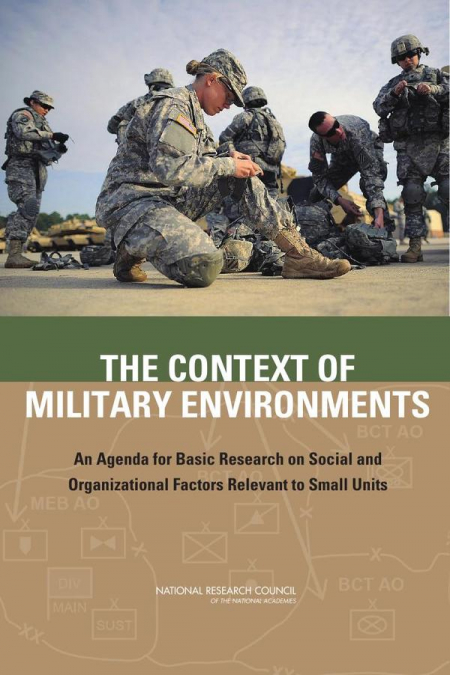
The United States Army faces a variety of challenges to maintain a ready and capable force into the future. Missions are increasingly diverse, ranging from combat and counterinsurgency to negotiation, reconstruction, and stability operations, and require a variety of personnel and skill sets to execute. Missions often demand rapid decision-making and coordination with others in novel ways, so that personnel are not simply following a specific set of tactical orders but rather need to understand broader strategic goals and choose among courses of action. Like any workforce, the Army is diverse in terms of demographic characteristics such as gender and race, with increasing pressure to ensure equal opportunities across all demographic parties. With these challenges comes the urgent need to better understand how contextual factors influence soldier and small unit behavior and mission performance. Recognizing the need to develop a portfolio of research to better understand the influence of social and organizational factors on the behavior of individuals and small units, the U.S. Army Research Institute (ARI) requested the National Research Council’s Board on Behavioral, Cognitive, and Sensory Sciences to outline a productive and innovative collection of future basic science research projects to improve Amy mission performance for immediate implementation and lasting over the next 10-20 years. This report presents recommendations for a program of basic scientific research on the roles of social and organizational contextual factors, such as organizational institutions, culture, and norms, as determinants and moderators of the performance of individual soldiers and small units. The Context of Military Environments: Basic Research Opportunities on Social and Organizational Factors synthesizes and assesses basic research opportunities in the behavioral and social sciences related to social and organizational factors that comprise the context of individual and small unit behavior in military environments. This report focuses on tactical operations of small units and their leaders, to include the full spectrum of unique military environments including: major combat operations, stability/support operations, peacekeeping, and military observer missions, as well as headquarters support units. This report identifies key contextual factors that shape individual and small unit behavior and assesses the state of the science regarding these factors. The Context of Military Environments recommends an agenda for ARI’s future research in order to maximize the effectiveness of U.S. Army personnel policies and practices of selection, recruitment, and assignment as well as career development in training and leadership. The report also specifies the basic research funding level needed to implement the recommended agenda for future ARI research.