 Librería Samer Atenea
 Kálamo Books
 Librería Elías (Asturias)
 Librería Kolima (Madrid)
 Librería Proteo (Málaga)
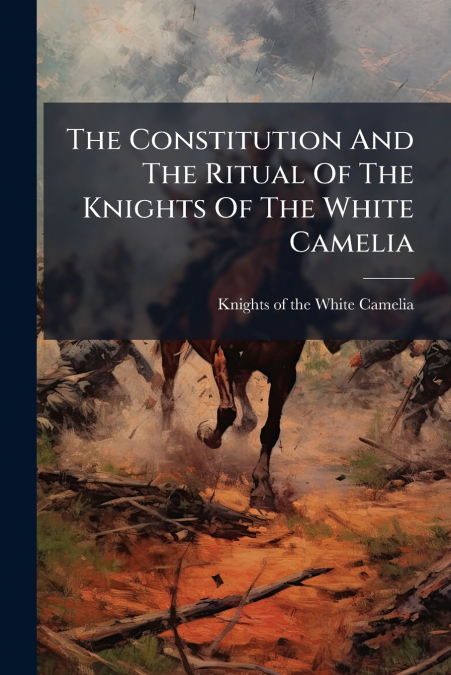
This historical document details the constitution and rituals of the Knights of the White Camelia, a secret society active in the Southern United States during the Reconstruction era. Similar to the Ku Klux Klan, the Knights aimed to maintain white supremacy and resist the social and political changes following the Civil War. This book offers a rare glimpse into the ideologies, organizational structure, and practices of a group dedicated to preserving the antebellum South’s racial hierarchy. A valuable resource for researchers and students of American history, particularly those interested in the Reconstruction period, Southern social history, and the history of racial discrimination in the United States. Examine the primary source document to gain insights into the mindsets and motivations of those who sought to undermine the progress of racial equality in the post-Civil War era.This work has been selected by scholars as being culturally important, and is part of the knowledge base of civilization as we know it. This work was reproduced from the original artifact, and remains as true to the original work as possible. Therefore, you will see the original copyright references, library stamps (as most of these works have been housed in our most important libraries around the world), and other notations in the work.This work is in the public domain in the United States of America, and possibly other nations. Within the United States, you may freely copy and distribute this work, as no entity (individual or corporate) has a copyright on the body of the work.As a reproduction of a historical artifact, this work may contain missing or blurred pages, poor pictures, errant marks, etc. Scholars believe, and we concur, that this work is important enough to be preserved, reproduced, and made generally available to the public. We appreciate your support of the preservation process, and thank you for being an important part of keeping this knowledge alive and relevant.